
Seeing the Whole Picture Behind the Registers
Los Angeles living has a unique rhythm—morning marine layers rolling over the Westside, sun-baked afternoons in the Valley, and canyon breezes that change on a dime. Our HVAC systems ride that rhythm with us, and our air ducts quietly carry the load. When it is time to clean those ducts, most homeowners expect an immediate, fresh result. And while a well-executed cleaning usually delivers exactly that, there are common issues that can complicate the experience if they are not addressed with local know-how.
After years of walking attics from Mar Vista to Mount Washington and tracing duct runs behind plaster in Hancock Park, I have learned that preparation, technique, and follow-through define success. The best way to avoid headaches is to understand what can go wrong and how thoughtful, professional air duct cleaning prevents problems before they start.
Odors That Linger After Cleaning
One of the top complaints homeowners share is a faint musty or smoky scent that seems to persist even after the ducts have been cleaned. In many cases, the odor reservoir extends beyond the ducts themselves. Residues can cling to the blower housing, evaporator coil housing, or even the return plenum, and when these are not included in the cleaning scope, the first few cycles can re-release the smell. In older homes, fabric-lined returns or vintage grilles may also hold a trace of history that needs careful attention.
The solution is a whole-path approach that includes registers, returns, and accessible blower compartments. When technicians pair careful agitation with proper containment and capture, homeowners typically notice that telltale fresh baseline as soon as the system starts up again.
Dust Blowback and Post-Clean Particles
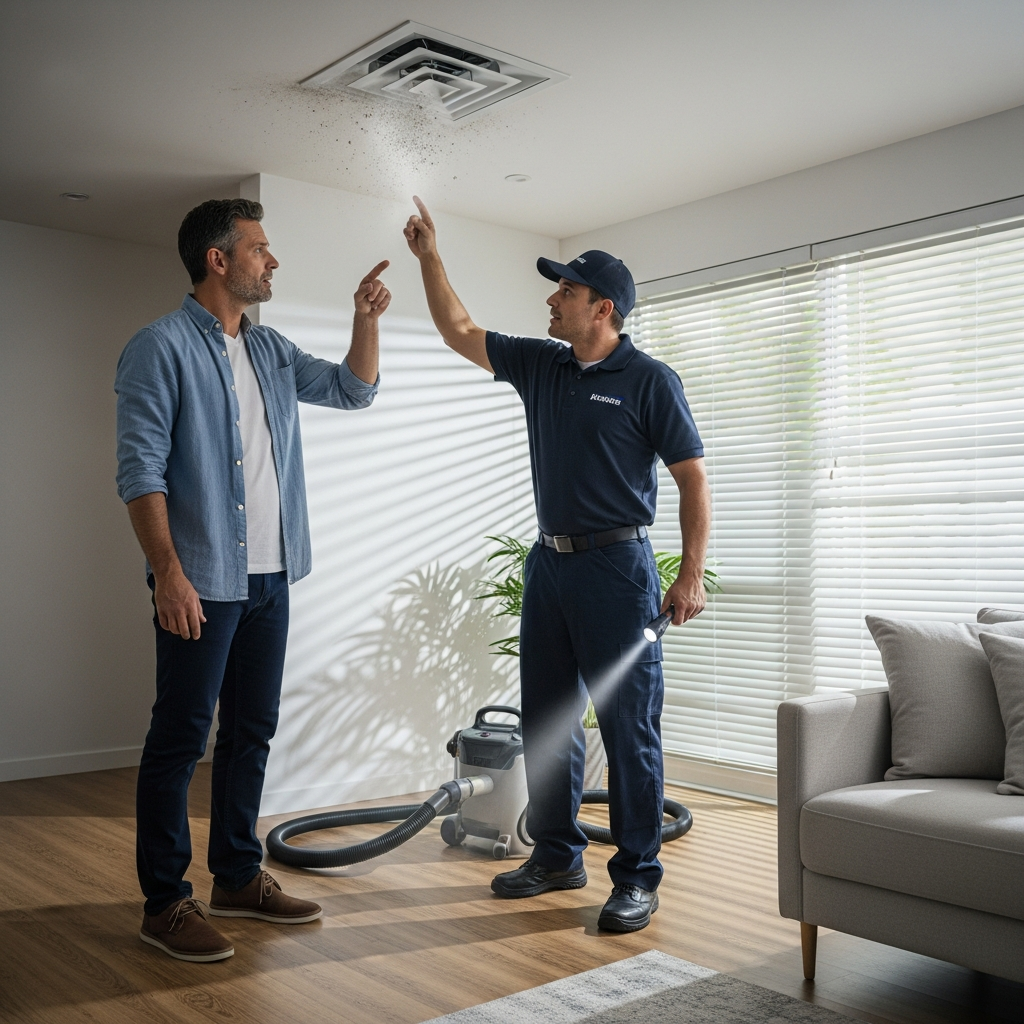
Another concern is a burst of dust after the first run, leading homeowners to wonder if cleaning made things worse. What usually happens is that a small volume of loosened debris, dislodged during agitation but not yet pulled into containment, lifts off when airflow resumes. In professional practice, extended negative pressure and meticulous passes at each register minimize this effect so that the first cycle feels clear, not cloudy.
If dust blowback does occur, it should be brief and minor. A quick follow-up pass can capture any stubborn pockets, and the home settles into cleaner air quickly thereafter.
Access Challenges in Tight or Historic Spaces
Los Angeles has an extraordinary range of housing stock, and many beloved homes pose access puzzles. Narrow attic hatches in 1920s bungalows, labyrinthine runs in hillside properties, and tight utility closets in downtown lofts all require adapted techniques. Without that adaptation, a team might skip sections or rush through complex areas, leading to uneven results and lingering dust in forgotten branches.
The fix is practical: plan access, bring the right tools for the home’s era and layout, and allow enough time to do the job methodically. When every branch is addressed, the outcome is smooth, and homeowners feel the full benefit across rooms rather than only at certain vents.
Fragile Duct Materials and Over-Aggressive Tools
Fiberboard and older flexible ducts are common in the region and can be damaged by too-stiff brushes or excessive force. A careful technician modulates agitation strength, choosing soft-bristle or air-whip tools as needed and checking progress with cameras where appropriate. When cleaning is tailored to the duct’s construction, you avoid tears, dislodged insulation, and the frustrating discovery of new leaks after the service.
Matching force to material is especially important in hot attics where adhesives age faster. Mindful technique protects both the duct and the homeowner’s peace of mind.
Leaky Ducts That Pull Dust from Attics and Crawlspaces
Sometimes what looks like a cleaning issue is actually a sealing issue. A leaky return can pull dusty air from an attic or crawlspace even after a pristine cleaning, leaving registers dusty again far too soon. Homeowners may assume the service failed when in reality the ducts are acting like vacuums for nearby dirt. During a comprehensive visit, technicians test for and identify these leaks, reinforcing mastic or recommending accessible sealing so the system stops importing contaminants.
When leaks are addressed, the fresh result of a cleaning lasts longer, and filters stop clogging prematurely. The house feels balanced rather than constantly on the brink of stuffiness.
Inconsistent Airflow and Temperature Imbalances
Cleaning can reveal underlying balance problems that were masked by dust piles. After debris is removed, a too-closed damper or a poorly sized run may show itself in sharp relief. Rather than a flaw in cleaning, this is an opportunity to fine-tune airflow so that rooms fall into harmony. Small adjustments at dampers and registers often solve the issue, while more complex cases might call for targeted duct modifications.
In large or multi-level homes—from Brentwood to Studio City—this tuning makes the difference between a good outcome and a great one.
Noise Complaints After Service
Occasionally, homeowners notice a new rattle or whistle. This is usually a loose register screw, a slightly misaligned grille, or a small section of duct whose settling became audible after debris was removed. A quick revisit to tighten, reseat, and add a bit of insulation where needed resolves most noises. Clean systems tend to run more quietly; the goal is to let that quiet settle in without distractions.
Don’t hesitate to speak up if something sounds different. Reputable teams welcome feedback and treat small adjustments as part of the service relationship.
Expectations vs. Reality on Deep Odors
While cleaning often eliminates the majority of stale or smoky odors, some homes with significant exposure—whether from wildfire smoke or longstanding indoor habits—may need a multi-step plan. That plan can include cleaning ducts and blower components, addressing soft surfaces in living spaces, and improving ventilation habits during favorable weather windows. Setting expectations and laying out the steps ahead of time keeps the process straightforward and satisfying.
Think of it as restoring a vintage car: polishing the intake path is crucial, but the cabin must be refreshed too if you want the full experience.
Scheduling Around L.A.’s Climate and Life Rhythms
Timing matters. Bookings that land on the hottest Valley weeks or in the middle of a wildfire episode can be uncomfortable and less effective. The sweet spots remain late spring and early fall, with flex for specific household needs. If you have just finished a remodel or welcomed a new pet, sooner is better. Aligning the calendar with your circumstances ensures you enjoy the fresh-air dividend when you most need it.
Coordinating with a provider who understands your neighborhood’s quirks—morning fog near the beach, dry canyon winds, dense urban dust downtown—pays off in results you can feel from the first cycle.
The Importance of a Whole-System Mindset
Many common issues arise when cleaning is treated as an isolated task rather than part of a whole-system approach. Registers, returns, blower compartments, and accessible coils form a chain. If one link is ignored, particles and odors travel. When every link is addressed with proper containment, the chain is strong and the air is genuinely reset. This is especially true in older homes with meandering runs where debris loves to hide.
Homeowners notice the difference immediately: fewer dust flickers in sunbeams, calmer breathing in the morning, and a house that smells like itself again.
What You Can Do Before and After
Preparation helps. Clearing access to registers, securing pets, and noting rooms where odors seem strongest make the visit more efficient. After cleaning, align your filter schedule with your lifestyle and climate triggers. During Santa Ana winds or smoky days, keep windows closed and let the HVAC fan run briefly to polish indoor air through filtration. Small habits extend the results and make the next service a fine-tune rather than a rescue mission.
Think of your home as an ecosystem. When each element supports the others, indoor air quality improves steadily rather than in spikes and dips.
Mid-Visit Check-Ins and Homeowner Communication
Misunderstandings are a common source of frustration, and they are avoidable. Good teams check in throughout the visit to explain what they are seeing, share photos from inside the ducts, and confirm you are on board with any recommended add-ons like sealing accessible leaks. This transparency ensures there are no surprises when the fan turns on and you take that first deep breath.
When you feel informed, you also feel empowered to maintain the gains—clean filters, clear returns, and smart use of your system during tough outdoor air days.
Frequently Asked Questions
Why do I still smell something after cleaning? Odors can originate from blower housings, coil cabinets, or even room fabrics. A whole-path approach and a bit of patience after the first few cycles usually resolve lingering scents.
Is dust blowback normal? A small, brief puff can happen if a pocket of debris dislodges late in the process. Thorough negative pressure and careful technique reduce this, and a quick follow-up pass eliminates stubborn areas.
Will cleaning fix my hot and cold spots? Cleaning improves airflow but may reveal the need for balancing or minor duct adjustments. Many imbalances can be solved with damper tuning once ducts are clear.
How can I keep results longer? Match your filter to your system, replace it on a realistic cadence, keep returns unobstructed, and consider brief fan runs during poor outdoor air days. Sealing accessible leaks makes a big difference.
What if my ducts are old and fragile? Experienced technicians tailor tools and force to the duct material, protecting older sections while still removing accumulated debris. Communication about constraints is key.
Clear the Air with Confidence
If you want results without surprises, choose a provider that treats your home like the ecosystem it is and communicates every step. With the right plan, cleaning becomes a renewal, not a disruption. When you are ready to breathe easier and sidestep the common pitfalls, schedule your professional air duct cleaning and enjoy the calm that follows the very first cycle.