
Evaluating Los Angeles Attic Rodent Proofing: Structural Barriers and Insulation Protection Standards
Los Angeles homeowners enjoy a unique climate, but our warm days and cool coastal nights make residential attics prime real estate for local wildlife. When rats, mice, or squirrels find their way into an upper crawl space, they do not just make noise; they actively dismantle your home’s thermal defense system. Effective rodent proofing los angeles requires a systematic approach that combines heavy-duty physical exclusion with modern thermal restoration to keep your household safe, comfortable, and energy-efficient.
The Myth of the Quick Fix: Why Traps Alone Fail in Southern California
The Population Cycle of Urban Rodents
Placing spring traps or bait stations in an attic space might capture a few active pests, but it does nothing to stop the continuous cycle of entry. In dense metropolitan areas like Los Angeles, rodent populations are highly active year-round. When you remove a few individuals without sealing the exterior structure, you simply clear space for the next family of pests to move in, guided by the pheromone trails left behind by their predecessors.
Pheromone Trails and the Attraction of New Pests
Rodents communicate through scent marking, leaving behind urine and pheromone deposits that can penetrate deep into wooden framing, drywall, and plaster. These chemical signatures act as a beacon, signaling to other rodents in the neighborhood that your home is a safe, warm environment with accessible entry points. Neglecting to eliminate these scent pathways means your home remains permanently vulnerable to re-infestation.
Why Physical Barriers Outlast Chemical Deterrents
Scent repellents, strobe lights, and ultrasonic sound machines are often marketed as easy solutions, but urban pests quickly adapt to these minor annoyances. Solid, physical exclusion remains the only reliable method for long-term protection. By physically blocking every possible access point with resilient materials, you remove the opportunity for entry, regardless of how attractive your attic smells to passing wildlife.
Structural Exclusion Standards: Mapping Your Attic’s Vulnerabilities
Roof Junctions, Dormers, and Eaves
Los Angeles architecture features a wide variety of roof designs, from classic Spanish tile to mid-century modern flat roofs. Each style has its own weak points. Spanish clay tiles, for example, have natural curved openings at the edges that invite pests if they are not sealed with custom-fit bird stops or wire mesh. Similarly, the gaps where different roof lines meet, known as valleys or dormer junctions, often contain small construction voids that allow easy entry.
Ventilation Screens and Gable Vents
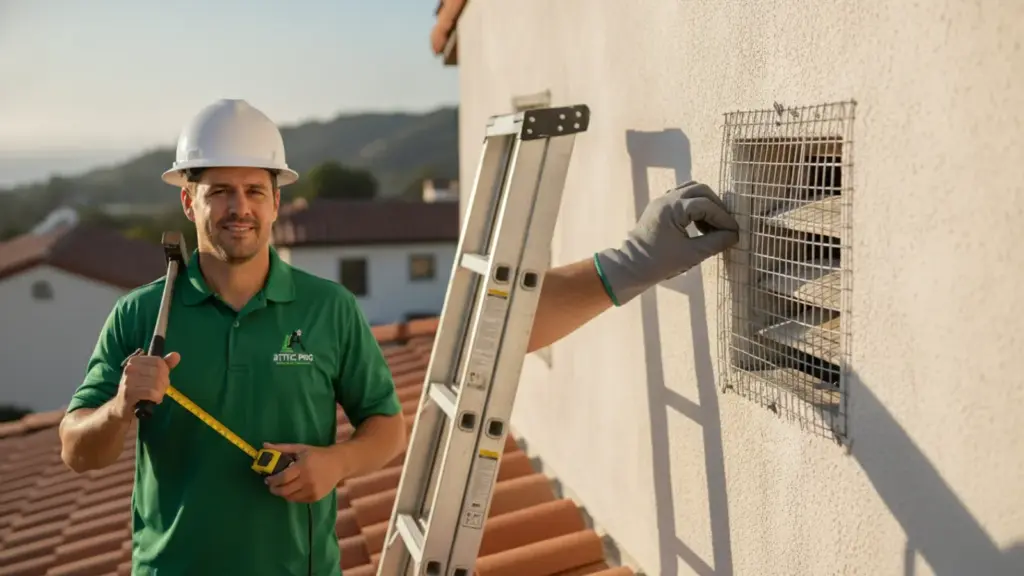
Proper attic ventilation is critical for regulating temperature in the Southern California heat, but vents are notorious entry points. Standard window screening is easily chewed through by determined rats or squirrels. High-standard exclusion work replaces these flimsy screens with heavy-duty quarter-inch galvanized hardware cloth, securely fastened to the structural framing with heavy staples or screws to resist clawing and chewing.
Utility Penetrations and Pipe Chases
Plumbing stacks, electrical conduits, and air conditioning lines travel from the ground level up into the attic, leaving holes in top plates and floorboards. If these penetrations are not properly sealed, they act as highways for pests. Technicians inspect these vertical pathways, sealing them with a combination of steel wool, expanding foam, and metal flashing to ensure no gaps remain around the utilities.
How Rodents Destroy Attic Insulation and Drive Up Energy Bills
The Destruction of R-Value Through Nesting
Your attic insulation relies on trapping quiet pockets of air to resist heat transfer, a performance rating known as R-value. When rodents invade, they tunnel through loose-fill cellulose or pull apart fiberglass batts to build nests. This nesting behavior compresses the material, destroying the air pockets and leaving large areas of your ceiling virtually uninsulated. As a result, summer heat pours directly into your living space, forcing your air conditioner to run constantly.
Contamination and Air Quality Degradation
As pests live in the attic, they deposit feces, urine, and nesting debris directly into the insulating material. The heat of a typical Los Angeles attic bakes these waste products, releasing airborne particles, dust, and unpleasant odors. Because of the natural convection currents in a home, this contaminated air can migrate downward through light fixtures and drywall gaps, compromising the air quality inside your bedrooms and living areas.
Compromised Ductwork and HVAC Infiltration
Many local homes feature HVAC ductwork running through the attic space. Rodents frequently chew through flexible duct jackets to access the cool air or find nesting material. This creates massive air leaks, allowing your expensive conditioned air to escape into the attic while pulling dusty, contaminated attic air directly into your home’s breathing supply. If your system has sustained this type of damage, you may need to look into professional air duct replacement to restore the integrity of your ventilation.
The Three-Step Restoration Process: Cleanse, Sanitize, and Re-Insulate
Step 1: Thorough Insulation Removal
When an attic has suffered a severe infestation, spot-cleaning is rarely sufficient. A complete restoration begins with professional insulation removal to clear out all compromised material. Technicians utilize high-powered, truck-mounted vacuum systems equipped with long, thick hoses to pull contaminated loose-fill insulation directly out of the attic, keeping the waste self-contained and preventing dust from entering your living spaces. Fiberglass batts are carefully bagged and removed by hand.
Step 2: Deep Attic Cleaning and Rodent Sanitation
Once the floor of the attic is bare, the true cleaning begins. This stage of attic cleaning los angeles involves vacuuming up any remaining droppings, debris, and dust. Afterward, technicians perform a detailed rodent sanitation treatment. This process utilizes specialized atomizing foggers to distribute an enzyme-based sanitizer across all exposed wood framing, joists, and drywall surfaces. The sanitizer breaks down organic waste, neutralizes lingering odors, and eliminates the pheromone markers that attract future pests.
Step 3: Installing Modern, Resilient Attic Insulation
With the attic clean, sanitized, and sealed, it is time to install fresh, energy-efficient insulation. Homeowners can choose between high-density fiberglass batts or blown-in cellulose. Modern blown-in cellulose is often treated with natural borate minerals, which not only acts as a fire retardant but also deters insects and pests from nesting in the material. This clean slate restores your home’s thermal boundary, keeping you cool in the summer and warm during chilly winter nights.
To help you understand the differences between common materials used in Los Angeles homes, here is a comparison of standard insulation options:
| Insulation Type | Typical R-Value per Inch | Pest Resistance Characteristics | Best Suited For |
|---|---|---|---|
| Blown-In Borate-Treated Cellulose | 3.2, 3.8 | High (natural borates deter insects and nesting) | Irregular attic floors, hard-to-reach joists, and deep coverage |
| Fiberglass Batts | 3.1, 4.3 | Low (untreated fiberglass is easily torn for nesting) | Standard joist spacing, clean crawl spaces, and simple layouts |
| Blown-In Fiberglass | 2.2, 2.7 | Medium (less attractive than batts but lacks active deterrents) | Quick topping off of existing insulation in clean attics |
Selecting the Right Materials for Southern California Homes
The Strength of Galvanized Steel Hardware Cloth
When it comes to stopping rats and squirrels, typical aluminum screening or plastic mesh is useless. Rodents have continuously growing incisors that can chew through soft metals and plastics with ease. True exclusion specialists rely on quarter-inch or half-inch galvanized steel hardware cloth. This heavy-gauge wire is hot-dip galvanized to resist rusting in damp coastal air, providing a permanent barrier that pests cannot chew through.
Expanding Foam vs. Mortar and Metal Flashing
While expanding polyurethane foam is excellent for sealing small drafts and air leaks, it does not stop rodents on its own; they will chew right through it. For robust exclusion, technicians pack structural gaps with stainless steel wool or copper mesh before applying expanding foam. For larger exterior gaps, particularly around roof lines or foundation edges, durable metal flashing or structural mortar is used to create an impenetrable solid barrier.
Understanding R-Value Requirements in Los Angeles County
When updating your attic insulation, it is important to meet modern energy efficiency standards. In Southern California, local building codes generally recommend insulating attics to a minimum of R-30, with R-38 to R-60 being ideal for maximum energy savings. Choosing a high-quality material and ensuring it is installed at the correct depth will significantly lower your monthly heating and cooling costs while preventing your HVAC system from working overtime.
Frequently Asked Questions
How do I know if I have rodents in my attic?
The most common signs include scratching or scurrying noises overhead, particularly at night when rats are most active. You may also notice unexplained spikes in your utility bills, musty odors coming from your vents, or visible chew marks on crawl space access doors and attic vents.
Can I just patch the holes in my attic myself?
While some minor sealing can be done by homeowners, finding every potential entry point requires extensive training and specialized equipment. Rats can squeeze through holes the size of a quarter, and mice only need an opening the size of a dime. Professional technicians have the experience to locate hidden construction gaps, roof junctions, and crawl space openings that are easily missed.
Is rodent sanitation safe for my family and pets?
Yes, professional sanitizing processes use EPA-approved, eco-friendly enzyme treatments and disinfectants. These products are designed to break down organic waste, bacteria, and viruses without leaving behind harsh chemical residues or toxic fumes, ensuring your indoor air quality remains safe and healthy.
How long does the rodent proofing and insulation process take?
A comprehensive project, including insulation removal, sanitation, structural exclusion, and new insulation installation, typically takes between one to three days depending on the size of your attic and the severity of the infestation. Technicians work efficiently to minimize disruption to your daily routine.
Protect Your Home and Restore Comfort Today
Do not let rodents compromise your home’s air quality, structural integrity, and energy efficiency. Secure your property with professional attic restoration services by contacting LA Attic Pro in Los Angeles. Call our experienced team to schedule your attic inspection today and take the first step toward a cleaner, more comfortable home.