
Blown insulation is a favorite for improving Los Angeles attics and select wall cavities, thanks to its ability to blanket irregular spaces and deliver even coverage around wires, pipes, and framing quirks. When homeowners ask about blown insulation installation cost in our region, the discussion quickly expands beyond a single figure. The most insightful conversations focus on scope and quality: what is being sealed, how ventilation is preserved, how old materials are handled, and how coverage is verified. If you are comparing options, a quick conversation with a local specialist in insulation installation will help you interpret proposals and align them with your home’s needs.
Blown-in materials—commonly fiberglass or cellulose—excel in open attics and retrofit wall applications. In attics, they flow around framing to create a uniform layer with few gaps. In walls, dense-pack techniques reduce drafts and noise, improving comfort without wholesale demolition of finishes. The adaptability of blown materials is a large part of their appeal, but that flexibility must be paired with careful preparation to achieve lasting performance.
What shapes a blown insulation scope
Every project begins with the existing conditions. Is there old, compacted insulation? Are there signs of rodent activity? How many can lights and mechanical chases cut through the ceiling plane? Are bath fans properly vented outdoors? Each yes adds steps to the scope. Responsible installers address these issues before blowing new material so the final result is clean, safe, and continuous.
Access matters too. Small attic hatches, low roof pitches near eaves, and cluttered storage areas slow progress and require additional protection. In some homes, contractors install temporary platforms or reinforce existing paths to prevent compression of new insulation during and after the job.
Air sealing and ventilation go hand in hand
Before any insulation blows in, air sealing closes the pathways that let hot attic air infiltrate living spaces and conditioned air escape. Penetrations around wiring, plumbing, and top plates are sealed, and larger chases are capped. Recessed lights receive appropriate covers where required. With leaks addressed, the new insulation can do its job without air currents undermining it.
Ventilation remains essential in a vented attic strategy. Eave baffles allow full-depth coverage while preserving airflow from soffit vents. Without baffles, insulation can slough into the eaves and block the very vents that keep the roof deck healthy. This pairing—air sealing first, baffles second, insulation third—is a reliable recipe for results homeowners feel immediately.
Material choices in Los Angeles
Fiberglass and cellulose each have champions, and both perform well when installed correctly. Cellulose’s dense nature can help with sound attenuation and conforms tightly around obstructions. Fiberglass offers excellent thermal performance at light weights and stable characteristics over time. The right choice often depends on attic conditions, desired performance, and whether walls are part of the project.
In some homes, a hybrid approach makes sense: targeted spray foam or sealants at tricky transitions or knee walls, followed by blown-in insulation across open fields. The goal is not allegiance to a material but delivering a continuous thermal and air control layer suited to your home’s assemblies.
How installers verify coverage
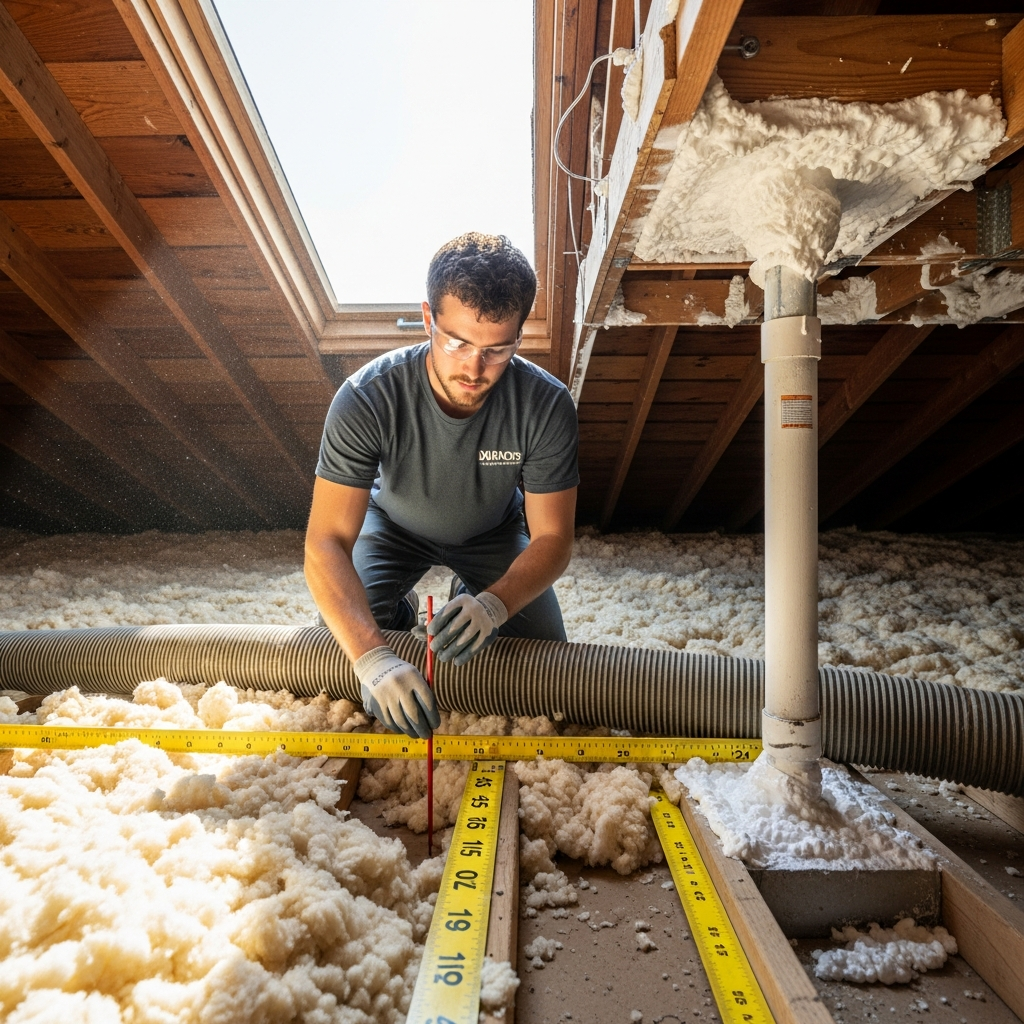
Verification turns good work into great work. Depth markers throughout the attic, photos of representative areas, and a final walkthrough provide transparency. Equally important is checking for wind washing at eaves, where moving air can reduce effectiveness. Properly placed baffles and edge detailing minimize this effect. In wall retrofits, installers document fill locations and confirm that cavities were densely packed without bowing finishes.
Some projects include optional diagnostics like thermal imaging after installation to visualize coverage and identify any cold spots at transitions. While not mandatory, these tools give homeowners confidence that the promised performance is in place.
Los Angeles microclimates and their impact
Inland neighborhoods endure extended summer heat, putting attics under continuous thermal stress. Coastal areas wake to cool, moist mornings that transition into sunny afternoons. Hillside homes face gusty winds and temperature swings. These patterns influence the balance between air sealing, insulation depth, and ventilation strategies. A plan that feels excessive in one location may be just right in another based on sun exposure, roof color, and wind patterns.
Local knowledge helps here. A team familiar with your neighborhood has seen how similar homes respond to upgrades and can fine-tune details—like extra attention near windward eaves or careful treatment of skylight wells—to suit your microclimate.
Walls and special assemblies
While attics are the first priority, walls deserve attention when drafts and street noise dominate certain rooms. Dense-pack wall insulation requires strategic access points and sensitive handling of older finishes. Plaster and lath, common in vintage LA homes, respond well to careful drilling, patching, and blending. In multifamily buildings or homes close to busy streets, adding density in targeted walls can create a remarkably calmer interior.
Special assemblies like vaulted ceilings, flat roofs, or rooms over garages introduce different dynamics. Here, blown materials may partner with other products to create an effective composite system. The aim is always continuity: no gaps at transitions, no unaddressed chases, and a thermal boundary that reads as one unbroken line around the living space.
Safety, cleanliness, and respect for your home
Good installers protect floors and furnishings, set up containment where dust could travel, and manage hose routes with care. If old insulation is removed, they bag and dispose of it properly, and sanitize when necessary before new materials go in. Attic hatches are insulated and weatherstripped, and any utility platforms or storage decks are secured to avoid future compression of the new layer.
Clear communication keeps the day easy: when crew arrival and departure will occur, where equipment will be staged, and how noise will be managed. The best projects feel organized and neighbor-friendly, reflecting the rhythms of Los Angeles life.
Comparing proposals without confusion
When two proposals differ, the headline square-foot number rarely explains why. Look for which includes air sealing, baffles, fixture covers, remediation if needed, and documentation. Confirm the approach to tight eaves and around mechanical chases. Ask how the team will protect finishes and how final verification will occur. Aligning on these details brings clarity and helps you choose the plan that best reflects your priorities.
Remember that transparency and education signal quality. Installers who take time to explain their approach tend to bring the same care to the work itself.
Timeline and homeowner preparation
Most attic-focused blown insulation projects move quickly once preparations are in place. You can help by clearing access paths, moving delicate items away from the hatch area, and flagging any household considerations like remote work or nap schedules. Crews work efficiently when staging is simple and pathways are uncluttered. With good planning, the day feels more like a well-choreographed service visit than a disruptive construction project.
After installation, you should notice immediate changes during the next hot stretch or cool morning. Temperature swings even out, and the home settles into a calmer rhythm as HVAC cycles smooth.
FAQ
What makes blown insulation different from batts? Blown materials conform to irregular spaces, delivering more consistent coverage in attics and retrofit walls. Batts can work well in accessible, uniform cavities but require meticulous fitting to avoid gaps and compression.
Do I need to remove old insulation first? Not always. If existing material is clean, dry, and evenly distributed, it may be left in place. Contamination, moisture damage, or badly matted insulation are reasons to remove and start fresh.
Will blown insulation help with noise? Yes. Dense-pack wall applications and well-detailed attic coverage reduce airborne sound from traffic and neighbors, creating a quieter interior.
How do you keep vents from getting blocked? Eave baffles maintain airflow from soffit vents while allowing full-depth insulation coverage at the roof edge. Proper installation prevents slumping and wind washing.
Is dense-pack safe for older plaster walls? With careful drilling, proper equipment, and gentle patching, dense-pack can be performed safely in many older assemblies. A test area often helps confirm technique and expectations.
How long does a typical attic project take? Many complete in a day, depending on access, preparation needs, and whether old material must be removed. Clear communication sets the schedule.
What kind of follow-up should I expect? Documentation of coverage, photos of representative areas, and a walkthrough that explains what changed. Optional thermal imaging or comfort checks can be added to verify results.
When you are ready to translate square footage into everyday comfort, partner with a trusted local team for insulation installation that treats preparation and verification as seriously as the blow itself. With the right plan and careful execution, your Los Angeles home can feel cooler, quieter, and more consistent through every season.