
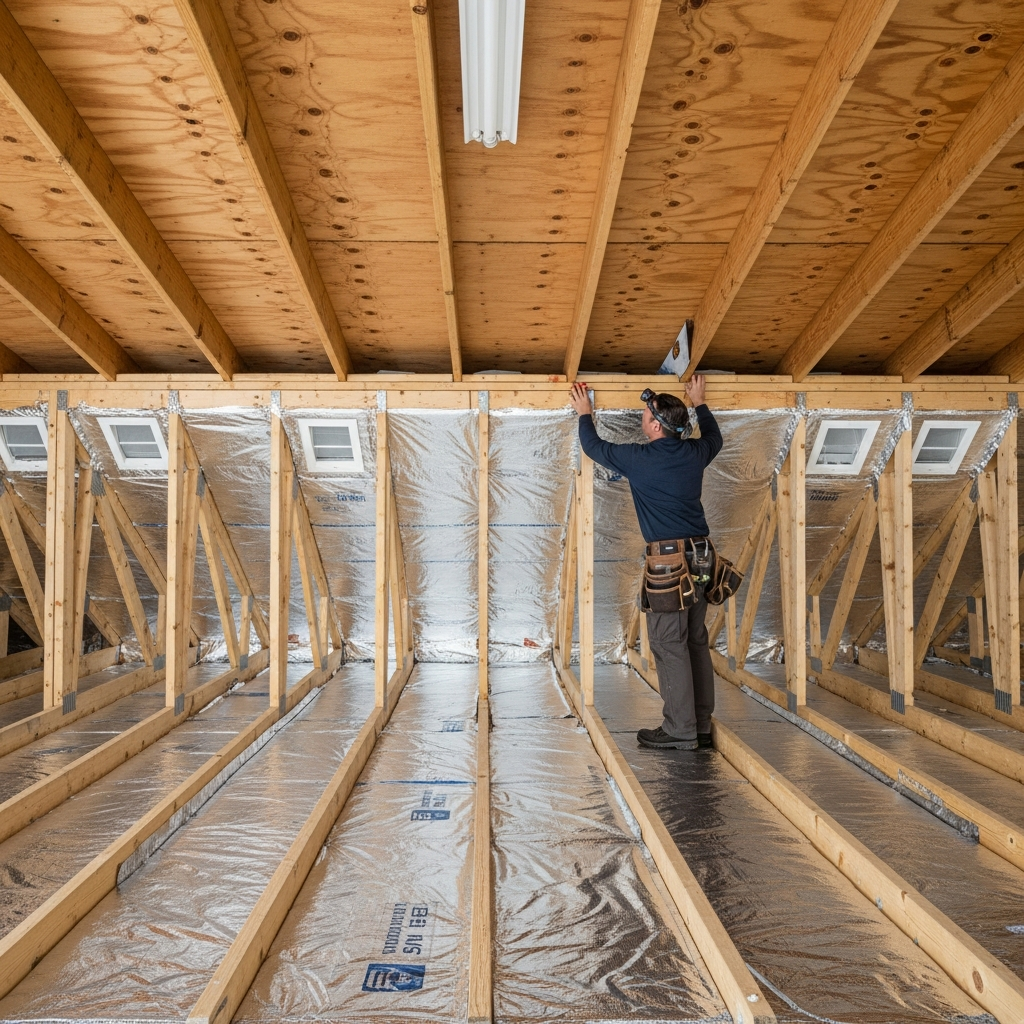
Cut Roof Heat at the Source With a Radiant Barrier
On clear Los Angeles afternoons, the sun loads enormous heat into the roof, and much of that energy becomes radiant heat inside the attic. Conventional insulation slows conductive and convective heat transfer, but radiant energy behaves differently—it moves in waves, warming surfaces it strikes. A radiant barrier addresses that mode directly by reflecting a significant portion of the sun’s energy before it can be absorbed and re-radiated into the home. Installed correctly, it works alongside attic insulation and ventilation to lower peak attic temperatures and soften those late-day heat pulses that make rooms feel stuffy right when you want to relax. When homeowners begin researching options, they often look for trusted local approaches to insulation installation that integrate radiant barriers with the rest of the attic system for smooth, reliable performance.
How Radiant Barriers Work
Radiant barriers are typically reflective surfaces—often aluminum foil laminated to a substrate—installed facing an air space. Their low emissivity reflects a large share of radiant energy rather than absorbing and re-emitting it as heat. In practical terms, this means less energy is transferred from the roof deck into the attic air and framing. The effect is most pronounced during sunny, hot conditions, which describes a big slice of our Los Angeles climate. When paired with a well-installed layer of attic insulation at the ceiling plane, the barrier reduces the attic’s role as a heat reservoir, so rooms below remain cooler for longer and air conditioners work under a lighter load.
Best Locations for Radiant Barriers
For most homes, the sweet spot is stapling a radiant barrier to the underside of the rafters, creating a continuous reflective surface while preserving ventilation channels from soffit to ridge. This approach maintains the required air gap and reflects heat before it engages the bulk of the attic space. In some cases, radiant barriers are integrated with roof decking during roofing projects, which can be an elegant solution when timed with a reroof. The critical point is to place the barrier where it can reflect radiant energy across an air space and to maintain that space over the life of the roof.
What Radiant Barriers Are Not
They are not a replacement for attic insulation at the ceiling. Insulation is still necessary to resist conductive and convective heat. A radiant barrier is one layer of a multi-layer strategy: reflect heat at the roof, ventilate the attic to sweep away what remains, and insulate the ceiling to block heat that still makes its way downward. Taking this system view is what transforms the performance of homes across LA’s varied neighborhoods, from sun-baked valleys to hillside enclaves.
Installation Details That Matter
Performance depends on details. The radiant surface must face an air space; if it is pressed against another material, its ability to reflect radiant energy is compromised. Seams should be overlapped and fastened cleanly, with care taken around ridges, hips, and valleys to avoid blocking airflow. Soffit vents require baffles to keep insulation out of the intake while ensuring the barrier does not constrict that passage. Around chimneys and flues, clearances and fire safety take top priority, and the barrier is held back as required by code. These thoughtful touches separate a high-performing installation from a cosmetic one.
Pairing With Insulation and Ventilation
The best results come from integrating three elements: a radiant barrier at the roof plane, balanced ventilation from soffit to ridge or gables, and a uniform insulation layer at the ceiling. In practice, this means starting with an attic assessment, addressing air leaks through the ceiling, protecting vents, and then installing the barrier with care. Afterward, insulation is adjusted or topped up to the target depth. This sequence manages radiant, convective, and conductive heat flows together, which is why homes feel markedly calmer during late-afternoon hours once the work is complete.
When a Radiant Barrier Makes the Biggest Difference
Homes with dark, sun-exposed roofs; west-facing roof planes; and limited shading benefit significantly. In neighborhoods where summer days run hot and clear, the attic can become a deep reservoir of heat that bleeds into the evening. Lowering the attic’s peak temperature with a radiant barrier reduces that reservoir effect, so bedrooms and living rooms stay more comfortable after sunset. It is a particularly compelling upgrade during reroof projects or as part of a comprehensive attic tune-up.
What You Will Notice After Installation
Most homeowners describe a tangible reduction in late-day heat drifting from the ceiling. The air feels less heavy, and rooms maintain a more even temperature between AC cycles. If your ductwork runs through the attic, it, too, benefits from the cooler environment, delivering colder air to the registers with less gain along the way. This system-wide effect is why a properly installed radiant barrier can feel like a quiet revolution in daily comfort.
Addressing Common Myths
Some worry that radiant barriers cause moisture problems. Installed with proper ventilation and clearances, they do not. Others think the material will degrade quickly; in fact, modern products are designed for the attic environment and maintain reflectivity for many years when kept clean and dry. There is also a misconception that radiant barriers make insulation unnecessary. They do not; rather, they complement it, tackling a different mode of heat transfer so the entire system performs better.
Installation Day: Clean, Safe, and Thorough
On installation day, crews protect access points, lay out materials to keep dust down, and work methodically from one rafter bay to the next. They verify airflow is preserved at soffits, maintain safety clearances at heat sources, and tape or staple seams as specified by the product manufacturer. If the attic has existing insulation that needs grooming or topping, that step follows, using depth markers for consistency. The result is a neatly detailed attic with clear intake and exhaust paths and a reflective plane that is continuous from edge to edge.
Choosing Materials and Partners
Not all radiant barriers are alike. Some are perforated to manage vapor; others are laminated to robust substrates that make installation easier in larger spans. A local installer will match the product to your attic geometry, ventilation plan, and any future roofing work. They will also coordinate with insulation upgrades to ensure the entire system is balanced. If you are comparing options, look for a provider who treats the attic as a whole and who can speak fluently about the interplay of reflection, resistance, and airflow. That integrated mindset separates average results from exceptional ones, and it is the ethos behind quality insulation installation across Los Angeles.
Frequently Asked Questions
Will a radiant barrier lower my attic temperature significantly?
In sunny conditions typical of Los Angeles, yes. A well-installed barrier can reduce peak attic temperatures compared to an attic without one, particularly on clear, hot days. The reduced heat translates into less radiant energy pressing down on the ceiling and a lighter load for your cooling system.
Do I still need attic insulation if I add a radiant barrier?
Absolutely. Insulation is essential for slowing conductive and convective heat transfer. The radiant barrier handles radiant energy at the roof plane, while insulation at the ceiling plane blocks what remains. Together, they form a complete strategy for year-round comfort.
Can a radiant barrier cause moisture problems?
Installed with appropriate ventilation and product selection—often using perforated barriers designed for attics—moisture issues are avoided. The key is preserving airflow from intake to exhaust and respecting code-required clearances around heat sources.
Is the radiant barrier visible from inside my home?
No. It is installed in the attic, typically on the underside of the rafters or integrated with roof decking, and is not visible from interior living spaces. What you will notice is a change in how the home feels during hot periods.
How long does installation take?
Most projects complete in a day, depending on attic size and complexity. If paired with insulation adjustments, the crew may spend additional time to ensure consistent coverage and protected ventilation paths. Good planning keeps the process efficient and tidy.
Will dust reduce the effectiveness of the barrier?
Over years, heavy dust accumulation can diminish reflectivity. In typical Los Angeles attics with proper ventilation, this is a slow process. Keeping the attic clean and dry, and avoiding disturbances that kick debris onto the surface, preserves performance.
When it is time to make your home feel cooler and calmer, consider a radiant barrier as part of a comprehensive attic plan. A short consultation, a careful assessment, and a well-executed installation can change your daily comfort in ways you notice every afternoon. To get started, connect with local specialists in insulation installation and enjoy a roof that finally works with you—reflecting heat away and letting your living spaces stay tranquil long after the sun sets.