
When you live in Los Angeles, you learn quickly that rodents are opportunists. They test every inch of a building for weakness, turning harmless-looking imperfections into doorways. The key to peace and quiet is not a single trap or product; it is the discipline of identifying and closing the specific openings that allow movement into and through the structure. The first time you hear a scurry overhead at 2 a.m., it can feel mysterious, but there is always a physical cause. Each successful proofing project is a map that connects signs—droppings, rub marks, gnaw marks, insulation trails—to real-world holes. If you are beginning this journey, it helps to study the fundamentals of rodent entry points so you can recognize patterns and understand the logic behind a professional sealing plan.
Los Angeles homes often share construction details that become predictable vulnerabilities. Open eaves on classic bungalows, oversized utility penetrations on remodels, and gable vents with wide louvers are frequent culprits. In hillside neighborhoods, terraced yards and fences create natural bridges to rooflines. In coastal areas, corrosion thins screens and deforms vent covers. In the Valley, high heat and sun exposure can warp plastics and dry out sealants, slowly enlarging hairline cracks into chewable edges. Identifying entry points is about seeing these patterns and then tracing how rodents turn them into a route from the yard to the attic, crawlspace, and living areas.
The Exterior Walk: From Grade to Roofline
A methodical walk-around is the foundation. Start at the ground. Where the wall meets the soil, look for small voids at the stem wall, gaps at siding terminations, or channels hidden under mulch. Even a neat planter can hide a tunnel. Follow utility lines: gas risers, electrical conduits, AC lines, hose bibbs, and cable entries. Each should be sealed with a combination of metal mesh and a durable, UV-stable sealant. Pure foam is a short-term patch at best and is easily chewed. Dryer and bath vents require rigid covers with fine screens that preserve airflow. Louvers that rattle in the breeze are not just noisy; they are telling you the joint is loose.
Move up to windows and doors. Trim intersections often form tight but consistent gaps. Rodents learn to nibble at the same points where paint flakes and caulk pulls back. Door sweeps and garage seals that have hardened or cracked can leave clean quarter-inch lines of daylight. Those lines are essentially welcome signs for small rodents. At the roof-wall junction, check where flashing laps over stucco or siding. Tiny gaps here repeat at predictable intervals along step flashing and under the first course of tile or shingles.
Inside the Envelope: Attics and Crawlspaces
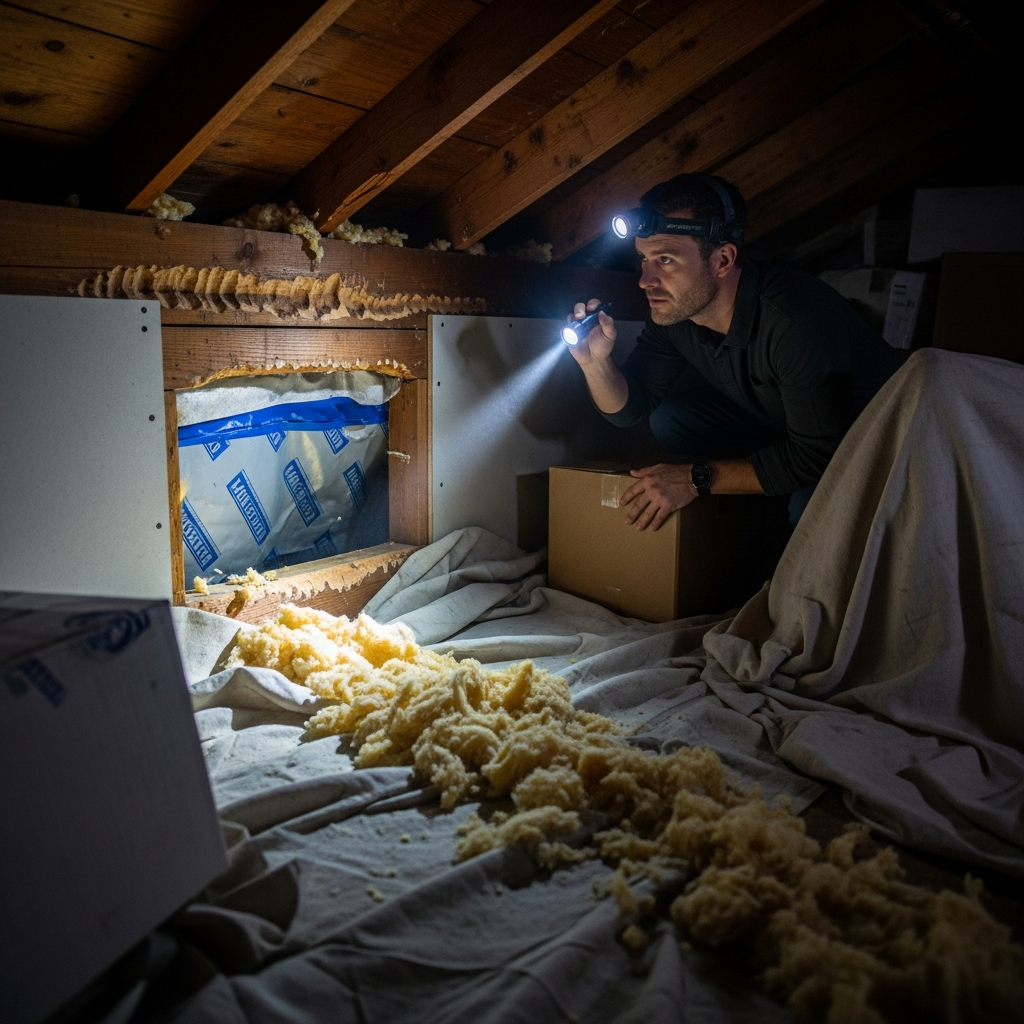
Once inside, the job is to read the story told by dust, insulation, and marks on framing. In attics, insulation trails form highways that point directly to active routes. Shine a light across the surface to see disturbed patterns. Around the perimeter, look for daylight leaking through eaves or roof transitions. In crawlspaces, examine the sill and rim joist for gnaw marks, then follow plumbing and electrical lines as they rise through the floor. Utilities often pass through oversized holes that were never sealed after installation. These become the main streets of rodent travel, linking voids behind walls to kitchens, baths, and laundry rooms.
To confirm where movement is occurring, professionals correlate what they see with what you hear. If scratching is loudest near a particular room, they trace from that point out to the nearest structural transition. The aim is to document a chain of connected openings from exterior to interior so that sealing stops movement comprehensively rather than in isolated patches.
Species Matters: Small Openings Versus Structural Gaps
Different rodents exploit different types of openings. Smaller mice can pass through gaps you might dismiss, while larger rats test corners, roof edges, and chewable materials such as foam. This difference informs material choices. Tight mesh and carefully backed sealants close smaller holes, while sheet-metal flashing, stainless screens, and reinforced vent covers handle heavier pressure points. Understanding species behavior ensures time and materials are spent where they will be most effective.
Regardless of species, rodents value consistency. They revisit the same points night after night, gnawing a little farther each time. That is why a comprehensive plan that addresses all connected openings at once outperforms a piecemeal approach. When the chain is broken at several links, rodents abandon the route and the structure calms.
Commonly Overlooked Holes
Some of the most persistent entry points are also the easiest to miss. The gap where a garage door seal meets a cracked driveway lip can open a route into the wall behind the water heater closet. The narrow space under siding where a hose bibb emerges may appear tight but leaves a chewable edge. Gable vents might look screened but hide torn mesh just inside the louvers. Under sinks, a pipe sleeve may be generous enough to pass a thumb, which means it is generous enough for a small rodent. The return plenum of older HVAC systems sometimes connects freely with wall cavities, creating a hidden highway to the attic. In each of these cases, tailored metal barriers and sealed joints transform vulnerable edges into quiet, stable parts of the building envelope.
Techniques That Stand the Test of Time
Durable sealing relies on mechanical barriers plus weather-stable sealants. For round penetrations, metal mesh should be packed neatly so it grips the pipe without sharp protrusions, then sealed with a compatible exterior product. Around vents, rigid covers backed by stainless or galvanized mesh maintain airflow while closing pest-sized openings. At roof edges, hemmed flashing tied into existing roof components prevents prying. Foam, if used, belongs out of reach and only as backing, never as the outer barrier. The finished result should appear tidy and integrated, encouraging future trades to respect rather than disturb it.
Verification is as important as installation. After sealing, quiet nights and dust patterns that stop spreading are strong indicators of success. A short, targeted follow-up visit focused on previously active zones confirms that openings were addressed thoroughly. This feedback loop prevents weeks of second-guessing and helps everyone trust the outcome.
When to Call a Professional
DIY enthusiasm can go a long way for landscape adjustments or basic housekeeping, but climbing onto steep roofs, accessing tight crawlspaces, and balancing exclusion with ventilation is specialized work. Professionals bring ladders, safety gear, cut-to-fit metals, and the experience to spot structural patterns quickly. They also understand Los Angeles-specific construction quirks and how to preserve features like stucco weep screeds and attic ventilation while excluding pests. If you have tried patching the same spot more than once or hear activity in multiple zones, a professional inspection is the next right step.
Midway through your learning process, it can be helpful to review authoritative guidance on durable rodent proofing so you can evaluate whether your plan covers every link in the chain. A holistic approach keeps you from chasing noises one by one and replaces uncertainty with a systematic path to quiet.
FAQ: Entry Points and Holes in Los Angeles Homes
How small can an opening be and still allow rodents through?
Smaller rodents can exploit surprisingly small gaps, which is why hairline cracks at predictable joints deserve attention. The safest route is to seal any opening that admits light, air, or a fingertip, using materials matched to the location and expected pressure.
Do I need to seal both outside and inside?
Yes. Exterior sealing prevents new arrivals, while interior sealing stops movement between voids. Addressing both ensures that animals already inside cannot reach living areas and that new ones cannot enter from the outside.
Will sealing affect my home’s ventilation?
Properly executed proofing preserves designed airflow. Vents are screened, not blocked, and weep paths are protected, not filled. The result is a healthier building envelope with fewer pests and maintained moisture control.
What if the noises continue after I seal a few holes?
Persistent noise suggests that additional connected openings remain unaddressed. A systematic inspection will identify the full pathway. Sealing works best when all links in the chain are closed within a short time window.
Is expanding foam a good solution?
Foam has limited, specific uses as backing material. It should not be the exposed barrier because rodents chew it easily and sun degrades it quickly. Metal barriers paired with quality sealants provide lasting results.
How often should I reinspect?
Seasonal checks after wind or rain events are wise. A quick walk around utility penetrations, vents, and roof-wall transitions helps catch small issues before they become active entry points again.
If you are ready to trade late-night scratching for true quiet, partner with a local team that takes a map-based approach to sealing, verifies results, and respects the way Los Angeles homes are built. For a dependable starting point and a thoughtful plan tailored to your structure, reach out to specialists in professional rodent proofing and enjoy a calmer, cleaner home.