
If you own a home in Los Angeles, you already know that our region’s climate and housing stock create a unique relationship with indoor comfort. We have bungalows from the early twentieth century, mid-century ranches tucked along canyons, and sleek infill homes near rail lines and revitalized corridors. In all of these structures, the ductwork quietly determines whether rooms feel even, fresh, and calm—or stuffy and inconsistent. When homeowners ask about home air duct replacement cost in Los Angeles, what they really want to understand is what drives the investment, how to plan it wisely, and how to make decisions that will hold up across our hot, dry summers and occasionally smoky fall days. As a local who has walked more attics and crawlspaces than I care to count, I’ll break down the nuances so you can approach air duct replacement with clarity and confidence.
Let’s start with a simple truth: cost is not a single number so much as the result of dozens of little choices and site realities. One home’s ducts may be sprawled through a flat, open attic with generous access and modern framing. Another might snake through tight knee walls, past plaster, around vintage chimney chases, with minimal clearance and brittle insulation. The project you choose—full replacement, partial swap, reroute, or restructure—interacts with those conditions in ways that determine how long the job will take, how many hands it requires, and how carefully each run must be sized and suspended to meet California energy codes.
What truly shapes the cost in Los Angeles homes
Square footage is the first lever most people think about, but it’s only part of the picture. A compact 1,400-square-foot bungalow with a maze of additions can demand far more craftsmanship than a straightforward 2,000-square-foot ranch. Layout complexity matters more than raw size. Long runs to distant rooms, cathedral ceilings, and split-level designs add friction to a project plan. Each turn, transition, and branch is a chance to either lose efficiency or get it right with measured fittings and airtight connections.
Material choice is another driver. In Los Angeles, you’ll see a mix of insulated flex duct, sheet metal trunk-and-branch systems, and, in some commercial-leaning residences, sections of rigid ductboard. Flex provides speed and versatility when routed correctly, but it must be sized and supported meticulously to avoid kinks and compression. Sheet metal takes more time to fabricate and fit, yet can deliver a robust backbone with stable airflow when paired with sealed joints and proper insulation. The project’s objective—quiet delivery, exceptional durability, or maximum efficiency—guides that material decision, and it’s a decision with cost implications.
Accessibility can’t be overstated. Our region’s crawlspaces vary wildly: some are generous and dry, others are barely sixteen inches from soil to joist and laced with legacy wiring. Attics can be similar: roomy with raised platforms in newer construction, or low, dusty, and filled with the surprises that decades of owners have tucked away. When installers have room to move, to protect the duct from pinch points, and to hang lines at a steady pitch, the process flows quickly. When access is constrained, every connection takes longer, and the attention to safety becomes its own discipline.
Return air matters as much as supply. Many older LA homes rely on a single central return, which can starve the system and create noisy, high-velocity grilles. Expanding returns—by increasing grille area or adding strategic return paths—can transform comfort. This can involve new pathways through walls or hallways, careful sealing of platforms, and a thoughtful balance between noise control and airflow. These adjustments often add scope but pay back in performance.
Then there’s the issue of insulation and sealing. Los Angeles homes must meet state energy standards that prioritize containment of conditioned air. That means mastic sealing on every joint, UL-listed tapes where appropriate, and insulation with the right R-value for the attic or crawlspace. Precision here doesn’t just meet a checklist; it keeps cooled air from being wasted on hot afternoon runs down a hallway.
The scope defines the spend
Most homeowners hear “replacement” and picture a one-to-one swap: old duct out, new duct in. In practice, responsible replacements usually improve layout. That might mean resizing a trunk, reshaping a plenum to reduce turbulence, or shifting a few runs to eliminate unnecessary bends. It could involve new boots and registers to reduce whistle and promote better throw across a room. These upgrades change the character of the home’s airflow, and while they add time to a project, they often do more for comfort than the new material alone.
Repair versus full replacement is a real conversation in Los Angeles. If large sections are brittle, contaminated, or undersized, patching becomes false economy. On the other hand, if most of the network is sound and a few critical runs are causing pressure issues, strategic replacements can stabilize the system without tearing into every corner. The right contractor will test, measure, and propose a scope that reflects actual conditions rather than a one-size-fits-all playbook.
Commissioning is another component that influences both outcome and cost. Static pressure measurements, temperature splits, and airflow readings at key registers ensure the new duct system behaves as designed. Balancing dampers set during commissioning help distribute air to the rooms that need it most, especially in homes where sun exposure varies dramatically from front to back or across multiple floors. Skipping these steps is like tuning a guitar without checking the strings: you might finish the job, but the song won’t sound right.
The Los Angeles factor
Local codes and inspectors expect duct systems to meet specific leakage thresholds and insulation standards. Neighborhoods with historic overlays or HOAs may have their own guidelines for exterior vents or rooftop penetrations. In hillside homes, seismic bracing and proper strapping for equipment and ducts are more than a box to check—they protect both the mechanical system and the structure. Coordinating these details requires a crew that understands LA’s patchwork of jurisdictions and the realities of working in canyons, flats, and beachside communities.
Wildfire smoke and Santa Ana winds are seasonal challenges that factor into replacement thinking. When smoke pushes into the basin, leaky ducts can draw contaminated air from attics or crawlspaces and spread it throughout the home. A well-sealed, well-insulated system, paired with thoughtful filtration, becomes a shield during those weeks. It’s not glamorous, but it is peace of mind, especially for households with sensitive lungs.
Climate and microclimates shape use patterns. Coastal neighborhoods often battle corrosion and cool marine layers, while inland valleys face intense summer heat with long evening run times. A design that thrives in Sherman Oaks may not be optimal in Mar Vista without tweaks to grille placement, return sizing, and insulation strategy. The goal is consistency: rooms that feel similar regardless of exposure, time of day, or season.
What to expect during a professional assessment
A thorough site visit starts with a conversation. How does the home feel at different times? Which rooms lag behind? Are there seasonal drafts or certain hours when the system roars? From there, a trained eye examines the equipment location, existing duct layout, and physical access. In attics, we look for crushed or sagging lines, long unsupported spans, and joints that were taped but never sealed. In crawlspaces, we check for contact with soil, insulation gaps, and signs of moisture or pests that might compromise new materials over time.
Measurements power the design. Square footage helps, but Manual D principles rely on room-by-room load considerations and the friction rate of the duct system. We take grille sizes, lengths, and proposed paths, then translate those into runs that deliver the right CFM without excessive static pressure. A good assessment results in a narrative: what’s wrong, what’s proposed, and why those changes align with both physics and the way you actually live in the space.
Expect photos and, ideally, a simple schematic along with your proposal. Visuals make it easier to compare approaches and to understand where the crew will work and how the house will be protected. If a contractor includes commissioning steps and post-install testing, that’s a sign they intend to leave you with a system they’ve verified. In the middle of this process, many homeowners find it helpful to research local providers and techniques; if you’re doing that now, focus on firms that speak clearly about duct design fundamentals and the long-term value of well-executed air duct replacement.
Value beyond the invoice
It’s tempting to view duct replacement only through the lens of energy use, but comfort is the daily dividend most homeowners feel. Balanced airflow can calm hot spots, soften noise at grilles, and make bedrooms sleep-friendly even during warm nights. Improved returns reduce the hard whoosh of air and stabilize pressures throughout the home, which in turn helps doors stop slamming and dust settle less aggressively.
Indoor air quality often improves as well. Sealed ducts reduce infiltration of attic particles and crawlspace odors. With proper filter selection and placement, the system can capture more particulates during smoky periods or high-pollen days. Many homeowners report fewer allergy flare-ups and a sense that rooms “smell like nothing,” which is exactly what you want.
Over the long haul, a stable duct system protects your equipment. When static pressure stays within manufacturer specifications, fans don’t overwork, heat exchangers and coils see less strain, and the whole system runs closer to its intended sweet spot. That can mean fewer unexpected breakdowns and a longer lifespan for major components, which matters when you think beyond this season to the next decade.
Common pitfalls and how to avoid them
Beware of phone-only quotes. Without eyes in your attic or crawl, it’s impossible to gauge access challenges, existing damage, or the scope of improvements that will bring your home up to par. Fast, low-commitment estimates often lead to change orders once crews encounter reality. Better to invest in a proper assessment and a transparent plan than to chase a number that shifts midstream.
Another mistake is focusing solely on supply lines while neglecting returns. Homes breathe, and the return side of a system is the lungs. Undersized or poorly located returns create noise, lower efficiency, and persistent comfort issues. A holistic project addresses both sides, even if it means a bit more drywall work or grille changes to get the geometry right.
Finally, don’t assume that replacing in-kind will fix temperature differences. If a bedroom has always lagged, simply swapping ducts may not change the underlying math. Thoughtful redesign—sometimes subtle—makes the difference: a boot change to improve throw, a damper tweak to rebalance, or a redesigned trunk to reduce turbulence at a critical junction.
Timeline and the day-of experience
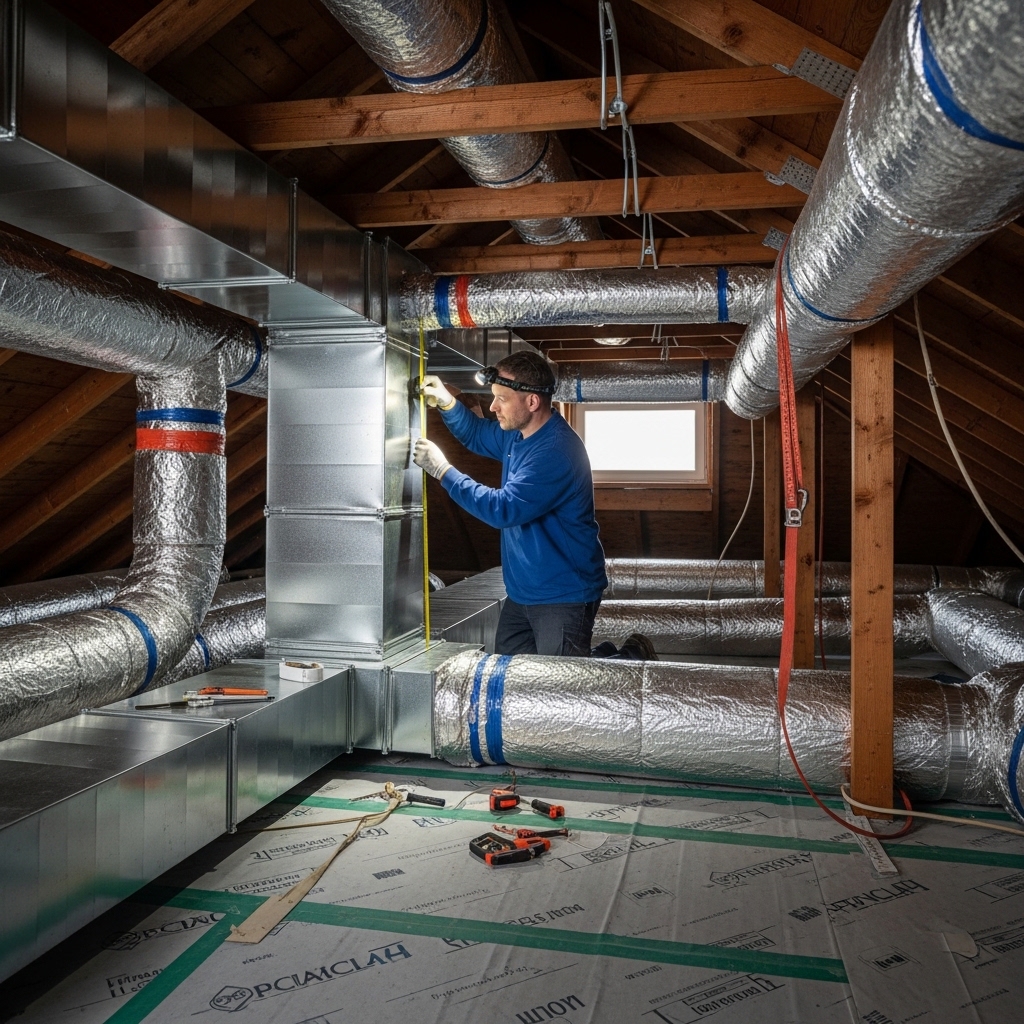
Home duct replacement is a construction project, but it doesn’t have to feel like chaos. Crews should protect floors, isolate work areas, and maintain clear walkways. In attics, installers often build temporary platforms to work safely and avoid compressing insulation. In crawlspaces, they’ll use proper lighting, PPE, and careful routing so the new lines stay off the ground and clear of future plumbing or electrical work. Expect periodic updates throughout the day and a walkthrough at milestones so you can see progress.
After installation, commissioning ties a bow on the work. Technicians measure static pressure, verify airflow at representative registers, and adjust dampers to dial in rooms that need a touch more or less air. They’ll review maintenance basics, like how to check for a slipped strap or a damaged line after a future attic project, and they’ll leave you with documentation you can reference if you ever upgrade your equipment.
FAQ: Home Air Duct Replacement in Los Angeles
How do I know my ducts truly need replacement?
Persistent comfort issues, damaged or brittle insulation, visible air leaks at joints, excessive dust despite good filtration, and ducts that are undersized or poorly routed are common red flags. A professional assessment with photos and measurements will separate cosmetic aging from problems that warrant replacement.
Can I replace only part of my duct system?
Yes. If testing shows that certain runs or components are the weak links, a targeted approach can be effective. The key is to ensure the partial upgrade does not trap the system with pressure or airflow imbalances. A good plan ties new sections into the existing network thoughtfully.
Will new ducts make my home quieter?
Often, yes. Proper sizing, smoother fittings, balanced returns, and secure mounting reduce turbulence and vibration. Many homeowners notice quieter operation at grilles and less rumble through walls and floors.
Do I need permits in Los Angeles for duct replacement?
Most jurisdictions in LA County require permits when ducts are replaced or significantly altered. This helps ensure leakage limits, insulation standards, and safety requirements are met. A reputable contractor will handle the permitting and inspections process.
What materials are best for our climate?
It depends on your goals and home layout. Properly supported and sealed flex is efficient and quiet in many applications. Sheet metal trunks with flex branches can deliver excellent performance where long straight runs are possible. The priority is correct sizing, airtight installation, and adequate insulation.
How long does a typical project take?
Most single-family homes are completed over a few days, depending on access, scope, and the extent of redesign. Larger or more complex layouts can take longer. The crew should give you a clear plan for each day’s activities.
Will replacing ducts help during wildfire smoke events?
Yes. Tight, sealed ducts reduce the chance of drawing contaminated air from attics or crawlspaces. When paired with the right filtration and system settings, you’ll notice cleaner indoor air during smoky periods.
Can I stay home during the work?
In most cases, yes. Expect some noise and occasional power tool use, but crews can coordinate with you to minimize disruptions and keep areas tidy.
If you’re ready to make your home more comfortable, efficient, and resilient season after season, choose a team that treats design and commissioning with the respect they deserve. Reach out today to discuss your project, schedule a thorough assessment, and take the first step toward a calmer, cleaner home with expert air duct replacement. Your future self—breathing easy during the next heat wave—will thank you.