
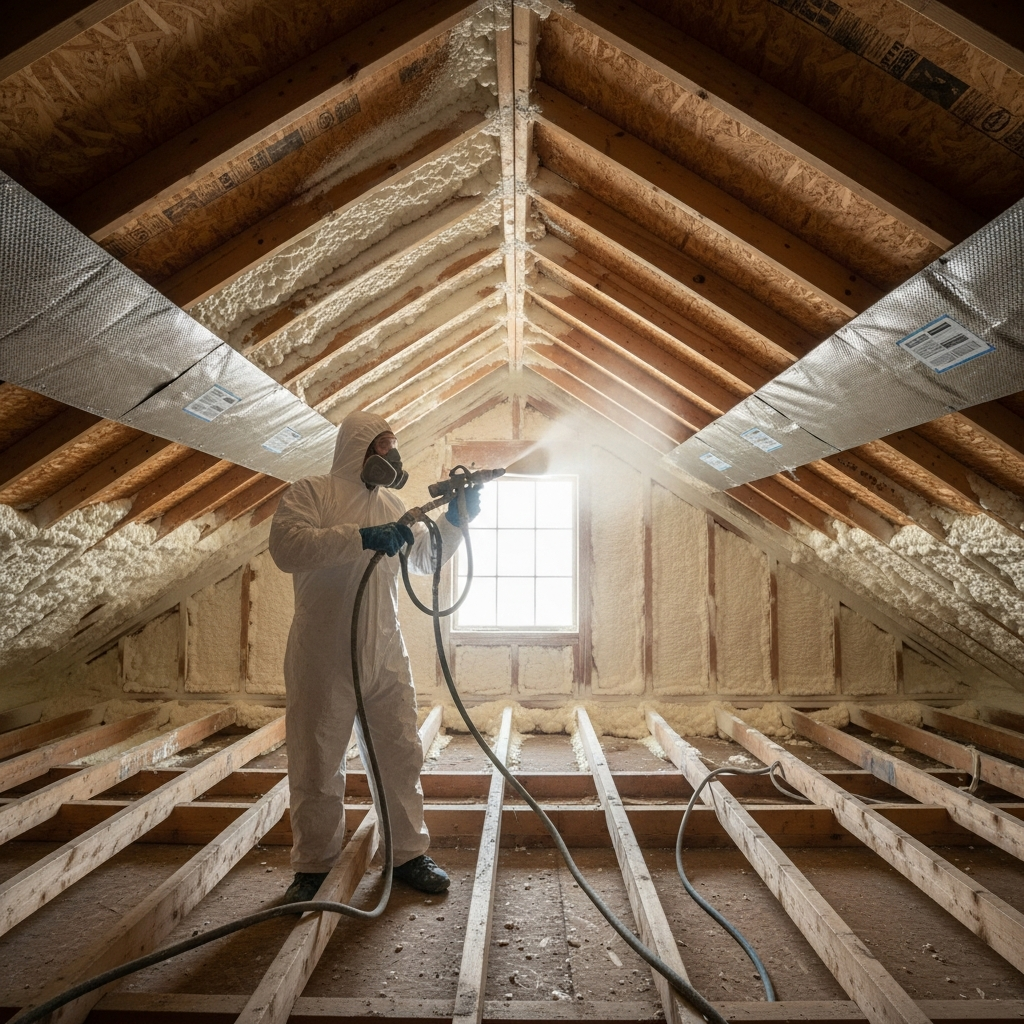
ADUs—those versatile backyard homes turning garages and side yards into creative, livable spaces—are reshaping Los Angeles neighborhoods from Mar Vista to Eagle Rock. Whether you envision a quiet office, a guest suite for visiting family, or a rental to help with household expenses, the comfort and performance of a small dwelling depend heavily on smart insulation. Spray foam, when planned and installed with care, can be an excellent fit for tight floor plans and complex rooflines common to ADUs. Before you commit, it’s wise to revisit the fundamentals of insulation installation so you can weigh where spray foam shines and how it should be integrated with the rest of the building system.
Los Angeles ADUs come in many forms: detached new builds tucked behind bungalows, garage conversions along alleys, and second-story additions above existing structures. Each type brings unique constraints. Conversions often inherit irregular framing, low headroom, and existing slab or foundation conditions; new builds may feature vaulted ceilings, engineered trusses, and modern glazing. Spray foam’s ability to air-seal while insulating can simplify assemblies in these tight quarters, giving designers more flexibility with ceiling heights, mechanical chases, and storage lofts.
Why Spray Foam Appeals to ADU Projects
Spray foam’s defining advantage is its combination of insulation and air sealing in one application. In small dwellings, air leakage can be a large fraction of total energy loss, and occupants feel drafts more acutely. By creating a continuous air barrier, spray foam helps keep temperatures steady, reduces outdoor noise, and limits the dust and pollutants that can ride air currents. This benefit is especially noticeable in neighborhoods close to busy commercial corridors or near flight paths, where a calm interior transforms the ADU into a truly livable retreat.
Open-cell and closed-cell foams serve different roles. Open-cell expands generously, filling irregular cavities and contributing to sound absorption, an asset for ADUs near activity. Closed-cell brings higher rigidity and moisture resistance in thinner layers, which can be valuable at rim joists, below-grade portions, or in assemblies where additional structural stiffness is welcome. Many ADUs blend the two—closed-cell for targeted areas that need moisture control or added stiffness, open-cell for walls and rooflines where depth is available.
Designing ADU Envelopes for Los Angeles Microclimates
From the Westside’s marine layer to the Valley’s intense sun, microclimates across LA shape how an ADU envelope performs. Vaulted ceilings under low-slope roofs, common in modern designs, benefit from foam’s ability to maintain ventilation paths or, where appropriate, to create a well-detailed unvented assembly. Coastal ADUs must maintain drying potential, while inland builds work to limit radiant heat gain and hold onto coolness during late afternoons. Spray foam gives designers options in these contexts, allowing careful control of air movement and enabling thinner assemblies that preserve precious interior volume.
If your ADU shares a wall or sits above a garage, vibration and sound can transmit easily through framing. In these cases, a combination of foam air sealing and strategic layers for mass and decoupling can produce a quiet, resilient enclosure. The small scale of ADUs means every assembly does multiple jobs: control temperature, limit noise, manage moisture, and protect finishes. Foam can be a strong anchor in that multifaceted strategy.
Managing Moisture, Ventilation, and Indoor Air Quality
Small spaces amplify the importance of moisture management and fresh air. While foam reduces uncontrolled airflow, it also means mechanical ventilation should be thoughtfully designed. Bath fans that exhaust directly outdoors, kitchen ventilation that actually clears cooking byproducts, and, where needed, balanced ventilation strategies keep the interior fresh. This is as true in a beach-adjacent ADU as it is in the canyons, where evening humidity can linger. Good design preserves the advantages of foam while maintaining a healthy indoor environment.
Moisture considerations differ between open-cell and closed-cell applications. Closed-cell’s lower vapor permeability can be an asset in specific locations, but assemblies must be planned to avoid trapping moisture. Open-cell, being more vapor-open, can support drying when paired with appropriate interior finishes. A team familiar with LA’s climate will guide the choice based on wall and roof build-ups, ensuring the ADU remains durable and comfortable through seasonal swings.
Installation Nuances in Tight Quarters
ADU job sites are often constrained. Narrow side yards, shared driveways, and limited staging areas require coordination with neighbors and a tidy workflow. Inside the unit, installers need full access to cavities before drywall. Foam expands and adheres quickly, so protective measures for windows, doors, and fixtures are essential. Experienced crews stage the work so that foam thickness is controlled, electrical boxes remain accessible, and ventilation chutes or baffles are preserved where required.
Because spray foam creates a sealed assembly, it’s important to consider how the ADU will be conditioned. Right-sized HVAC, including ducted mini-splits or well-placed ductless heads, complements the tighter envelope. The synergy between airtight insulation and modern HVAC is where small spaces shine: quicker temperature recovery, quieter operation, and steady comfort from morning marine layers to late-night Santa Ana winds.
Integrating Foam with Other Materials
Few ADUs use foam alone. It often pairs with batt insulation in secondary cavities, rigid foam on the exterior for thermal continuity, or dense-pack cellulose in interior partitions to enhance sound control. The goal is a balanced assembly where each layer has a job and no component works at cross-purposes. For a garage conversion, for example, closed-cell at the slab edge and rim joists can manage moisture and stiffen the assembly, while open-cell in the vaulted lid brings acoustic and thermal stability. Interior partitions can be filled with mineral wool or cellulose to keep bedrooms or offices hushed.
Windows and doors deserve equal attention. Even the best insulated walls are undermined by leaky or thin fenestration. Thoughtful selection of frames, glass packages, and proper flashing ensures the envelope acts as a team. The finished ADU feels composed: quiet, even in temperature, and free of the hot and cold spots that plague many small dwellings.
Fire, Safety, and Finish Readiness
In foam-insulated assemblies, ignition or thermal barriers are a key part of the plan. Depending on the location within the ADU, foam must be protected with appropriate coverings, often standard gypsum board, to meet safety requirements. Installers coordinate with builders to ensure that foam thickness, cure times, and ventilation during application align with best practices. The result is a space that’s ready for finishes without surprises—no bulging drywall, no inaccessible boxes, and no compromised ventilation paths.
Homeowners sometimes worry about odors or off-gassing. Reputable installers manage site conditions, mixing, and cure periods so that by the time finishes go up, the ADU is comfortable to occupy. Good communication about scheduling and ventilation during application eases concerns and keeps the project on track.
From Design Intent to Everyday Comfort
When the foam goes in, you’re close to the moment that turns drawings into a home. The difference is immediate: rooms hold their temperature, street noise fades, and cooking aromas don’t linger the way they might in a leaky structure. Because ADUs are compact, these gains are especially noticeable. You’ll feel the steady calm during a heat wave and the gentle warmth on cool mornings. Guests sleep better, and if you use the ADU as an office, calls and video sessions are clearer and more private.
FAQ
Is spray foam always the best choice for an ADU? Not always. Foam is powerful for air sealing and space-constrained assemblies, but some projects benefit from hybrid approaches that combine foam with batts, cellulose, or exterior rigid insulation. The right mix depends on the ADU’s design, location, and performance goals.
What’s the difference between open-cell and closed-cell foam in practice? Open-cell expands more and offers sound absorption with a softer feel, suitable for many walls and rooflines. Closed-cell is denser, adds rigidity, and resists moisture better in thin layers, making it useful at rim joists, below-grade areas, or where structural stiffness is beneficial.
How do I ensure good indoor air quality with a tightly sealed ADU? Plan for effective mechanical ventilation. Exhaust fans that vent outside, kitchen hoods that actually capture cooking byproducts, and, where appropriate, balanced ventilation help maintain freshness without giving up the benefits of a sealed envelope.
Will spray foam reduce outside noise? Foam’s air sealing reduces paths for sound, and open-cell in particular adds acoustic absorption. For the quietest results, pair foam with good windows, solid doors, and attention to flanking paths.
What should I expect on installation day? Crews protect surfaces, mask windows and doors, and stage work so foam thickness is controlled and cavities remain accessible for inspections. After curing and trimming, the space is ready for drywall and finishes.
If you’re planning an ADU in Los Angeles and want it to feel like a true extension of your home—comfortable, quiet, and resilient—bring spray foam into the conversation early. Walk the site with a local pro, discuss microclimate factors, and map out how foam integrates with HVAC, windows, and finishes. When you’re ready to explore qualified insulation installation, schedule a consultation and set your project on a path to everyday comfort that belies the ADU’s compact size.