
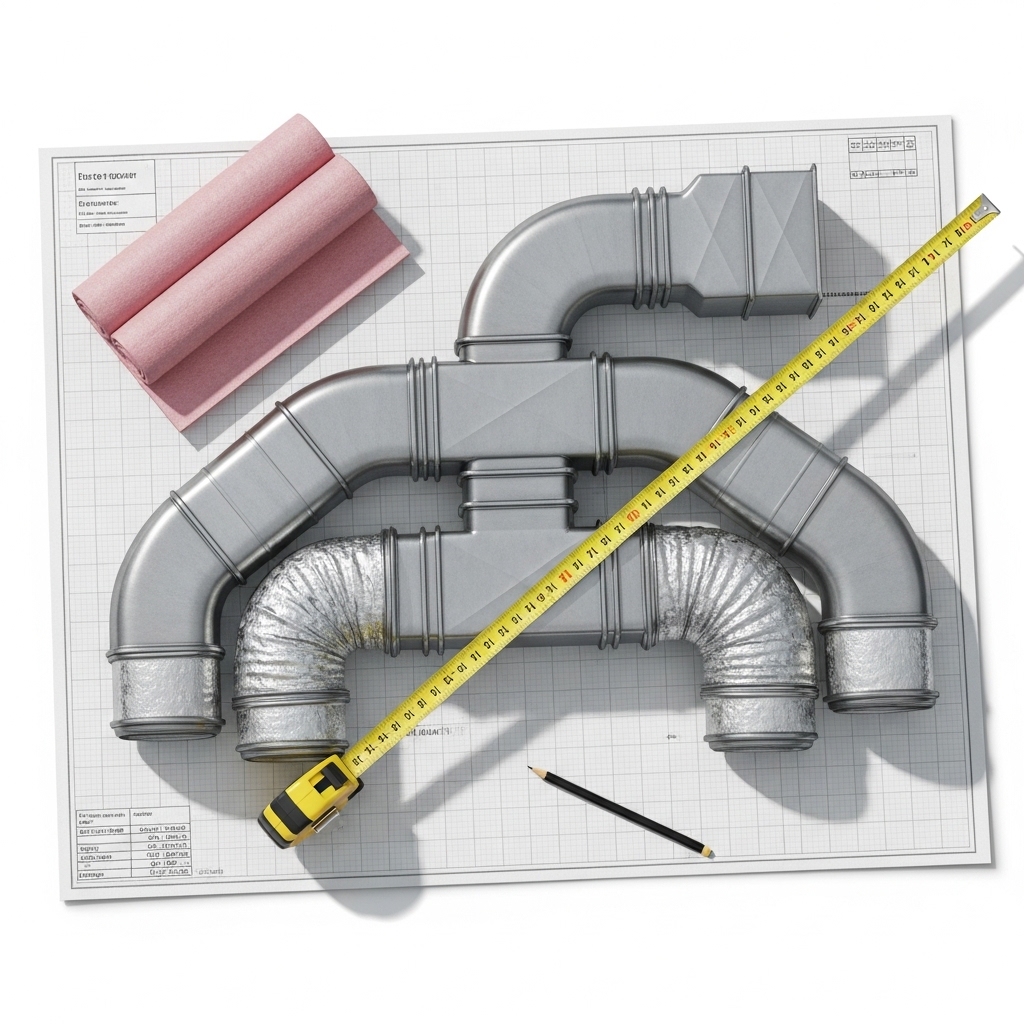
Every week, a homeowner asks me for the air duct replacement cost per foot in Los Angeles, and I understand why. A single figure per linear foot sounds like an easy way to compare bids and forecast a budget. The truth is, though, that ducts aren’t lumber. They’re a network that breathes, and a foot of duct in one home can’t be compared directly to a foot of duct in another. When you factor in fittings, transitions, returns, balancing, and the realities of working in LA attics and crawlspaces, that neat “per-foot” number unravels into a more nuanced picture. If you’re trying to make sense of the investment, the most productive path is to understand what each foot must do, not merely how many feet you have. With that perspective, you can approach air duct replacement with confidence and ask smarter questions of the teams you interview.
Start with the anatomy of a duct system. Feet of straight run are only part of the story. Fittings—like wyes, elbows, reducers, and boots—shape air as it moves. Each piece introduces resistance. A smooth, short run with one gentle wye may outperform a longer run with multiple sharp turns and undersized transitions, even if both serve the same room. When a contractor quotes a per-foot number without accounting for fittings and design, they’re pricing the least informative piece of the puzzle.
Effective length versus tape measure length
Engineers use the concept of “equivalent length” to describe how fittings add resistance to airflow. A short run with two tight elbows can behave like a much longer straight line, and that behavior drives static pressure and the need for careful sizing. In practical terms, the system’s performance is determined not just by how far air travels, but how artfully it’s routed. This is why two houses of similar size with similar total feet of duct can feel profoundly different once the system is running.
Returns complicate the per-foot idea even more. Many Los Angeles homes rely on a single central return that starves the system. Expanding return pathways may require new wall or ceiling routes, larger grilles, or a new platform. That work adds little in terms of “feet,” yet transforms the system’s function. You could tally every inch and miss the very element that makes the house finally feel evenly conditioned.
The Los Angeles context
Our climate and construction styles make duct design a local sport. Coastal homes often have lower attic clearances due to rooflines and vintage framing, which means careful routing and supports to avoid compressing insulation. Valley homes face intense summer heat, raising the stakes on insulation quality and airtight sealing. Hillside structures bring access challenges that turn simple replacements into puzzles worthy of a weekend carpenter’s envy. All of these realities affect labor, materials, and the finesse required—none of which are captured by a single per-foot figure.
Building codes play their part, too. California standards require ducts to be insulated and sealed to specific leakage limits. Meeting those thresholds demands mastic on joints, UL-listed tapes where appropriate, and testing protocols that a good crew follows without cutting corners. Per-foot numbers rarely account for the time and materials devoted to sealing and verification, yet these steps are what keep conditioned air inside the system and out of the attic or crawlspace.
What a real-world scope includes
Beyond replacing runs, a well-planned project often reshapes the plenum to reduce turbulence, selects boots and grilles for reduced noise, and adds balancing dampers to tune rooms that run hot or cold. It considers throw patterns for wall versus ceiling diffusers, the need for return expansion, and the subtle ways a home’s sun exposure changes load from front to back. None of that reads on a tape measure. All of it influences how many hours a crew spends and how carefully they assemble each connection.
Material decisions also shift the calculus. Properly supported, well-sized flex can be quiet and efficient across winding paths. Sheet metal trunks add rigidity and stability, especially for long, straight sections. A hybrid approach is common: metal where strength and straightness matter, flex for branches where curves can be gentle and controlled. Different paths, same goal—get the air where it needs to be without noise, waste, or stress on the equipment.
Why commissioning should be part of the conversation
Commissioning is the moment when design becomes reality. After installation, the crew measures static pressure, checks airflow at representative registers, and tunes dampers to ensure rooms receive their intended share. These steps reveal if a run needs adjustment or if a return is underperforming. A per-foot quote often omits this phase, but without it, you’re relying on guesswork. Commissioning doesn’t just validate the workmanship—it gives you a baseline for future maintenance and upgrades.
In Los Angeles, commissioning takes on special importance because many homes carry the legacy of past renovations. Additions, partial remodels, and moved walls can create weird zones and uneven loads. Testing lets the crew solve those quirks instead of baking them into a brand-new system. It also informs you if further improvements—like better attic insulation or strategic shading—would magnify the benefit of your duct upgrade.
How to make sense of proposals
When you read a proposal, look for a story. A strong plan explains what’s wrong, what will change, and why those changes matter. It calls out returns, plenum design, balancing, and sealing practices. It names materials and insulation levels, and it includes commissioning. If a contractor offers a single per-foot number without that supporting detail, you’re being asked to buy a commodity rather than a solution. Your home deserves better than that.
Ask for photos, measurements, and a simple diagram. When you can see the current state and the proposed future, you can compare bids apples-to-apples. One plan might include a redesigned return and a reshaped plenum, while another simply swaps lines in kind. Even if the second plan is shorter or uses fewer feet, it could leave you with the same old problems.
Comfort, noise, and indoor air quality: the real returns
While energy use matters, comfort is the daily outcome you feel. Balanced airflow means fewer hot and cold spots and grilles that whisper instead of hiss. Expanding and relocating returns reduces door slams and stabilizes room pressures. Airtight ducts keep attic dust and crawlspace odors out of the living space, which is especially helpful during wildfire smoke events when outdoor air quality dips.
Quiet is a gift. Good boots, correct grille sizes, and smooth transitions can reduce the mechanical presence of your system to a low, steady background. That makes living rooms more pleasant and bedrooms more restful, which is the kind of improvement you don’t fully appreciate until you experience it.
What the work looks like day to day
On-site, a well-managed crew respects your space. They protect floors and furnishings, establish safe pathways to access hatches, and stage materials in a way that minimizes disruption. In attics, they avoid compressing insulation and use proper platforms when needed. In crawlspaces, they keep ducts off soil and clear of future plumbing or electrical work. As sections are completed, they test, adjust, and move methodically across the home.
By the midpoint of a project, you should have seen photos of progress, heard updates on any surprises uncovered, and had a chance to walk the site with the lead. It’s around this time that many homeowners dig a bit deeper into research and references; if that’s you, focus on firms that describe the why behind their choices and who treat air duct replacement as a design-and-commissioning process rather than a simple swap.
Frequently Asked Questions: Per-Foot Pricing and More
Why is per-foot pricing misleading for ducts?
Because performance hinges on fittings, transitions, returns, and commissioning. A foot of straight duct says little about the resistance that fittings introduce or the labor needed to design and verify a balanced system.
Can two houses with the same square footage have very different duct costs?
Absolutely. Layout complexity, access, material choices, return strategies, and code-driven sealing and insulation all influence the scope and time required.
Is it worth redesigning returns during replacement?
Often yes. Returns are the system’s lungs. When they’re undersized or poorly located, noise rises, comfort suffers, and equipment strains. Thoughtful return design stabilizes the entire system.
Do I need sheet metal ducts to get good results?
Not necessarily. Properly sized and supported flex can perform very well. Many homes benefit from a hybrid approach—metal for trunks and flex for branches—executed with attention to detail.
How long does commissioning take?
It varies by home, but it’s a crucial final step. The crew measures pressures and airflow, then adjusts dampers and confirms that rooms receive their intended share. This ensures the system operates as designed.
Will duct replacement help with wildfire smoke?
Sealed, insulated ducts reduce infiltration of attic and crawlspace air, and when combined with proper filtration, they help maintain cleaner indoor air during smoky periods.
Can I stage the project?
You can, if the plan accounts for balance. A thoughtful contractor can identify which sections will deliver the biggest improvement now without painting the system into a corner later.
If you’re ready to move beyond rough per-foot approximations and toward a plan that makes your home consistently comfortable, start with a detailed assessment and a clear design narrative. We’ll walk the space together, explain options in plain language, and deliver a system that’s quiet, balanced, and durable. When you’re ready, reach out to schedule your evaluation and take the first confident step toward high-performance air duct replacement for your Los Angeles home.