
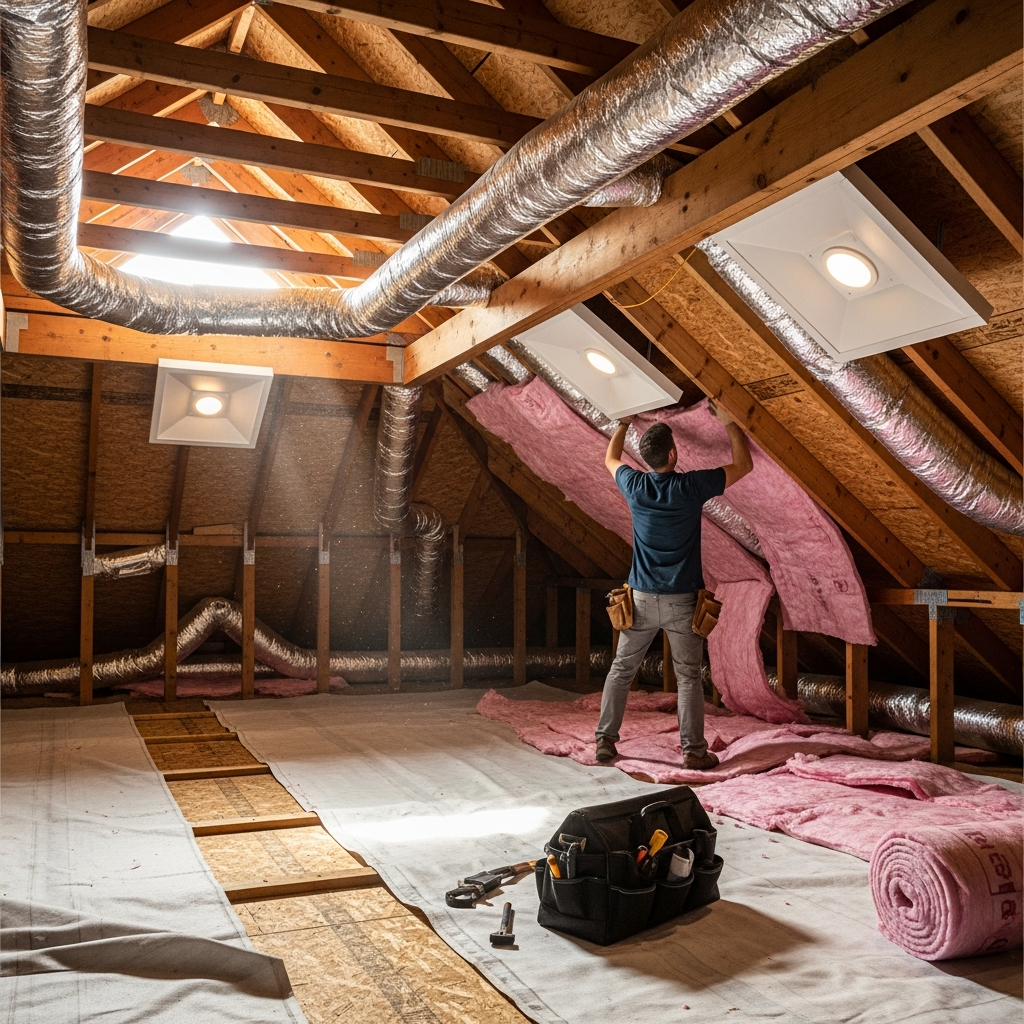
If you have lived in Los Angeles for any length of time, you know our homes face a unique tug-of-war between coastal fog and valley heat. Attics sit right at that crossroads, soaking up midday sun and cooling down fast after dark. That daily swing is exactly why insulation—and the work that surrounds it—matters so much here. Homeowners often ask how home size affects the overall scope and effort of an attic project. The answer isn’t just that a bigger home needs more material. In Los Angeles, everything from roof complexity to ducts in the attic to access points can shape the path from estimate to completion, and understanding those variables helps you plan a smooth project from the start. Early clarity also leads to better comfort, quieter rooms, and a more consistent indoor temperature year-round.
Before we dive into home size, it’s useful to set a baseline for what an attic upgrade typically includes in our region. Most professional projects go well beyond simply rolling in new batts. They often involve air sealing around light fixtures and chases, installing baffles for proper ventilation at the eaves, protecting ducts, and addressing any safety concerns like knob-and-tube wiring or heat-producing fixtures. When you see the full scope, you realize why the term attic insulation covers a constellation of tasks that protect your home as a system. Those tasks scale differently for a 900-square-foot bungalow compared to a 3,000-square-foot two-story with multiple rooflines.
How Los Angeles Microclimates Influence Attic Work
From Santa Monica’s marine layer to the San Fernando Valley’s long afternoons of sunshine, our microclimates shape attic conditions. Coastal homes may deal with damp morning air and salt-heavy breezes, while inland homes see higher attic temperatures. Both ends of the spectrum influence which materials and techniques are best, and how long the crew will be in the attic. For instance, attic ventilation strategies are not one-size-fits-all, and the way heat accumulates and convects under your roof deck can change the level of air sealing needed to stabilize indoor temperatures. When you factor in the number of zones in your home, the length and layout of ducts, and how many penetrations exist between living space and attic, the picture gets clearer: climate interacts with home size to shape the magnitude of the project.
Older Los Angeles homes are especially interesting because many began life with minimal insulation and a patchwork of later upgrades. Craftsman-era bungalows and postwar ranches often have tight eaves, narrow passages, and plenty of charming details that complicate access. In these homes, the square footage of the attic might be modest, but the labor can be meticulous. In contrast, a contemporary hillside home may have areas of vaulted ceiling that function differently from a traditional attic, with sections that call for dense, targeted air sealing to prevent hot spots and drafts in rooms below.
Home Size Versus Complexity
When people ask how home size influences total effort, I start with a simple idea: size is a major factor, but complexity is the multiplier. A straightforward, single-story ranch with a clean attic floor and good access can be remarkably efficient to work in, even if it is larger than average. Square footage still affects the amount of material, the time to stage and distribute that material, and the duration spent verifying coverage and ventilation. But once roof angles multiply, skylights appear, and ducts weave across the attic like freeways at rush hour, the scope expands beyond raw size.
Two homes with the same footprint can also differ dramatically depending on how many recessed lights pierce the ceiling. Each of those light penetrations needs its own air-sealing strategy and clearance plan. The same goes for bathroom fan terminations, flue chases, and open wall cavities. In a compact home, a high count of penetrations can drive substantial work; in a larger home with fewer penetrations, the approach may be more material-heavy but comparatively streamlined.
Access is the invisible variable many people overlook. A hallway scuttle that requires a ladder and contortion to enter adds time to every phase of the job—tools, material, and vacuum hoses all move slower through a small opening. On the other hand, a dedicated attic stair or a wide hatch enables smooth workflow. In older LA neighborhoods, we also encounter decorative plaster that calls for gentle handling, which further shapes the pace of the project. Multiply those access conditions over the square footage, and you can see why home size interacts closely with logistics.
Material Choices and How They Scale
Material selection in Los Angeles usually centers on achieving robust thermal performance while respecting ventilation and moisture realities. Fiberglass and cellulose both perform well when installed to the appropriate depth and density. Cellulose offers excellent coverage and can fill irregular cavities, while fiberglass, installed properly, provides long-term stability and predictability. Spray foam is sometimes discussed for roofline encapsulation, but many homes here function beautifully with a traditional vented attic when air sealing and insulation are done right. Your choice of material should be guided by building design, existing conditions, and performance goals rather than marketing alone.
When we consider home size, it is tempting to picture material costs simply rising linearly with square footage. In broad strokes, that is true: more area requires more insulation. However, labor often scales in steps rather than in a straight line. There are setup tasks—protecting living areas, building temporary walkways, staging tools—that occur once per project. A smaller home does not always get a proportional discount if those tasks are equally necessary. Conversely, larger homes benefit from a kind of rhythm once the crew is working efficiently, a cadence that sometimes offsets the raw increase in square footage. These patterns are why conversations about scope are just as important as discussions about material.
Another dimension is the interplay between attic work and other improvements. Many owners coordinate duct sealing or replacement with insulation upgrades, especially if the HVAC system resides in the attic. When ducts are leaky, adding insulation alone can’t deliver the full benefit. Aligning these efforts during a single visit can streamline logistics in both modest and expansive homes, and it can set the stage for steady comfort and reliable performance through heat waves and cool nights. In the middle of a project of any size, we often pause to confirm that ventilation pathways are protected with baffles and that the attic plane is truly sealed, because that’s where attic insulation pulls its weight as part of a whole-home approach.
In homes that have partial insulation from earlier decades, we evaluate whether to remove or to supplement. Sometimes older material is compressed, dusty, or disrupted by past electrical work. Topping it off may appear convenient, but if the base layer is uneven or contaminated, removal can yield better final results. Removal can be more involved in small attics lined with tight trusses than in larger spaces with clear pathways. The decision often comes down to access, cleanliness, and the long-term health of the attic environment.
Code, Targets, and What Works in LA
Local energy codes and best-practice guidelines in Southern California typically target attic R-values in the R-38 to R-49 range, depending on specifics of the house and roof. Hitting those levels provides reliable year-round comfort here. The goal is not just to slow heat flow—it is to create a stable boundary between living space and the extremes of the attic. In coastal neighborhoods, that boundary keeps damp chill at bay in the mornings. In the valleys, it blunts the afternoon heat that otherwise radiates down into bedrooms and hallways. Regardless of home size, those targets guide the installation depth and density, which in turn inform the time and preparation needed to do the job right.
Ventilation remains a critical partner to insulation. Soffit intakes, ridge vents, or other continuous strategies keep the attic from accumulating moisture and help manage summertime heat. In Los Angeles, we routinely check that existing ventilation is clear of paint and debris, a detail often overlooked in older houses with multiple layers of exterior work. Proper ventilation lets the attic breathe while the insulation and air sealing define the boundary, and the combination protects your roof deck as much as it stabilizes your indoor climate.
Wildfire season adds another layer to the story. While insulation itself does not harden a home against embers, air sealing around vents and gaps can reduce pathways for smoke and fine particulates to enter the living space. That protective effect is valuable whether your home is 900 or 3,900 square feet. For many owners, the peace of mind that comes from a tighter building envelope is part of the overall value calculation, and it is especially appreciated in hillside neighborhoods and canyons where breezes change quickly.
Small, Medium, and Large Homes: What to Expect
Small homes in LA—cozy bungalows, cottages, and ADUs—often surprise owners with how detailed the work becomes. With tighter framing and shallower eaves, crews must choreograph every move, laying protection across plaster ceilings and navigating electrical runs elevated above joists. While the volume of insulation is modest, the finesse required can be significant. The outcome is worth it: small homes respond dramatically to well-executed attic upgrades, with evenings growing quieter and mornings less chilly almost immediately.
Mid-sized homes, from two-bedroom ranches to split-levels, occupy the sweet spot for efficiency. There is enough space to work efficiently, but not so much area that logistics dominate the day. In these homes, we frequently find opportunities to improve duct sealing and to adjust ventilation pathways. The attic tends to be a patchwork of prior upgrades, and aligning the various layers—old batts, new loose-fill, selective baffles—yields a cohesive system that performs above the sum of its parts.
Larger homes, particularly multi-story and custom builds with complex roofs, ask for more coordination. Skylights, vaulted sections, and junctions with knee walls all demand tailored techniques. The overall square footage means more material and more time, but the finish line is a house that holds temperature steadily from downstairs to upstairs, reducing that all-too-familiar LA experience of a hot second floor and a cool living room. Larger homes also benefit from careful planning around recessed fixtures, flues, and access platforms for future service on HVAC equipment, so that the completed attic remains safe and functional for years.
Attic Health: Cleanliness, Safety, and Sequencing
A clean attic is fundamental to long-term performance. Dust, droppings, or leftover construction debris can compromise air quality and make new insulation less effective. If we recommend removal of existing material, it is usually to start fresh with a truly sealed and clean attic floor. Sequencing matters here: where possible, we align remediation, rodent-proofing, and any electrical upgrades before adding new insulation. That order—clean, seal, then insulate—creates a result you can trust regardless of your home’s size.
Safety considerations sometimes push decisions. For homes with older wiring or heat-producing fixtures, we ensure clearances, protective covers, or fixture upgrades as needed. The same is true for attic-mounted furnaces or water heaters: we build safe service platforms and protect clearances. These steps add reliability and remove future headaches during maintenance. When homeowners see these details, they often understand why a well-scoped attic project feels comprehensive—it is not only about warmth and coolness, it is about a healthy home.
Planning, Timing, and the LA Calendar
Los Angeles gives us year-round opportunities to upgrade attics, but there are windows that align nicely with comfort goals. Late spring and early fall are particularly good because they set you up for the heat of summer and the damp mornings of winter. If your project includes duct work, consider scheduling before peak cooling season so the system is ready for a long stretch of warm afternoons. For small homes, a single, well-organized day may be enough. For larger and more complex projects, expect a longer schedule with thoughtful staging to protect living spaces while work proceeds overhead.
Communication with your installer is key. A walkthrough that includes attic access, a count of penetrations, and a look at ventilation paths helps set clear expectations. Photographs of the attic can be invaluable for homeowners who prefer not to climb up themselves. That clarity ensures that the agreement reflects both the square footage and the real-world complexity of the space, so there are no surprises once work begins.
What “Value” Really Means for LA Homes
When Angelenos talk about value, they’re usually thinking of comfort across microclimates, less noise near busy streets, and steady indoor temperatures through the afternoon heat. Insulation contributes to all of that, but it does so in lockstep with air sealing and ventilation. In homes of every size, a well-executed attic upgrade supports HVAC systems, giving them an easier job and often extending their useful life. It can also reduce temperature differences between floors, which is a common complaint in larger homes. Whether you’re in a compact Spanish bungalow or a contemporary build with broad overhangs, the attic is the lever that moves the needle.
Finally, the value of confidence is hard to overstate. Owners appreciate knowing that their attic is clean, their ducts are protected, and their home is prepared for the long, bright days and cool nights that define Los Angeles living. It’s a project that pays dividends in quiet, in comfort, and in a sense of ease when you step from a sun-warmed driveway into a calm, evenly tempered home.
FAQ
How does home size influence the scope of an attic insulation project in Los Angeles?
Home size sets the stage for how much material is needed, but the true scope is shaped by complexity—rooflines, penetrations, ducts, and access points. Smaller homes can require detailed labor due to tight spaces, while larger homes demand more material and careful planning around features like skylights and vaulted ceilings. In both cases, a thorough approach to air sealing and ventilation determines overall performance.
Is it better to remove old insulation or add new insulation on top?
It depends on the condition of the existing material. If the base layer is clean, even, and dry, topping it can be effective. If it is compressed, dirty, or contaminated, removal provides a clean slate for air sealing and a consistent final layer. Access and attic layout also influence the decision, and an inspection usually makes the best path clear.
What R-value should I target for an LA attic?
Most Los Angeles homes perform well at R-38 to R-49 in the attic, paired with diligent air sealing and proper ventilation. Those levels address our daily temperature swings and help stabilize indoor comfort in both coastal and inland neighborhoods.
Will attic insulation help with noise from streets or aircraft?
Yes. While insulation is not a dedicated soundproofing system, adding dense, continuous coverage in the attic can soften sharp outdoor sounds and reduce echo inside the home. Air sealing also closes pathways that allow sound and air to travel together, contributing to a quieter interior.
When is the best time of year to upgrade my attic in LA?
Late spring and early fall are ideal for preparing your home for the hottest and coolest stretches. That said, Los Angeles allows for projects year-round. If you’re coordinating duct improvements or HVAC maintenance, schedule the attic work just before peak usage seasons to maximize benefits immediately.
Do I need to upgrade ventilation when I add insulation?
Ventilation and insulation work together. In many homes, adding baffles at the eaves and ensuring clear intake and exhaust paths creates a balanced attic environment. Verifying ventilation while insulating is standard practice and supports the long-term health of your roof deck and interior comfort.
If you’re ready to explore a plan tailored to your home’s size and layout, let’s walk the attic together, look at the access points, and map out a clean, efficient path from start to finish. For a tailored Los Angeles approach to attic insulation that prioritizes comfort, cleanliness, and lasting performance, reach out and start the conversation today.