
Step outside on a spring morning in Los Angeles and you can feel how the air changes block by block. In the flats you might catch a hint of the marine layer; near the canyons, the breeze runs a little drier; and when the Santa Anas visit, everything becomes warmer and dustier than usual. Those shifting conditions don’t stop at your front door. They travel through soffit vents, roof gaps, and ductwork, settling where you rarely look: the attic. As a local who has peered into hundreds of attics from Mar Vista to Mount Washington, I can tell you that a clean, well-sealed, and properly insulated attic is one of the quietest ways to improve your home’s comfort, air quality, and efficiency. That journey often starts with thorough attic cleaning, a process that does far more than make a dusty space look tidy.
Los Angeles homes are uniquely exposed to a mix of coastal moisture, freeway particulates, wildfire ash, and the occasional deluge that tests old roofing and flashing. Over time, these elements build layers of contaminants above your living spaces. It’s easy to shrug and think, “It’s just the attic,” but the attic is a major component in your home’s breathing system. Every time your HVAC kicks on, pressure differences can draw attic air into the rooms where you eat, rest, and work. That’s why cleaning the attic is as much a health measure as it is a maintenance task.
Why a Clean Attic Matters for Los Angeles Homes
Most Angelenos notice air quality on our bad days—wildfire smoke, dust-filled winds, or smog that lingers in heat. But in homes, the quiet, persistent sources are often above the ceiling. Dust laden with urban pollutants, rodent droppings, and old insulation fibers can all become part of your indoor air, especially through recessed lights, gaps around pipes and wires, and aging returns on forced-air systems. When we remove debris and decontaminate surfaces, we’re not just restoring an overlooked space; we’re eliminating reservoirs of particles that can aggravate allergies, asthma, and general respiratory discomfort.
Families with young children, seniors, or anyone with sensitive airways feel the difference first. As contaminants are extracted with HEPA-grade equipment and the attic is sanitized, there’s often an immediate reduction in musty odors and that faint “attic smell” that wafts down in the afternoons. Pairing cleaning with air sealing—closing the cracks where air sneaks between the attic and living spaces—creates a cleaner, more controlled indoor environment that holds steady through the day’s temperature swings.
Energy Performance You Can Feel
Los Angeles may be blessed with mild winters, but our summers are getting hotter, and interior valleys can feel downright punishing by late afternoon. A neglected attic forces your air conditioner to fight conductive heat pouring through the ceiling and convective heat sneaking through gaps. Cleaning is the first step that makes insulation truly effective. By removing matted or contaminated insulation and vacuuming out debris that blocks soffit ventilation, we set the stage for fresh, evenly distributed insulation to deliver real performance. The result is steadier temperatures, fewer hot-and-cold zones from room to room, and less strain on cooling systems that already work hard from May through October.
Just as important is airflow. Many attics we see have soffit vents clogged with dust, paint, or old pest barriers. Without clear inlets at the eaves and a proper outlet at the ridge or gable, heat stagnates. During cleaning, we uncover these blockages, correct them, and confirm the attic can breathe. A balanced attic ventilation plan reduces peak attic temperatures, supports a healthier roof deck, and helps the insulation below do its job—especially through long, bright LA afternoons.
The Health Story Above the Ceiling
Beyond visible dust and debris, rodent activity is one of the most common issues we encounter. Roof rats are both agile and prolific across Los Angeles neighborhoods, and they love the quiet, warm shelter attics provide. Their droppings and urine not only carry pathogens but also create persistent odors that seem to bloom on the first hot day of spring. Professional cleaning focuses on safe removal of contaminated materials, cautious handling to prevent aerosolization, and a thorough sanitizing phase that leaves surfaces clean and ready for sealing and insulation.
Moisture is another quiet culprit. In coastal areas like Santa Monica or the South Bay, the mix of fog and a worn roof can lead to damp sheathing or slight mold colonization that never quite turns into a visible bloom—but still contributes to odors and air quality concerns. Inland, bathroom fans sometimes terminate in the attic rather than venting outdoors, pushing humid air into a space never meant to hold it. A proper cleaning process includes finding these sources, correcting poor vent terminations, and addressing any minor growths with targeted treatment, all while emphasizing prevention so the problem does not return.
Local Realities: Wildfires, Winds, and Aging Building Stock
Seasonal wildfires bring ashfall that travels far beyond the burn lines. We frequently discover a gray film across rafters and insulation in attics from Sherman Oaks to Pasadena after an especially smoky season. That residue, combined with the ultra-fine particles of typical city dust, settles deep into porous insulation and can be disturbed every time someone goes up to store a box. During cleaning, HEPA vacuums, containment practices, and careful bagging limit the spread of these particulates and remove the material that keeps recontaminating your air.
Our housing stock adds its own twists. Spanish tile roofs with older underlayments, Craftsman bungalows retrofitted over decades, and hillside homes with complicated chaseways all present unique paths for dust and unconditioned air. Part of the value of a local, detail-obsessed approach is simply knowing where these hidden pathways usually live and sealing them—the gaps around old chimneys, the seams of scuttle hatches, and the puzzle pieces where additions meet an original structure.
What a Thorough Cleaning Includes
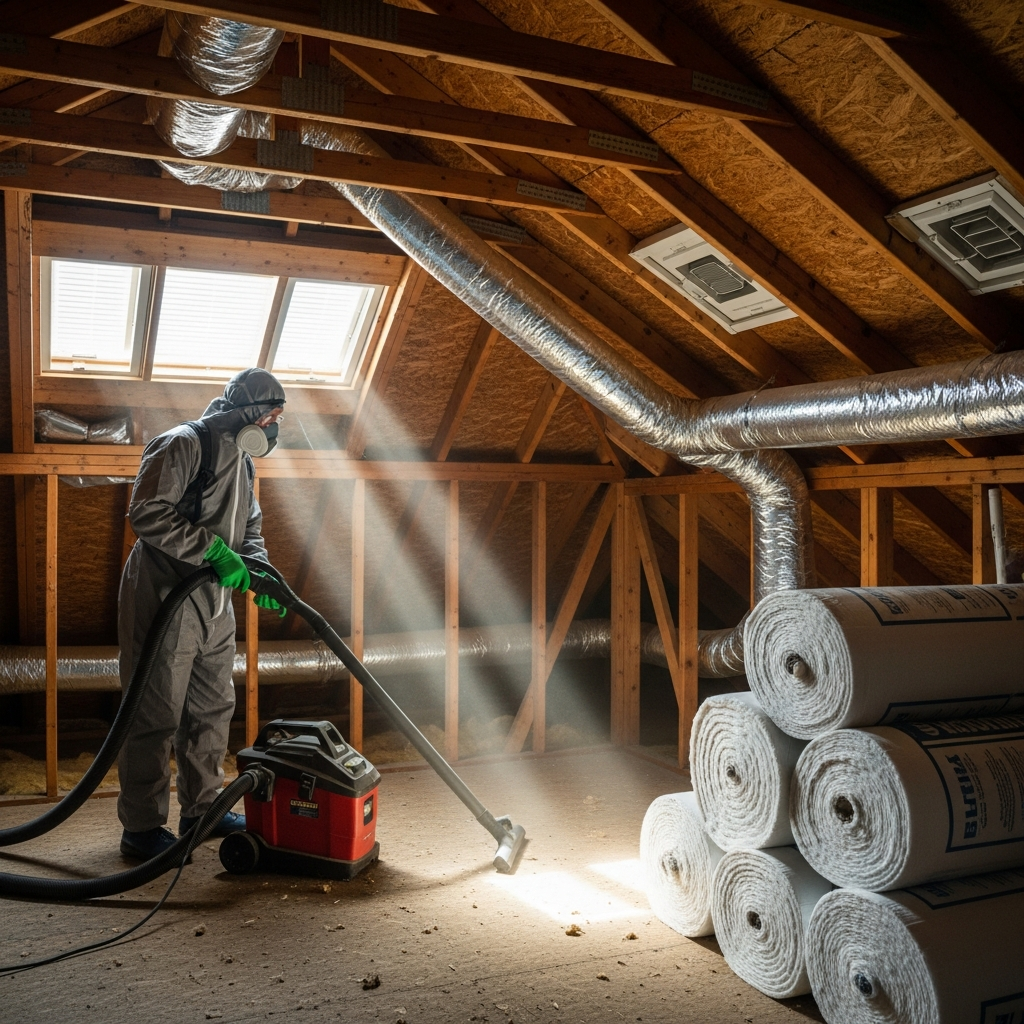
Homeowners often picture sweeping and bagging, but the real art is in the sequence. We begin with a careful assessment, mapping out access points, wiring, duct runs, and any fragile elements like knob-and-tube remnants or delicate plaster ceilings in older homes. Next comes containment—protecting the living areas below and the pathways we’ll use for removal. Then the heavy work starts: extracting old or contaminated insulation, vacuuming the attic floor down to the joists, and pulling debris from the eaves where it accumulates. We sanitize surfaces, seal penetrations from below, and then, if part of the plan, reinstall fresh insulation with attention to depth and coverage. Every step supports both hygiene and efficiency, and together they create a lasting improvement rather than a quick refresh.
Some projects involve duct inspection too. In Los Angeles, a surprising number of ducts run through attics, and even small leaks at seams waste a lot of conditioned air while pulling in dust from the surrounding space. During or after cleaning, sealing duct joints and adding insulation wraps where appropriate multiplies the comfort gains—you’ll notice rooms reach temperature faster and the system cycles less often.
Comfort That Follows You Room to Room
One of the most satisfying parts of this work is hearing from homeowners after a heat wave who say the bedroom that used to feel like a furnace at 10 p.m. now holds steady and comfortable. That is the combined effect of a clean, ventilating attic and insulation that performs to its rating because it is no longer matted, damp, or choked by dust. In winter, fewer drafts and a gentler, more even warmth make mornings easier. These are the day-to-day rewards of doing the invisible work above the ceiling.
Midway through many projects, homeowners ask what will keep the attic clean going forward. The answer is a blend of sealing, ventilation balance, and routine checks after weather events. Once we’ve completed the foundational work of attic cleaning, it becomes easier to spot new issues quickly—a disturbed patch of insulation that hints at a new rodent entry, a damp board that suggests a small leak, or a fan hose that came loose and needs to be reattached to an exterior vent.
The Long View: A Healthier Home and a Stronger Roof
Clean attics aren’t just about the space below. By reducing heat buildup and humidity pockets, you extend the life of roofing materials and protect the sheathing that anchors everything above. In neighborhoods with mature shade trees, that also means fewer surprises when a wet winter follows a windy fall, because your attic will have airflow that helps dry incidental moisture. When you multiply those protective effects across seasons, the value is obvious: a home that wears the weather more gracefully.
FAQs
How often should an attic be cleaned in Los Angeles?
For most homes, a detailed cleaning every few years is appropriate, with quick visual checks after heavy winds, a wildfire smoke event, or a major rainstorm. If you’ve had rodent activity or a roof leak, schedule a cleaning and inspection sooner to address contamination and moisture before they spread.
Can I clean my attic myself?
Basic tidying is possible, but deep cleaning requires protective equipment, HEPA-grade vacuums, and safe handling of contaminants. Professionals also know how to move in attics without damaging ceilings or disturbing electrical lines, and they can combine cleaning with sealing and insulation improvements.
Will cleaning the attic help with allergies?
Yes. By removing reservoirs of dust, dander, and droppings, and by sealing the gaps that let attic air mix with living spaces, many homeowners report noticeable improvements in respiratory comfort and fewer irritants circulating indoors.
What if my insulation is old but not contaminated?
If the material is still dry and intact, it may be possible to vacuum around it, add targeted air sealing, and top up with fresh insulation to current standards. If insulation is compacted, damp, or smells musty, replacement is usually the wiser choice so you do not trap odors or debris beneath new layers.
Is attic cleaning disruptive?
With good containment and planning, most projects wrap up within a day or two, and the work areas inside the house remain protected. Expect some noise from vacuums and equipment, but daily life can usually continue around the project.
If you are ready to breathe easier, improve comfort, and give your home a quieter path to year-round efficiency, this is the moment to act. Schedule professional attic cleaning with a local team that knows Los Angeles construction styles and weather patterns. We will assess your attic, map a clear plan, and handle every detail from debris removal to sealing and insulation so you can enjoy a healthier, more comfortable home.