
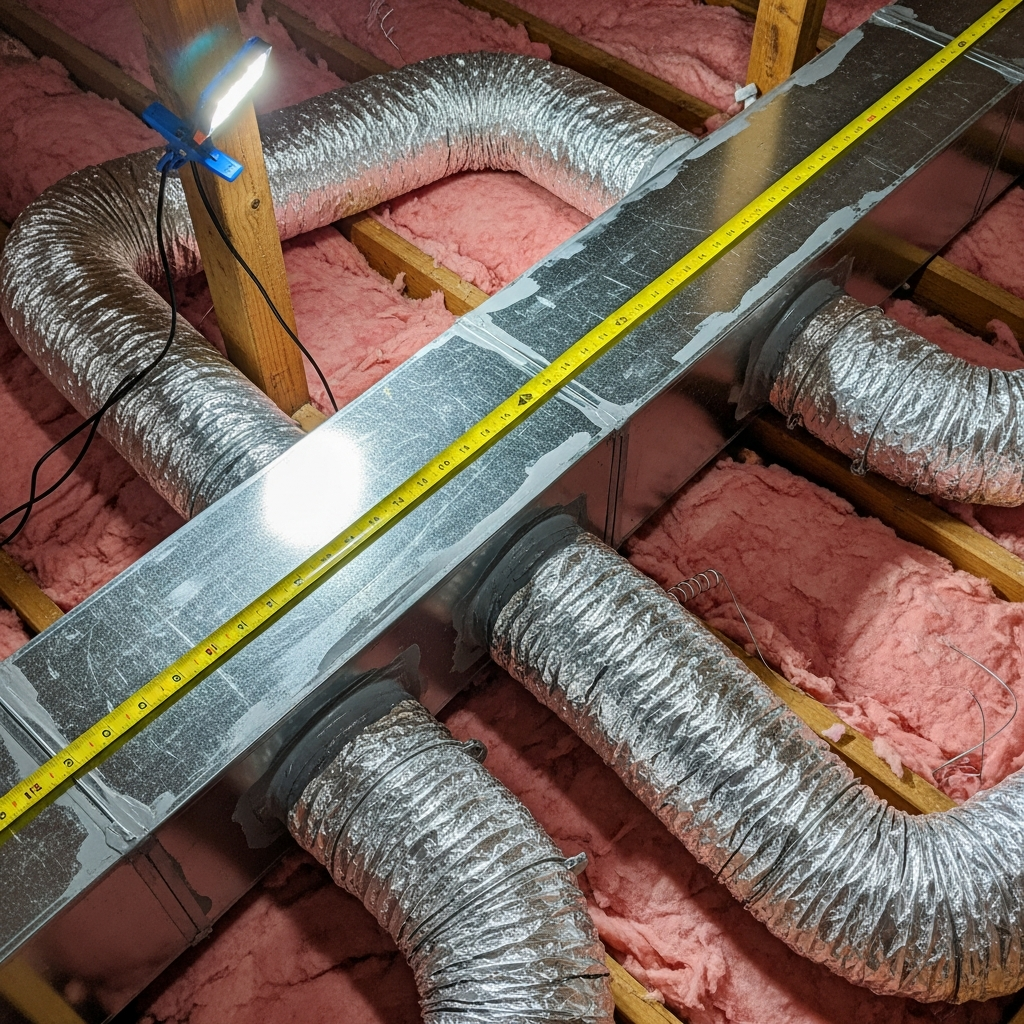
Why “Per Foot” Tells Only Part of the Story
It is understandable to look for a neat, per-foot baseline when planning duct replacement in Los Angeles. The trouble is that duct systems are not just lengths of tubing—they are networks shaped by fittings, boots, returns, transitions, and the peculiarities of each home. Two houses with the same total footage can demand very different designs depending on attic access, room needs, and how carefully air must be moved to keep things quiet and even. Rather than chasing a simple multiplier, it is more helpful to understand the anatomy of a complete system and how each component shapes the overall investment. If you are just getting oriented, ground yourself with reliable overviews of professional air duct replacement so you can judge proposals on more than a single number.
Imagine two 1,600-square-foot homes in Mid-City. One is a single-story with a roomy attic and straightforward register locations. The other is a 1930s bungalow with plaster ceilings, tight eaves, and a tangle of past remodel routes. Both might total similar duct footage, but the second home will require careful routing, selective register relocations, and delicate finish work. In such cases, footage is a small part of the story; design labor, access planning, and fine finishing shape the project in ways raw length cannot capture.
The Pieces That Footage Ignores
Trunks and branches are only the start. Boots that connect ducts to rooms must be sealed to the building shell so you are not pulling attic or wall air into the system. Returns must be sized to let the blower breathe, or else the system grows noisy and inefficient. Transitions from the air handler to trunks need smooth shapes that avoid turbulence. Each of these pieces involves measurements, fittings, and sealing methods that have nothing to do with simple length.
The path of a duct is just as critical. Sharp turns, kinks, and compression add resistance, starving far rooms. Good design replaces right angles with gentle sweeps and keeps insulation at full thickness. Supports are spaced to prevent sag and squeeze. These choices do not change footage much, but they transform how the system feels in your living room on a hot Valley afternoon.
Register placement and style also matter. A living room throw that splashes against a wall wastes energy and can cool your ankles but not the space. The right grille helps wash air across the room, reducing drafts and improving comfort. Sometimes a small relocation of a boot—just a few inches—solves a long-standing annoyance without changing total length at all.
Access, Architecture, and Microclimates
Los Angeles architecture spans everything from hillside moderns to classic Spanish bungalows. Access in each is different. Low-slope roofs create shallow attics; tight crawl spaces challenge routing and support. Clay tile roofs complicate safe staging; steep driveways affect how crews move materials. None of this shows up in a footage number, yet it dictates workmanship, pacing, and how carefully ducts can be installed without compression or damage.
Microclimates intensify the need for proper insulation and sealing. Valley attics in July demand robust insulation and impeccable sealing to keep supply temperatures steady. Coastal homes fight cool dampness in the mornings and benefit from moisture-aware routing and materials. Canyons channel winds that can raise infiltration on leaky systems. Accounting for your home’s microclimate makes the system quieter, steadier, and kinder to your equipment.
Why Returns Deserve Center Stage
Ask any seasoned tech in LA what most old systems lack, and you will hear the same refrain: return air. Many homes rely on a single undersized hallway return. That bottleneck elevates noise, reduces filtration performance, and starves branches at the far end of the system. Upgrading or adding returns often becomes the centerpiece of a redesign, and its effect on comfort dwarfs anything a footage metric could predict. When the system breathes easily, temperatures smooth out and whistling registers calm to a hush.
Filter cabinets and their seals are part of this story. Air that bypasses the filter drags dust into your ducts and rooms. A tightly sealed cabinet paired with the right media keeps your system clean and improves indoor air quality—again, a detail that has little to do with how many feet of duct you have.
Per-Foot Pitfalls to Avoid
Per-foot thinking can push installers to shortcut essential details: rushed transitions, minimal sealing, and cramped returns. You might get the footage you paid for, but not the comfort you hoped for. The smarter approach judges proposals by how they address the whole system: design, routing, supports, sealing, insulation, returns, and commissioning. Those factors are what you will feel every day.
Consider, too, that per-foot comparisons blur major differences in materials and methods. A trunk of rigid metal supported to maintain shape, sealed with mastic, and insulated to retain full thickness performs differently from a long, compressed flex run at the same length. The numbers on a tape measure might match; the lived experience will not.
Commissioning: The Step a Tape Measure Cannot See
The end of a good project is testing and balancing—tasks that have nothing to do with footage but everything to do with comfort. Measuring static pressure, checking register temperatures, and fine-tuning damper positions ensure each room receives its share of airflow. A system that has been balanced feels calm and predictable; a system that has not can feel chaotic, even if the total footage looks fine on paper.
Documentation helps you live with the system, too. Photos of routes, notes on damper settings, and a quick map of trunk and branch layout give you confidence and make any future adjustments painless.
What a Thoughtful Proposal Looks Like
When you invite companies to bid, ask for more than a linear-foot number. A serious proposal describes access conditions, shows photos, and details how the team will protect your finishes. It explains return strategy, register placement, boot sealing, and insulation targets. It outlines removal and disposal of old materials and the final testing you can expect. In short, it reads like a plan for your home rather than a generic spreadsheet.
That plan will likely discuss local permitting and inspections. LA jurisdictions often require testing to confirm performance. A contractor comfortable with these processes will guide you through timelines and expectations so you are never in the dark.
The Middle of the Process: Choices That Shape Results
During installation, you will make a few decisions that echo for years. One is whether to relocate a register that has always blown on a sofa or bed. Another is whether to enlarge or add a return to quiet the system and improve filtration. A third is choosing grille styles that match your decor while allowing free airflow. While none of these choices change total footage much, they make a noticeable difference in how your home feels every day.
To get a realistic picture of how pros balance these choices—materials, sealing, routing, and commissioning—consider reviewing practical overviews of air duct replacement. Once you see how each element contributes to a calm, even system, it becomes easier to evaluate proposals that lean too hard on a per-foot narrative.
FAQ
Is there ever a good reason to compare by footage?
Footage can provide a rough scale for material quantities, but it is not a reliable measure of quality or comfort outcomes. Use it only as background context while you compare full-system plans that explain routing, returns, sealing, insulation, and commissioning.
What makes one home with similar footage more complex than another?
Access and architecture. Tight attics, plaster finishes, tricky chases, and long runs that need gentle curves all increase the design and craftsmanship required. Microclimates and noise goals can also shift material choices and support strategies.
Will better returns really change day-to-day comfort?
Absolutely. When your system can breathe, noise falls, filters work better, and airflow becomes easier to balance room by room. Many uneven homes become calm and consistent after return upgrades and balancing—even without adding much footage.
How will I know the finished system is dialed in?
Your contractor should measure static pressure, check temperatures at registers, and adjust dampers to match the design. You should feel steadier temperatures, quieter operation, and fewer drafts in spaces that used to struggle.
Can I phase improvements if a full redesign is not in the cards right now?
Yes. A well-conceived plan can be executed in stages, focusing first on high-impact items like returns and the most constricted routes, then addressing secondary branches later. The key is to design holistically and build in a logical sequence.
If you are ready to move past simplistic metrics and focus on what truly drives comfort—design, sealing, insulation, and balanced airflow—connect with a local team that treats your home as a system, not a spreadsheet. For a clear sense of how a complete, code-compliant process comes together, browse trusted insights on air duct replacement and schedule your in-home consultation. The right plan will turn numbers on a page into quiet, even comfort you can feel in every room.