
Understanding Attic Insulation Installation Cost in Los Angeles
Ask any longtime Angeleno who has weathered a few Santa Ana seasons and you will hear the same truth: the attic is the unsung climate buffer of a Los Angeles home. From the cool marine layers rolling in from the coast to the dry heat that settles in the Valley, our microclimates push attics to work overtime. When people talk about the cost of installing new attic insulation, they’re really talking about a cluster of decisions shaped by the home’s age, roof design, existing materials, moisture dynamics, and the kind of day-to-day comfort they want to achieve. Before you compare line items, it helps to understand what’s actually involved in a well-executed upgrade and why the numbers can vary from one Los Angeles neighborhood to the next.
Many homeowners begin by researching contractors and options for insulation installation because they’re experiencing hot second floors in summer, persistent dust, or unusually high energy use. Here in Southern California, our building codes emphasize performance, but the actual path to reaching those targets depends on your attic’s layout and the condition of what’s already up there. A craftsman in Highland Park with decades-old insulation will have a different starting point than a mid-century ranch in Woodland Hills with ducts crisscrossing the attic floor. Framing type, roof pitch, and the presence of can lights or skylight chases all influence how the job is scoped.
When you hear the phrase “attic insulation cost,” think of it as the sum of preparation, materials, access, labor complexity, quality control, and aftercare. A contractor isn’t simply blowing in new material and calling it a day. The thorough ones are sealing air leaks, protecting pathways for ventilation, safeguarding recessed lights as needed, and ensuring that every cubic inch of coverage is doing real work. Those layers of detail determine the outcome you feel in your living room on a 95-degree afternoon or a chilly winter night when the foothills send a bite of cold down the canyons.
Home Conditions That Shape Your Attic Investment
Los Angeles homes wear their history proudly. That history shows up in the attic as a patchwork of older insulation, paint cans stored for decades, remnants of knob-and-tube wiring in vintage properties, and ductwork installed during a prior remodel. Each of these details affects how the project is staged. If the current insulation is degrading or contaminated with rodent activity, removal and sanitation become part of the plan. If access is limited by a tight hatch or steep pitch, crews may need more time to reach every corner safely. If the roof decking reveals signs of past moisture or a little daylight where vents aren’t properly flashed, you’ll want that addressed before new material locks everything in place.
There’s also the matter of air sealing. In Los Angeles, where cooling loads often dominate, the fastest path to better comfort is closing the invisible pathways that allow attic air to exchange with the living space. Gaps around plumbing penetrations, top plates, and electrical openings can be sealed before insulation is installed, and that step is often one of the quiet heroes in your overall comfort and efficiency story. Whether you live in a Spanish revival with plaster ceilings or a newer home with plenty of can lights, the time invested in this prep work pays dividends every day your AC or furnace runs.
Ventilation remains an essential consideration. Soffit and ridge vents—or their gable and roof vent equivalents—allow the attic to breathe. When insulation is dense and even, it should not block those critical air pathways. Baffles or chutes are installed to maintain that flow, protecting your roof deck and ensuring that heat does not stagnate. A well-ventilated attic behaves predictably during our hot spells, which is part of why two homes on the same block can feel entirely different even with the same insulation depth.
Material Options and Performance Goals
In Los Angeles, you’ll encounter three leading approaches to attic insulation: fiberglass batts, loose-fill (fiberglass or cellulose), and spray foam. Each has different properties and installation styles. Batts can be effective in open joist bays when installed with precision; loose-fill excels at blanketing irregular spaces; spray foam brings air-sealing power directly into the insulation layer. The right choice for a given attic depends on goals like acoustic control, thermal resistance, air movement, and your future plans for HVAC or roofing upgrades. For some homeowners, a layered strategy—air seal first, then dense coverage of loose-fill—delivers a sensible balance of performance and cost control without reconfiguring the roofline.
It’s also important to think about durability and maintenance. Loose-fill materials can be topped off if a future renovation stirs things up, and modern formulations resist settling when installed to the correct density. Batts require meticulous fit and alignment with no gaps or compression. Spray foam, when used in the roofline, can reframe the entire attic as conditioned space, but it comes with its own design and code considerations. An experienced local installer can explain what’s appropriate for your roof structure, ventilation, and mechanical systems so that you are choosing a path that serves the home as a system, not as a one-off product swap.
Preparation, Access, and Day-of Logistics
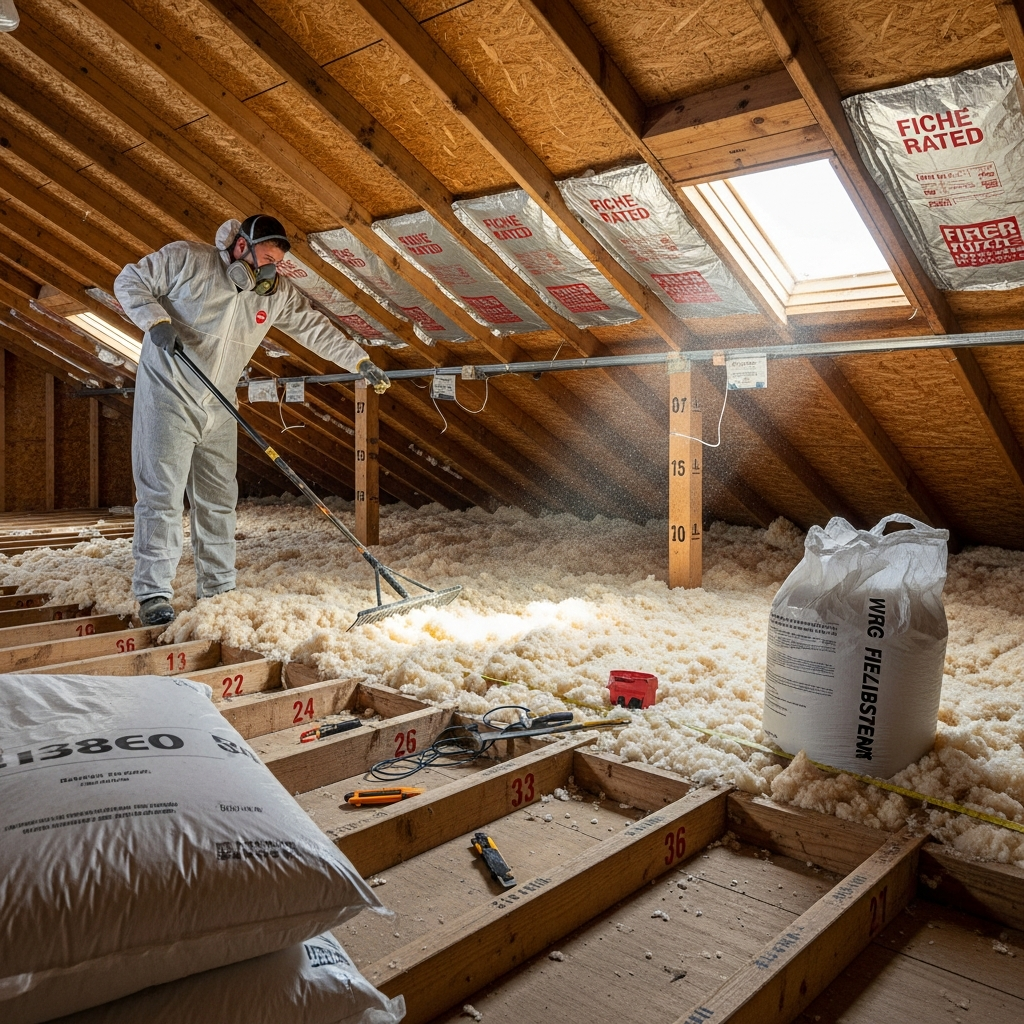
Even a straightforward attic upgrade benefits from careful staging. Crews protect floors and walls from the entry hatch to the attic. Materials are positioned to minimize trips. If old insulation must be removed, it’s done with vacuum systems and sealed hoses to control dust. Air sealing is executed methodically before the fresh insulation goes in. If lighting or exhaust fan penetrations need special covers, those are installed and labeled for future access. The best projects end with a space that looks tidier than before, with rulers or depth markers visible so you know exactly what was achieved.
Access often dictates scheduling and crew size. A small hatch in a 1920s bungalow requires different techniques than a pull-down ladder in a post-war home. Trusses add navigational challenges; vaulted ceilings can change the plan entirely. Expect your installer to confirm where any fragile finishes are below, whether attic platforms need to be built for safe travel, and how to protect ductwork or wiring runs during the process. That preparation is part of the value proposition because it reduces the chance of callbacks and ensures a cleaner, more predictable outcome.
Local Codes, Inspections, and Good Documentation
California’s energy code sets the tone for thermal performance, and Los Angeles jurisdictions interpret and enforce those guidelines with local nuance. That means your contractor should be conversant in current standards for attic R-values, ventilation strategies, and safe clearances around heat-producing fixtures or flues. Good documentation matters, particularly if you plan future HVAC upgrades. A record of what was installed—material type, settled density for loose-fill, locations of baffles, and air sealing details—becomes a helpful reference for you and any future professional who works on the home.
In older properties, especially those with previous wiring types or unusual framing, it’s normal to pause and coordinate with electricians or roofers as needed. A responsible installer will never bury a problem. Instead, they’ll surface it early and fold solutions into the plan, keeping your attic both efficient and safe. That collaboration across trades is one of the reasons seasoned Los Angeles crews deliver consistent results in such a varied housing stock.
How Contractor Expertise Influences the Bottom Line
Two proposals can look similar on paper yet lead to very different real-world performance. The difference is often in the diagnosis and execution. A thorough assessment includes measuring insulation depth, mapping hot spots with infrared tools, inspecting ventilation and duct condition, and identifying major leakage pathways at the ceiling plane. With that insight, a contractor can recommend a targeted scope instead of a generic, one-size-fits-all approach. In practice, that might mean dedicating more time to sealing chases around a chimney or carefully boxing in can lights before any insulation is added.
It’s also fair to ask how crews are supervised and how quality is verified. Attic work happens out of sight, so you want to trust that each step has been done to spec. Photographs, depth markers, and a walkthrough of key locations provide transparency. Well-run companies invest in training and communication, and they leave you with a clear understanding of how the attic now supports your comfort goals. If questions arise later—perhaps when a roofer visits or during a remodel—you’ll have the context to protect the insulation you’ve invested in.
In the middle of your decision-making process, it can help to revisit your priorities. Are you battling heat migration into a second story every afternoon? Are you setting up a home office under the eaves and want better acoustic separation from the street? Are you preparing to replace an HVAC system and hoping to right-size it? Lining up these goals with the specifics of your attic will shape a scope that makes sense for your household. If you find yourself comparing approaches, circle back to the fundamentals and the quality of the planned insulation installation rather than any single product attribute.
Comfort, Efficiency, and Long-Term Value
A well-insulated attic does more than drop peak temperatures on a hot Valley afternoon. It smooths the daily swings that drive thermostat adjustments, it quiets outside noise, and it reduces the workload on mechanical systems. Over time, that steadier thermal profile shows up in the lifespan of your HVAC equipment and your day-to-day sense of calm. It can even open up new ways of using your home, like converting a low-traffic spare bedroom into a comfortable office or media space without resorting to portable fans or space heaters.
For many Los Angeles homeowners, the value conversation also includes environmental stewardship. Attic insulation upgrades reduce energy demand during peak hours when the grid is most stressed. Choosing materials thoughtfully—balancing recycled content, embodied energy, and performance—can further align your project with your values. None of this requires sacrificing aesthetics; in fact, a healthy, well-ventilated, and properly insulated attic protects finishes and keeps your home feeling fresh, even when the weather outside is testing the limits.
Common Situations in Los Angeles Attics
I often see homes where a previous owner added batts atop old loose-fill, creating uneven layers with gaps that act like thermal shortcuts. Another frequent scenario is a generous layer of insulation but no air sealing, which lets heat and dust pump through light fixtures and chases. And then there are attics with beautiful new insulation, but the soffits are clogged because there were no baffles installed, so summer heat stagnates. The remedy in each case is not necessarily starting over; it’s diagnosing and correcting the specific failure points. When the plan is precise, the path to comfort usually is, too.
Ducts are another major consideration. In many Los Angeles homes, supply and return runs snake across the attic. If those ducts are leaky or poorly insulated, their influence on comfort can overshadow the gains from new attic insulation. A thoughtful contractor will evaluate this system alongside the insulation plan, advising on sealing or relocating ducts if needed. That integrated perspective prevents surprises later and ensures you feel the full benefit of your attic upgrade.
Timeline, Seasonality, and What to Expect
While attic projects happen year-round, timing them around roofing work or HVAC replacement can be advantageous. If you plan to re-roof, for example, coordination can ensure that ventilation is optimized and penetrations are properly managed. During installation, expect some noise and activity, but interior disruption should be minimal when crews protect the path and contain dust. Afterward, you should notice immediate changes in how quickly the home heats up in sun-exposed rooms or how steadily temperatures hold overnight.
Good communication doesn’t end when the crew leaves. The best teams provide aftercare guidance, such as how to maintain clear pathways to mechanical components, where safe storage is possible, and whom to call if you later add recessed fixtures or fans. Treat your attic as a functional system rather than a static layer, and it will pay you back every season.
Frequently Asked Questions
How do I know if my attic needs new insulation?
Look for rooms that heat up rapidly in the afternoon, uneven temperatures between stories, visible dust streaks around ceiling fixtures, or insulation that looks matted, contaminated, or short of the joist height. A professional assessment with thermal imaging and a visual inspection provides a clear answer tailored to your home.
Will new attic insulation help with noise from traffic or airplanes?
Yes, dense and continuous coverage can noticeably reduce airborne noise. While insulation is not a substitute for acoustic windows or construction, many homeowners report a calmer, quieter interior after their attic upgrade, especially under flight paths or on busy streets.
Do I need to remove my old insulation?
Not always. If the existing material is dry, clean, and evenly distributed, it may be possible to air seal and add to it. Removal is recommended when there is contamination, moisture history, or a mix of materials installed in a way that creates gaps and compression.
What about ventilation—could insulation block it?
Properly installed insulation should never obstruct ventilation. Baffles at the eaves keep soffit vents open, and clear channels to ridge or roof vents are maintained. Good ventilation and good insulation are partners, not competitors.
How long does an attic project usually take?
Most single-family attics can be completed in a day or two once the scope is set. Additional time may be required for removal, complex air sealing, or coordination with electricians or roofers, especially in older homes with unique conditions.
Is spray foam better than loose-fill for Los Angeles?
“Better” depends on goals and attic design. Loose-fill paired with diligent air sealing delivers excellent results for many homes. Spray foam at the roofline can transform the attic into semi-conditioned space, which is valuable in certain designs. A site visit is the best way to align method with objectives.
Will adding insulation change my HVAC needs?
Often, yes. Improved insulation and air sealing reduce heating and cooling loads, which may allow for right-sizing equipment during the next replacement. That can improve comfort, efficiency, and system longevity.
If you’re ready to transform comfort and stability in your home, schedule a local assessment and get a clear, tailored plan. Start the conversation with trusted pros who specialize in Los Angeles homes and deliver meticulous insulation installation so your attic works as hard as you do. Reach out today and take the first step toward year-round comfort you can feel in every room.