
Why Spray Foam Insulation Appeals to Los Angeles Homeowners
Across Los Angeles, spray foam has earned attention for its ability to insulate and air seal in one step, a combination that can be especially powerful in homes dealing with summer heat and winter drafts. Whether you live near the beach, in the Valley, or up in the foothills, controlling air movement through the building envelope stabilizes indoor temperatures and eases the burden on your HVAC system. When people explore spray foam installations, they often want to know what makes it different, where it shines, and what to consider before committing. Those answers depend on the house itself—roofline design, attic use, ventilation strategy, and the balance of comfort, acoustics, and moisture control you want to achieve. Many start their journey by comparing methods of insulation installation and learning how spray foam changes the dynamics of an attic or wall cavity.
Here in Southern California, the microclimates are real. A breezy morning near Venice can give way to a scorching afternoon across the hill in Burbank. That daily swing encourages homeowners to look for insulation that not only resists heat transfer but also tamps down the sneaky air leaks that drive temperature spikes. Spray foam’s defining trait is that it expands to fill gaps, joints, and irregular surfaces. Applied correctly, it knits the thermal and air barrier together, creating a predictable, controlled interior even when outdoor conditions are unsettled.
Open-Cell vs. Closed-Cell: Understanding the Difference
Spray foam comes in two main types, each with particular strengths. Open-cell foam is lighter, expands more, and offers notable sound absorption. It is often used in roofline encapsulations and interior assemblies where vapor openness is acceptable and acoustic comfort matters. Closed-cell foam is denser, offers higher thermal resistance per inch, and adds rigidity to assemblies. It is more resistant to moisture diffusion and can contribute structural stiffness, which can be valuable in certain applications. Choosing between them isn’t about better or worse; it’s about aligning material properties with your climate zone, roof design, and goals for the space.
Because Los Angeles homes vary widely—from flat-roofed mid-century designs to steeply pitched Spanish tile—your installer’s familiarity with local assemblies is essential. For example, when foam is applied at the roofline to create a semi-conditioned attic, ventilation strategy changes. Instead of relying on soffit and ridge vents to flush heat, the foam minimizes heat gain and air exchange. That shift affects duct performance, attic storage, and even future service access. A well-scoped plan takes all of this into account and ensures that each piece of the home’s system is working in harmony.
What a Thoughtful Spray Foam Installation Looks Like
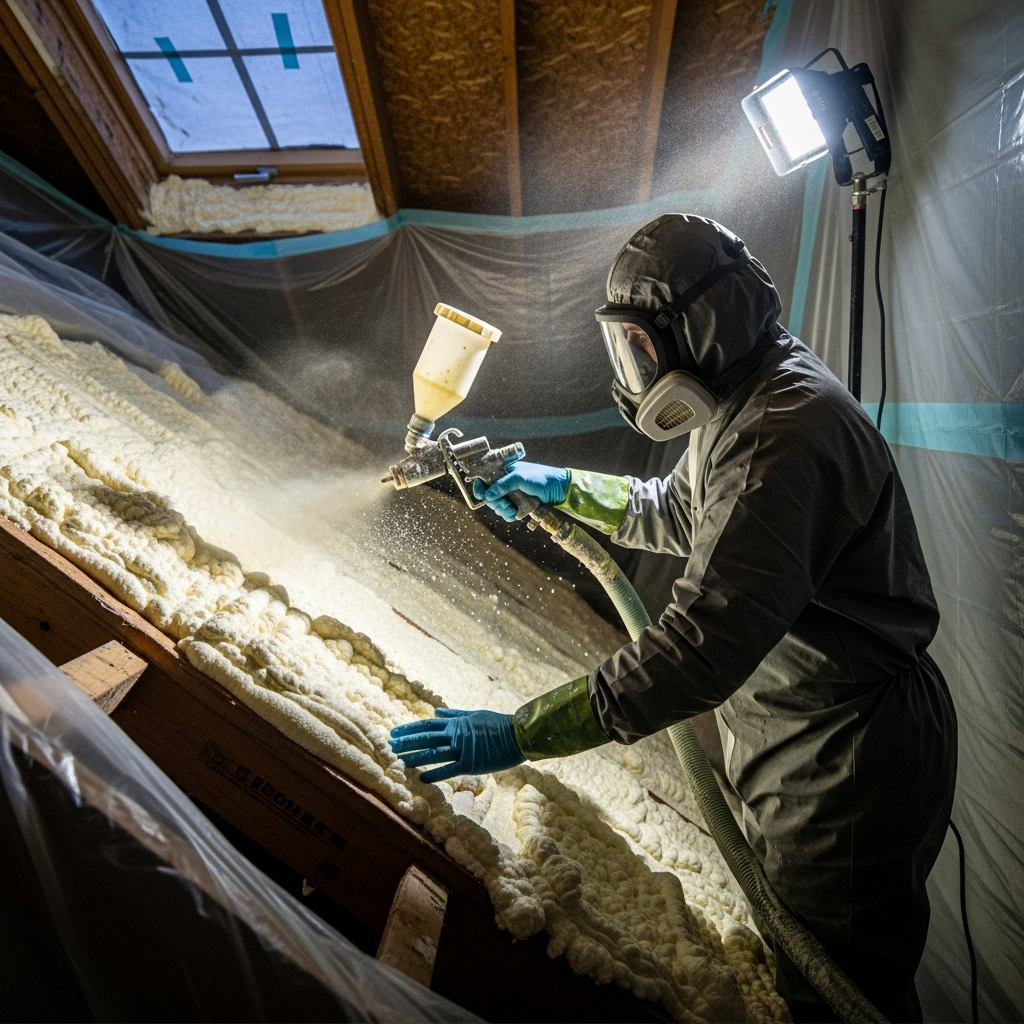
The process begins with a diagnostic walkthrough. A trained crew inspects the attic or wall cavities, notes electrical and mechanical systems, and flags any moisture or roof concerns. Surfaces are prepared and protected, with careful masking of areas that should remain foam-free. The foam is then applied in measured passes to reach the specified depth and uniformity, avoiding overexpansion or gaps. Vent or service areas are preserved as needed, and ignition or thermal barriers are addressed per code and manufacturer guidance. The crew monitors curing and trims excess material so that the space is tidy and ready for the next trades or for you to use as planned.
Safety and air quality are central throughout. Professional-grade ventilation and personal protective equipment are used during application. After curing and cleanup, the space airs out. The result is an attic or wall assembly that holds temperature with very little drift, a quieter interior due to the foam’s continuous coverage, and fewer pathways for dust and outdoor pollutants to enter the home. These benefits are meaningful in neighborhoods near busy thoroughfares or flight paths, where ambient noise and particulates are part of daily life.
When Roofline Encapsulation Makes Sense
Spray foam often shines when used to insulate along the roof deck rather than the attic floor. This approach, commonly called roofline encapsulation, brings the attic closer to indoor conditions, which can be a game changer if ducts and air handlers live up there. Reducing the temperature extremes around your mechanical equipment improves efficiency and comfort at the registers. It also makes the attic more hospitable for light storage or future service access. However, encapsulation changes how the assembly handles moisture and ventilation, so it must be planned and executed by a team fluent in local code, roofing details, and building science.
Some Los Angeles attics are framed in ways that make floor-level insulation awkward or insufficient—think of trussed cavities with lots of obstructions, or spaces where headroom is limited but the roof deck is readily accessible. In these cases, a well-detailed foam application at the deck can deliver smoother, more predictable results than trying to thread batts or blow loose-fill around complex framing. The goal is to select the approach that produces a continuous, durable barrier against heat and air movement.
Coordinating with Other Upgrades
Spray foam projects often pair well with other improvements. If you are planning to replace your HVAC, it may be possible to right-size the new equipment once the foam is in place and the home’s load has dropped. If a re-roof is on the horizon, it’s wise to align details like venting, penetrations, and deck repairs before foam is applied. The same goes for electrical work: routing new lines is easier to plan once you know where foam will sit and how service clearances will be maintained. Good coordination reduces disruption and helps lock in the performance gains you expect.
Project logistics matter, too. Access to the attic, staging area for materials, and the sequence of application are all tailored to the home. Experienced Los Angeles crews know how to work around clay tile roofs, protect delicate finishes below, and plan for neighborhood constraints such as narrow driveways or limited parking. These considerations don’t just affect the calendar; they shape the smoothness and completeness of the finished job.
Codes, Barriers, and Professional Standards
California’s energy standards guide minimum performance, but spray foam adds layers of detail beyond simple thermal targets. Ignition barriers, thermal barriers, and clearance around heat sources must be handled correctly. When foam is used at the roof deck, ventilation strategies are rethought to suit the new assembly. In certain configurations, an additional coating or barrier is required to meet fire safety requirements. Qualified installers understand these details and can articulate the “why” behind each one, giving you confidence that your home is both efficient and safe.
Documentation is key. Your project file should note foam type, thickness, coverage areas, and barrier treatments. Photos of hidden areas offer transparency for future trades. If you decide to remodel later, those records will prevent accidental damage and make it easier for professionals to work within the assembly. They also help support resale conversations about efficiency and comfort improvements, which Los Angeles buyers increasingly appreciate.
Performance You Can Feel Every Day
What most homeowners notice after spray foam is installed is the way temperatures hold steady, even during afternoon peaks. Rooms under the attic stay comfortable longer, and the AC no longer runs hard just to keep up with a west-facing roof. Indirect benefits follow: dust infiltration drops, indoor noise is hushed, and the whole home takes on a calmer feel. Over the long term, mechanical equipment tends to cycle less dramatically, which supports longevity and can reduce maintenance surprises. This is the kind of improvement that earns its keep through daily comfort rather than flash.
In the middle of exploring options, it’s useful to compare the installation craft as closely as the product itself. The results you feel come from continuous, well-bonded coverage and thoughtful transitions at edges, penetrations, and service areas. It’s why homeowners who emphasize the quality of their insulation installation often report smoother, more satisfying outcomes than those who focus on any single specification in isolation.
Addressing Common Concerns
People sometimes worry that foam will make their home “too tight.” In practice, the solution is balanced ventilation and moisture management. A well-sealed envelope improves control; it doesn’t eliminate the need for fresh air. Modern homes pair tight assemblies with designed ventilation strategies, which deliver consistent indoor air quality without the random leakage that undermines comfort. Others ask about reversibility or future access. Careful planning preserves service pathways and marks them for future trades so that maintenance and upgrades remain straightforward.
There’s also the question of sound. While open-cell foam offers notable acoustic benefits, even closed-cell applications can quiet a home by reducing the flanking paths that sound uses to move. If a room under the roof doubles as a studio or office, this reduction in ambient noise can be as valuable as the thermal improvements. Each of these details contributes to the texture of daily life in the home, and they’re worth weighing alongside pure energy performance.
Frequently Asked Questions
Is spray foam safe for my family and pets?
When installed by trained professionals who follow manufacturer guidance, spray foam cures into an inert material. During application, the workspace is isolated and ventilated. After curing and cleanup, the area is safe to occupy as directed by your installer.
Can spray foam be installed in an older Los Angeles home?
Yes, but the plan must respect existing wiring, roof condition, and ventilation strategy. A thorough inspection ensures safe, compatible assemblies and may suggest targeted electrical or roofing updates before foam is applied.
Will my attic still need ventilation after roofline foam?
Encapsulating the roofline changes how the attic behaves; traditional venting is often reduced or eliminated by design. The insulation and air barrier move to the roof deck, and the attic becomes part of the home’s semi-conditioned space. Your installer will specify the correct approach for your assembly.
What’s the difference between open-cell and closed-cell foam?
Open-cell is lighter and offers greater expansion and sound absorption; closed-cell is denser, resists moisture diffusion more strongly, and delivers higher thermal resistance per inch. The right choice depends on goals and assembly design.
How long does a typical spray foam project take?
Most attic projects can be completed within one to two days once prep is finished, though complex rooflines or coordination with other trades can extend the schedule. The goal is thorough, even coverage and a clean handoff.
Will spray foam lower my energy usage?
By reducing heat transfer and sealing air leaks, spray foam can significantly trim heating and cooling loads. Homeowners typically notice fewer hot and cold spots and calmer temperature swings, which translates into more efficient HVAC operation.
Ready to explore the comfort and control that spray foam can bring to your home? Connect with a local team that treats your house as a system and pairs expert guidance with precise insulation installation. Schedule a consultation today and take the first step toward a steadier, quieter, and more efficient Los Angeles home.