
How Los Angeles Homes Shape Insulation Decisions
From the ocean’s edge to the foothills, Los Angeles blends architectural history with demanding microclimates. That diversity is exactly why conversations about insulation costs resist tidy averages. A bungalow near the coast breathes differently than a hillside contemporary in the Valley, and each home’s structure, access, and mechanical systems write the rules for a smart insulation plan. If you’re evaluating upgrades, think first about the home as a system—how heat, air, and moisture move—and then about the materials and methods that will guide that movement into a gentler, more predictable pattern.
Homeowners often begin with a broad scan of options for insulation installation and quickly discover that the path from estimate to everyday comfort runs through careful diagnosis. The clearest proposals explain what the crew will do before the first bag is opened: sealing attic penetrations, protecting ventilation channels, handling can lights and bath fans, and coordinating with electricians or roofers when conditions suggest a pause-and-fix approach. The integrity of those steps drives the result you feel—not just the material placed overhead or in the walls.
Spaces That Commonly Need Attention
Attics are the headliners in Los Angeles, but they are not the only actors on stage. Crawlspaces, knee walls, garage ceilings under living areas, and exterior walls can all influence comfort. A toasty bonus room above a garage or a cool back bedroom over an uninsulated crawlspace can undermine the whole-home experience. Prioritizing the biggest drivers first—often the attic and air sealing—tends to deliver the fastest day-to-day gains. From there, targeted improvements to ductwork, walls, or floors bring the rest of the home into alignment.
Exterior walls in older homes may have little to no insulation, and the best approach depends on access, siding type, and renovation plans. Crawlspaces benefit from air sealing at the rim joists and careful insulation of floors or walls depending on moisture considerations. Garage ceilings that separate living spaces from unconditioned areas often need dense, continuous coverage to cut heat transfer and noise. Each of these assemblies behaves differently, so a cookie-cutter plan misses opportunities to maximize comfort and stability.
Materials and Methods: Matching Goals to Assemblies
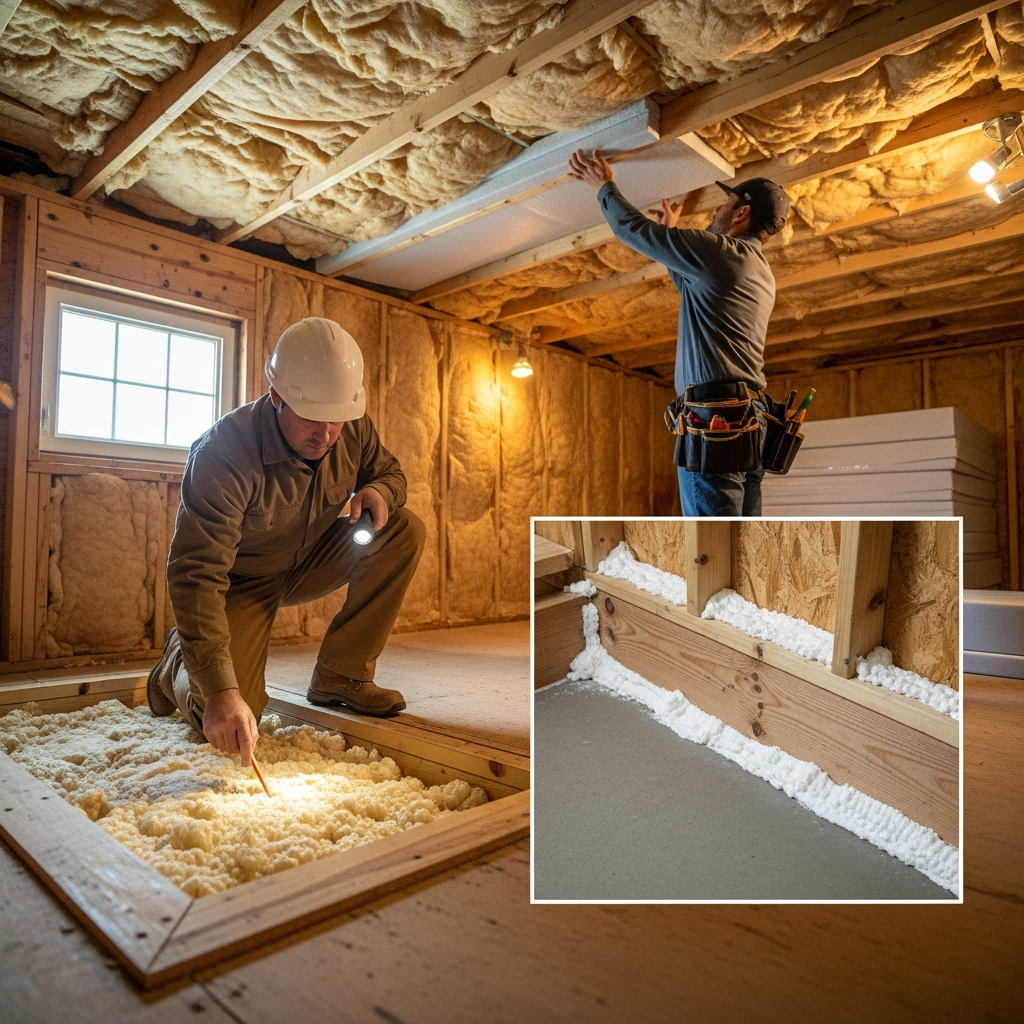
Loose-fill insulation shines in attics with irregular shapes and obstructions, delivering a uniform blanket that tucks into corners batts can’t reach. Batts work well in open bays when installed with precision and without compression. Spray foam brings air sealing into the insulation layer and is powerful in assemblies where roofline encapsulation or complex geometries would otherwise leave gaps. The right choice depends on the assembly’s needs and your goals for acoustic control, thermal performance, and future access for service or storage. A balanced plan might pair diligent air sealing with dense loose-fill in the attic and high-quality batts in a garage ceiling, for example.
Performance targets, such as the thermal resistance of the assembly, are benchmarks, not the whole story. In practice, continuity and air control frequently outpace nominal R-values in terms of felt comfort. A slightly thinner but perfectly continuous assembly can outperform a thicker one riddled with gaps. That’s why experienced local crews emphasize detailing around edges, penetrations, and transitions just as much as they focus on depth or thickness.
Existing Conditions: The Hidden Variables
Older insulation that’s been disturbed by storage, pests, or previous projects rarely performs as intended. Removal and sanitation, when needed, restore the attic to a clean slate. Wiring type, recessed lighting, and flues set requirements for clearances and protective covers. Ducts that run through the attic deserve evaluation and sealing; their influence on comfort can overshadow the gains from new insulation if left leaky. Access conditions—from tiny scuttles to generous hatches—shape logistics and crew size. Each of these factors contributes to the effort behind a polished result and helps explain why two homes with identical square footage can follow very different paths.
Ventilation cannot be an afterthought. Soffit and ridge or roof vents allow the attic to exchange air, protecting the roof deck and reducing heat buildup. Baffles ensure that new insulation doesn’t block those intakes. Balanced airflow, combined with air sealing at the ceiling plane, yields the quiet, predictable interior that homeowners hope for when they invest in insulation work.
Planning, Scheduling, and Coordination
The smoothest projects are coordinated with adjacent work. If you’re replacing a roof, attic insulation planning should be part of that conversation so ventilation and penetrations are handled once and handled right. If new HVAC is on the horizon, load reductions from improved insulation may influence equipment sizing, duct layout, and register placement. Electrical upgrades can be timed so that fixtures and junctions receive the right housings and clearances before they’re covered. A well-choreographed project saves time overall and ensures each trade supports the others.
On installation day, expect a calm sequence: protect access paths, stage equipment, address air leaks, install baffles, and then place or blow insulation with attention to even coverage. Good crews photograph critical steps, mark service pathways, and label key fixtures for future reference. When removal is part of the plan, negative-pressure vacuums and sealed hoses keep dust under control. Afterward, the attic or work area should look orderly and documented, with depth markers visible where applicable.
Measuring Success: Comfort You Can Feel
Homeowners often notice a change the very first evening after an attic upgrade. Rooms hold temperature more steadily, west-facing spaces don’t spike as sharply, and the HVAC system cycles in a calmer rhythm. Morning chill lingers less, and hot afternoons feel less oppressive indoors. If your home sits near busy roads or under a flight path, you may also enjoy a quieter interior thanks to denser, more continuous coverage and sealed leakage paths. These practical, day-to-day improvements are the dividends of a carefully planned and well-executed insulation job.
There’s a long-term dimension as well. Consistent interior conditions ease the workload on your HVAC equipment, supporting longevity and potentially simplifying future choices when it’s time for replacement. Documentation from today’s project helps tomorrow’s trades work cleanly and confidently around what’s been installed. And because efficiency and comfort increasingly matter to buyers, a well-insulated home tells a compelling story at resale.
Reading and Comparing Proposals
When you receive multiple proposals, compare the narrative, not just the headline. Does the plan include air sealing? How are soffits protected with baffles? What’s the strategy for can lights and bath fans? Are ducts assessed for leakage? Is removal included if existing insulation is compromised? Will the team provide photos and labels for future access? Proposals that answer these questions give you a truer comparison point and help you choose an installer whose process matches your expectations.
Midway through your evaluation, it can be grounding to return to essentials. A reliable result arises from an unbroken thermal layer, robust air sealing where the home meets the attic or exterior, and ventilation that continues to flow as intended. Installers who commit to these principles—and who communicate clearly—deliver the comfortable, stable interiors that make Los Angeles living feel effortless.
Frequently Asked Questions
Which area of my home should I insulate first?
For many Los Angeles homes, the attic delivers the largest immediate comfort gains, especially when paired with targeted air sealing. From there, address crawlspaces, garage ceilings under living areas, and exterior walls as needed.
Do I need to remove old insulation?
Only when conditions warrant it. Clean, dry, evenly distributed insulation can sometimes remain after air sealing. Removal is advised for contamination, moisture history, or a patchwork that creates gaps and compression.
Will insulation help with noise?
Yes. Denser, continuous coverage softens airborne noise from streets and overhead traffic. While not a substitute for dedicated acoustic assemblies, many homeowners experience a quieter interior after upgrades.
How long does an insulation project take?
Most single-space projects—like an attic—finish in a day or two once preparation is set. Complex access, removal, or coordination with other trades can extend timelines, but clear planning keeps things predictable.
What’s the difference between blown-in, batts, and spray foam?
Blown-in excels at covering irregular spaces; batts perform well in open bays when installed precisely; spray foam integrates air sealing and insulation and can transform roofline assemblies. The right choice depends on your home’s design and goals.
Will better insulation affect my HVAC needs?
Often yes. Lower heating and cooling loads can support right-sized equipment at the next replacement, improving comfort and efficiency. A post-project assessment helps quantify those changes for planning.
If you’re ready to trade temperature swings for steady comfort, connect with a local team that pairs clear diagnostics with careful insulation installation. Book your assessment today and take the first step toward a quieter, calmer, and more efficient Los Angeles home.