
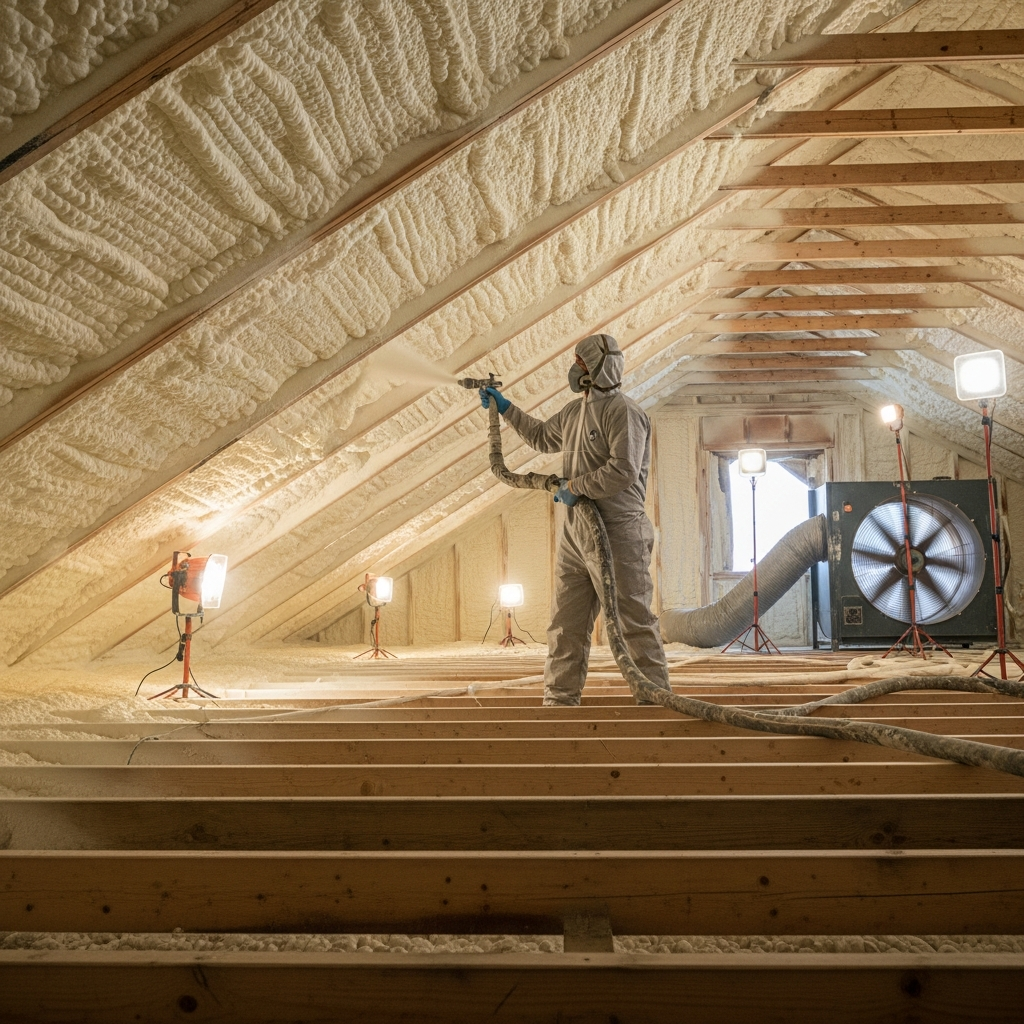
Spray foam insulation has earned a reputation in Los Angeles for delivering both thermal resistance and robust air sealing in one application. From coastal bungalows contending with foggy mornings to hillside homes staring down hot, dry winds, spray foam’s ability to tighten the building envelope can immediately elevate comfort. But as with any powerful tool, results hinge on design, product selection, and field execution. If you are exploring spray foam for your home, it pays to partner with a specialist in insulation installation who understands how our region’s microclimates and building styles influence best practices.
Two main families of spray polyurethane foam dominate residential work: open-cell and closed-cell. Open-cell foam is lighter and can expand to fill irregular cavities, offering excellent sound absorption and air sealing. Closed-cell foam is denser, adds notable rigidity to assemblies, and provides exceptional control of air and incidental moisture. Both require trained applicators, precise equipment calibration, and attention to substrate temperature and humidity—factors that can vary significantly from a cool coastal morning to a sun-baked afternoon in the Valley.
Design first, product second
Great outcomes begin with the assembly you have and the performance you want. Are you encapsulating a vented attic to bring it into the conditioned space, or are you targeting specific leaks at rim joists and knee walls? Are your walls plaster over lath, or modern studs with OSB sheathing? Will you pair foam with other insulation types to balance acoustics, cost, and thermal goals? These questions guide whether open-cell, closed-cell, or a hybrid approach fits best. A design-first mindset ensures that foam is used where its strengths shine rather than as a one-size-fits-all solution.
Local code considerations also factor into the design. Ignition barriers, thermal barriers, and clearances around heat sources are non-negotiable details that must be addressed in the plan and verified in the field. An experienced team coordinates these elements so that the finished assembly is as safe as it is efficient.
Substrate preparation and moisture awareness
Foam adheres best to clean, dry, properly prepared surfaces. In Los Angeles, coastal homes may experience morning condensation under roof decks, while inland properties might see superheated surfaces by midday. Crews adapt to these swings by timing application and using moisture meters and temperature probes to confirm conditions are suitable. Where roof leaks or prior condensation marks exist, those issues must be addressed before foam goes in; encapsulating a hidden moisture problem helps no one.
In basements and crawl spaces—less common but present in some hillside homes—closed-cell foam’s resistance to incidental moisture makes it a strong candidate. On above-grade walls, vapor profiles require careful thought so assemblies can dry in at least one direction, maintaining durability through our seasonal patterns.
Equipment calibration and application technique
Spray foam relies on a precise chemical reaction that creates its cellular structure. Equipment calibration, hose temperatures, and spray technique influence density, adhesion, and expansion. In the field, that means trained applicators perform test sprays, monitor rise, and adjust for ambient conditions. They apply foam in lifts to control heat buildup and ensure proper curing. Corners, transitions, and penetrations receive special attention so that the air seal remains continuous despite framing quirks.
Quality control continues with trimming excess foam flush where required and documenting thickness across representative areas. Thoughtful sequencing ensures that electricians and other trades are not left with blocked paths and that access to essential components remains available for future service.
Attic encapsulation versus vented strategies
One of spray foam’s most discussed uses is attic encapsulation—spraying the underside of the roof deck to bring the attic into the conditioned envelope. This approach can dramatically reduce heat entering the home and keep mechanical systems in a friendlier environment. It also changes the ventilation strategy, as the attic is no longer vented to the outdoors. Proper detailing around skylights, chimneys, and soffits is critical, and code-required ignition or thermal barriers must be observed.
Alternatively, some homes are better served by maintaining a vented attic and using foam in targeted areas such as knee walls, ducts, or complex transitions where air leakage is severe. The decision depends on roof design, existing mechanical layout, and project goals. A comprehensive evaluation weighs these factors and proposes a path that fits your home rather than forcing a single solution.
Sound control and comfort
Los Angeles living often means street noise, nearby flight paths, or neighbors in close proximity. Open-cell foam, with its softer, more absorptive nature, can help tame airborne sound in walls and ceilings. When combined with strategic air sealing, many homeowners report a noticeable hush in rooms once prone to noise. In multi-story homes, treating floor cavities can soften footfall and create a calmer interior environment, complementing the thermal gains that foam provides.
Comfort is also about temperature stability. After a proper foam installation, rooms that used to swing wildly through the day settle down. Air conditioning cycles smooth out, and the chill that once radiated from certain walls on winter mornings fades. Spray foam’s continuous contact and air sealing are a big part of that transformation.
Safety, ventilation, and re-entry
During application, professional crews manage ventilation and establish clear re-entry timelines so that occupants return when conditions are appropriate. Proper personal protective equipment, containment, and real-time monitoring are part of responsible practice. Communication is key: homeowners should know the schedule, the temporary restrictions, and when spaces will be comfortable to reoccupy.
After curing, foam is inert. Still, it must be protected by code-compliant barriers in many locations. Your installer should walk you through these requirements and how they will be met in your home’s specific assemblies.
Integrating foam with other insulation types
Foam excels as an air and thermal control layer, but it is not always the solo star. In many Los Angeles homes, a hybrid approach maximizes value. For instance, a thin layer of closed-cell foam at the roofline can create a robust air seal and moisture control, followed by blown-in insulation to build additional thermal resistance where it fits well. In walls, small amounts of foam can treat tricky transitions while batts or dense-pack cellulose fill the bulk of the cavity. This blending leverages each material’s strength while keeping the overall assembly balanced and serviceable.
Coordination is essential: thicknesses, drying paths, and ignition barrier strategies must be aligned so that the combined system performs predictably over time.
Working within Los Angeles homes
Local housing quirks shape the playbook. Plaster and lath walls, common in older neighborhoods, require careful planning for any injection foam alternatives or adjacent work. Many homes feature recessed lighting and skylight wells that need protection and precise detailing. Hillside properties may have irregular framing or inaccessible crannies best approached with targeted foam. Flat-roof mid-century designs demand particular attention to roof drainage and penetrations before any encapsulation decisions are made.
On the logistical side, crews plan for staging around narrow driveways, manage noise windows in dense neighborhoods, and protect interiors from overspray with meticulous masking and containment. Professionalism shows in how the job integrates with daily life while staying on schedule.
Quality assurance and documentation
Trustworthy installers document the process—materials used, application areas, average thickness, and barriers installed. Photos of key details and coverage patterns provide transparency. When combined with post-install comfort checks or optional diagnostic testing, you gain a clear picture of what changed and why it matters in your daily experience.
If roof work or remodels are in your future, good records help ensure future crews respect the new assemblies and avoid damaging sealed transitions or blocking critical access points.
Choosing the right partner
Focus on experience, communication, and a design-driven approach. Ask how the team differentiates between open-cell and closed-cell in local applications, how they verify conditions before spraying, and how they will protect occupants and finishes. Request a written plan that explains where foam will be used, how thick, and what barriers will follow. Clear answers suggest a crew that treats your home with the same care they bring to the chemistry of spray foam itself.
As you explore options for insulation installation, remember that spray foam is most powerful when fitted precisely to your home’s assemblies and goals. A collaborative design and a disciplined field process turn a promising material into day-to-day comfort you can feel.
FAQ
Is spray foam safe for homes with older wiring? It can be, but clearances and code requirements must be respected. An assessment identifies any wiring concerns and integrates safety measures into the plan before application.
Will spray foam make my home too tight? A tighter envelope is good for comfort and efficiency, but ventilation must remain adequate. Your installer will discuss balanced ventilation strategies if diagnostics suggest they are needed.
How long does installation take? Many targeted applications finish in a day, while whole attic encapsulations can take longer. Scheduling considers curing time and re-entry guidance so you know exactly when spaces are ready.
Can foam help with noise? Yes. Open-cell foam is particularly effective at absorbing airborne sound in walls and ceilings, complementing its thermal benefits.
What about roof leaks? Existing leaks must be fixed before foam is applied. Encapsulating a leak masks the symptom but does not solve the cause, and it can trap moisture where you do not want it.
Will I still need other insulation? Often, yes. Hybrid assemblies pair foam’s air seal and moisture control with other insulation types to build total thermal performance efficiently.
How do I maintain spray foam? Foam is low-maintenance after installation. Periodic visual checks after any roof or remodel work ensure assemblies remain intact and undisturbed.
Ready to elevate comfort and control in your home? Connect with a local pro for insulation installation that designs spray foam into your home the right way—safely, thoughtfully, and with respect for how Los Angeles homes really live.