
Attic Insulation in Los Angeles: A Complete Buyer’s Guide to Materials, R-Value, and Hiring the Right Contractor
You run your hand along the ceiling drywall on a July afternoon and it’s warm to the touch. That’s not normal, and if you own a home in Los Angeles, it’s a reliable signal that your attic insulation is either inadequate, degraded, or missing entirely. LA’s climate is mild enough that homeowners often ignore the attic for years, then face sky-high cooling bills when summer arrives. This guide walks you through every decision you’ll make when evaluating attic insulation services in Los Angeles, from material selection and R-value targets to vetting a qualified contractor.
Why Attic Insulation Matters Differently in Los Angeles
Los Angeles sits in a Mediterranean climate zone, which means long, dry summers with intense radiant heat and mild, occasionally wet winters. Unlike homes in colder climates that lose most of their energy through walls and windows, LA homes shed the most conditioned air through the roof plane. A poorly insulated attic acts like a heat battery, absorbing solar energy all day and radiating it downward into living spaces well into the evening.
The challenge is compounded by the region’s wide microclimates. A home in the San Fernando Valley routinely sees temperatures 10 to 15 degrees higher than a coastal property in Santa Monica. That means the insulation strategy that’s adequate in one part of LA County may be undersized for another. Any honest attic insulation contractor should account for your specific neighborhood’s heat exposure, not just a countywide average.
If your second floor or rooms directly beneath the attic feel noticeably warmer than the rest of the house, that’s a pattern worth investigating. You can read more about the specific causes in our article on why LA attics overheat in summer.
What the California Energy Code Requires for Attic Insulation
California’s Title 24 Building Energy Efficiency Standards set minimum insulation requirements for new construction and significant renovations. For most of Los Angeles (Climate Zone 9), current standards call for ceiling insulation at R-38 or higher in new builds. Older homes, particularly those built before the 1980s, frequently have R-11 or R-19 batts that were code-compliant when installed but fall well short of today’s benchmarks.
It’s worth noting that requirements vary depending on permit type, project scope, and the specific climate zone your property falls in. Always verify current requirements with your local building department or ask your contractor to pull the applicable code section for your address. A licensed attic insulation contractor should be familiar with Title 24 compliance and be able to document that the finished installation meets or exceeds the required R-value for your zone.
Insulation Materials: Comparing Your Main Options
Three materials dominate residential attic insulation installations in the Los Angeles area. Each has a distinct performance profile, installation method, and set of trade-offs worth understanding before you request quotes.
| Material | R-Value per Inch | Installation Method | Best For | Key Consideration |
|---|---|---|---|---|
| Blown-in Fiberglass | ~R-2.2 to R-2.7 | Blown loose-fill | Topping up existing insulation; irregular joist bays | Settles over time; verify depth at multiple points |
| Blown-in Cellulose | ~R-3.2 to R-3.8 | Blown loose-fill | Full attic coverage; eco-conscious homeowners | Made from recycled paper; moisture management important in LA’s rare wet winters |
| Spray Foam (Open-Cell) | ~R-3.5 to R-3.7 | Sprayed, expands in place | Air sealing + insulation in one pass; older homes with many penetrations | Higher upfront investment; seals attic as conditioned space |
| Spray Foam (Closed-Cell) | ~R-6.0 to R-7.0 | Sprayed, rigid when cured | Maximum R-value per inch; moisture barrier needed | Highest material cost; typically used in specific applications rather than whole-attic fills |
| Fiberglass Batts | ~R-2.9 to R-3.8 | Hand-laid between joists | New construction; accessible, uniform joist spacing | Gaps and compression reduce effective R-value significantly |
For most existing Los Angeles homes, blown-in cellulose or blown-in fiberglass offers the best balance of coverage and value. Both materials conform to irregular framing, flow around obstructions, and can be installed over existing insulation when the existing material is in acceptable condition. The choice between the two often comes down to the specific conditions in your attic. Our detailed breakdown at fiberglass vs. cellulose for LA attics covers those trade-offs in depth.
If you want it handled correctly the first time, consider professional attic insulation in Malibu.
Understanding R-Value and Why Depth Alone Isn’t the Whole Story
R-value measures thermal resistance. The higher the number, the more effectively the material slows heat transfer. For Los Angeles homeowners targeting Title 24 compliance or general comfort, R-38 is a common minimum target for the attic floor, with R-49 being the recommended ceiling for Energy Star-qualified homes.
To reach R-38 with blown-in fiberglass, you typically need around 14 to 17 inches of settled depth. With cellulose, that same R-38 requires roughly 10 to 12 inches. These numbers matter when a contractor gives you a quote: ask specifically what settled depth they’re guaranteeing and how they’ll verify it (most reputable installers use ruler depth markers visible from the attic hatch).
What R-value doesn’t capture is air leakage. A perfectly rated R-38 batt installation with gaps around recessed lights, plumbing penetrations, and attic hatches will perform far below its rated value because conditioned air bypasses the insulation entirely. Air sealing before insulation installation is a critical step that distinguishes a thorough attic insulation service from a basic material-drop job. Ask every contractor you evaluate whether air sealing is included in their scope or quoted separately.
Wondering whether your current insulation is past its useful life? The signs that your attic insulation needs replacement article covers the visual and performance indicators to look for before scheduling an assessment.
The Los Angeles Housing Stock: What Contractors Encounter Here
Los Angeles has one of the most varied residential housing stocks in the country. A single neighborhood can contain 1920s Spanish Revival bungalows, 1950s post-war ranch homes, 1970s apartment conversions, and 2000s-era tract houses, each presenting a different attic insulation challenge.
Older homes, particularly those built before World War II, often have knob-and-tube wiring routed through the attic. Blown-in insulation should not be placed directly over active knob-and-tube wiring without an electrician’s sign-off, as the insulation can trap heat around the conductors. A reputable attic insulation contractor in Los Angeles will flag this during the inspection rather than proceed without disclosure.
Many mid-century homes in areas like Burbank, Glendale, and the eastern San Fernando Valley were built with shallow attic cavities and minimal roof ventilation. Proper insulation in these spaces requires balancing thermal performance with adequate airflow to prevent moisture buildup during the region’s rainy season, typically December through March. Homes in hillside areas face an additional layer of complexity: irregular roof lines, limited access points, and sometimes fire-zone requirements that influence material selection. California’s wildfire risk zones, which cover portions of the Santa Monica Mountains, Verdugo Hills, and other brushy hillside communities, have specific building standards that may affect which materials are appropriate for your attic.
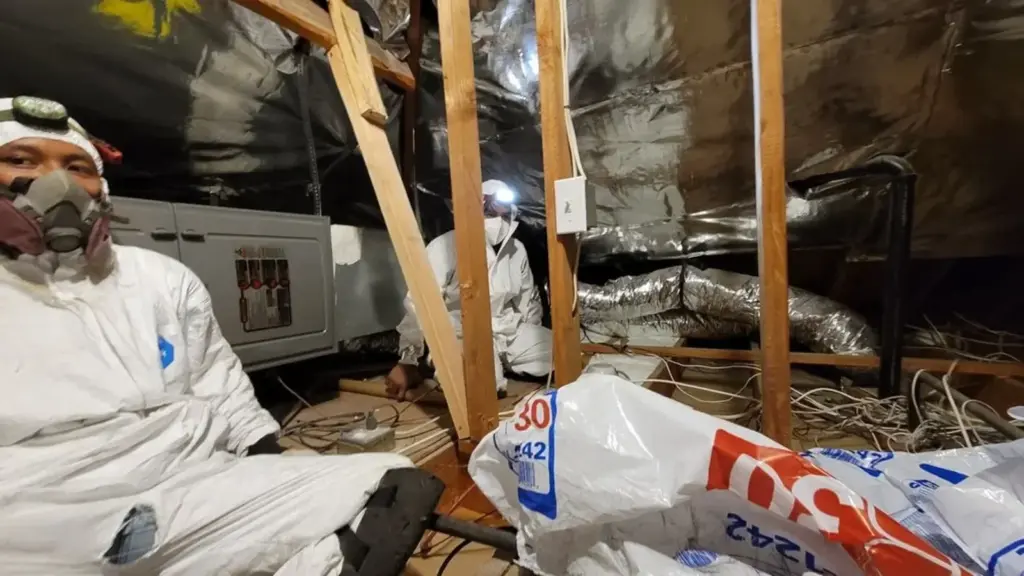
Rodent activity is also more common in LA attics than many homeowners realize. Rats and mice nest in insulation, compress it, and contaminate it with waste. If there’s any sign of animal activity, the insulation removal and attic cleaning should precede any new installation. Skipping that step means new material going over a compromised substrate.
Many Malibu homeowners rely on expert attic insulation in Malibu for exactly this.
How to Evaluate an Attic Insulation Contractor in Los Angeles
The difference between a well-executed insulation job and a mediocre one often comes down to the contractor’s process, not just the material they use. Here’s what to look for when comparing attic insulation contractors in the LA area.
Licensing and Insurance
California requires insulation contractors to hold a C-2 (Insulation and Acoustical) license issued by the Contractors State License Board (CSLB). Verify the license number on the CSLB website before signing anything. General liability insurance and workers’ compensation coverage should be current and verifiable. An unlicensed installer has no accountability to the state licensing board if work is substandard or a claim arises.
The Inspection Process
A legitimate attic insulation contractor should physically enter your attic before quoting. A quote generated from a photo or a brief look through the hatch is a red flag. The inspection should document existing insulation depth and condition, air sealing needs, ventilation status, signs of moisture or pest activity, and any electrical or structural concerns. You should receive a written scope of work that specifies the material, the target R-value, the installation method, and what happens to existing insulation (left in place, removed, or supplemented).
What the Quote Should Include
A complete quote for attic insulation installation should clearly separate labor, materials, and any preparatory work such as air sealing or debris removal. Watch for quotes that list only a total price without a material breakdown, as it’s difficult to verify whether the promised R-value was actually achieved after the job is done.
Ask whether the installer will provide a Certificate of Insulation, which documents the material, coverage area, and R-value achieved. This document is often required for utility rebate programs and can be valuable when selling the home.
Warranty and Post-Installation Support
A quality attic insulation service should include a workmanship warranty covering installation defects, separate from the manufacturer’s material warranty. Ask what the process is if you notice uneven temperatures or drafts after installation, and get the answer in writing. You can also get a sense of what the post-installation period typically looks like in our article on what happens after attic insulation is installed.
Red Flags to Watch For When Getting Quotes
Not every contractor operating in the Los Angeles market follows best practices. A few patterns are worth watching for as you collect quotes.
- No attic entry during the estimate. If the contractor quotes without going into the attic, they’re guessing at conditions rather than assessing them.
- Vague R-value commitments. “We’ll add about six inches” is not a specification. A professional installer commits to a target R-value and documents how it will be verified.
- Pressure to decide immediately. Legitimate contractors don’t create artificial urgency around insulation quotes. Take the time to compare at least two or three written proposals.
- No mention of air sealing. Insulation without air sealing is a partial solution. If a contractor never brings it up, ask directly whether it’s included.
- Unlicensed or uninsured. Verify the CSLB license number independently before any work begins.
If you’re also trying to understand the cost side of the equation before reaching out to contractors, the factors that affect attic insulation costs in Los Angeles article explains what drives pricing without putting a number on it.
Ready for the next step? Learn how attic insulation services in Malibu can help and reach out to the team.
Frequently Asked Questions
What R-value do I need for my Los Angeles attic?
Most of Los Angeles falls in California Climate Zone 9, where current Title 24 standards recommend a minimum of R-38 for attic insulation, with R-49 the target for Energy Star compliance. Homes in hotter inland areas like the San Fernando Valley often benefit from reaching the higher end of that range. Your contractor should reference the applicable climate zone for your specific address rather than applying a single countywide standard.
Should I remove old insulation before adding new material?
Not always. If existing insulation is dry, free of pest contamination, and still structurally intact, blown-in material can often be added on top to reach the target R-value. However, if there’s evidence of rodent activity, moisture damage, mold, or significant compression, removal is the right first step. A thorough attic inspection will reveal which situation you’re dealing with.
How long does attic insulation installation take for a typical LA home?
For a single-story home with a straightforward attic, a blown-in insulation installation typically takes a half day to a full day once any prep work is complete. Larger homes, attics requiring significant air sealing, or projects that include insulation removal beforehand will take longer. Your contractor should give you a realistic timeline in the written scope of work.
Is a permit required to add attic insulation in Los Angeles?
In most cases, adding insulation to an existing attic does not require a building permit in the City of Los Angeles, but requirements can vary by project type, scope, and jurisdiction within LA County. If the work involves electrical modifications or structural changes, permits may apply. Always confirm with your local building department or ask your contractor to verify permit requirements for your specific address.
Can attic insulation help with noise as well as temperature?
Dense-pack cellulose and certain spray foam applications do provide some acoustic dampening, which homeowners near busy streets or flight paths sometimes notice after installation. However, attic insulation is not a substitute for dedicated soundproofing. The primary function is thermal performance, and any noise reduction is a secondary benefit rather than a guaranteed outcome.
How do I know the job was done correctly after the crew leaves?
The most straightforward check is measuring insulation depth at multiple points using a ruler or the depth markers the installer should have placed during installation. You should also receive a Certificate of Insulation documenting the material, square footage covered, and R-value achieved. Within the first few weeks, you can compare how your home holds temperature against what you experienced before the installation as a practical performance check.
Ready to Schedule an Attic Insulation Assessment in Los Angeles?
Getting the right insulation for your Los Angeles home starts with an honest, thorough attic inspection. LA Attic Pro provides written assessments that document existing conditions, identify air sealing needs, and recommend the right material and R-value for your specific home and neighborhood. Whether you’re in the Valley heat or closer to the coast, the approach should fit your actual attic, not a generic template.
Contact LA Attic Pro’s attic insulation service to schedule your assessment and get a written quote with a clear R-value commitment. No pressure, no guesswork, just a documented plan for a more comfortable home.