
Cost Drivers for Attic Insulation and Duct Jobs in Camarillo and Greater LA
When attic insulation and ductwork are left in poor condition, the consequences rarely announce themselves loudly. Instead, they show up quietly: a utility bill that creeps higher each summer, a back bedroom that never quite cools down, or an HVAC system that runs longer and longer to meet the same thermostat setting. In Camarillo and across the greater Los Angeles basin, where attic temperatures can climb well above 130°F on a hot summer afternoon, degraded insulation and leaking ducts are not a minor inconvenience, they are a continuous drain on your household budget. Understanding what drives the cost of an attic insulation service and a duct replacement project is the first step toward making a smart, coordinated decision rather than paying twice for the same access.
Before You Start: What Shapes Every Project Estimate
No two attics in the Camarillo or LA area are exactly alike, and the variables below are what a qualified contractor will evaluate before quoting any job. Knowing them in advance helps you ask the right questions and compare proposals accurately.
- Attic square footage and ceiling height, larger attics require more material and more labor hours.
- Current insulation depth and condition, heavily contaminated or moisture-damaged insulation must be removed before new material goes in.
- Duct system layout and age, older flex-duct systems with multiple bends and long runs cost more to replace than compact, newer layouts.
- Attic accessibility, a low-clearance attic with a small hatch slows every task considerably.
- Presence of rodent activity or contamination, remediation and sanitation must happen before insulation or duct work begins.
- Desired insulation R-value, California’s Title 24 energy code sets minimum requirements that vary by climate zone; Camarillo sits in a zone with specific targets.
- Scope of duct work, partial repair versus full air duct replacement carries very different labor and material demands.
Step 1: Assess the Existing Insulation Honestly
The first real cost driver is the condition of whatever insulation is already in the attic. In many Camarillo homes built before the 1990s, original insulation has compacted significantly over the decades, losing much of its thermal resistance. Blown-in fiberglass or cellulose that once met code may now measure at a fraction of the R-value it started with. If the existing material is still clean and structurally intact, a contractor may be able to add new insulation on top, which reduces both labor time and disposal costs. If the material is contaminated by rodents, moisture intrusion, or mold, full removal is necessary before any new attic insulation installation can proceed. That removal step adds to the overall project scope but is not optional, installing new insulation over compromised material simply locks the problem in place.
Step 2: Evaluate Duct Condition Before Touching the Insulation
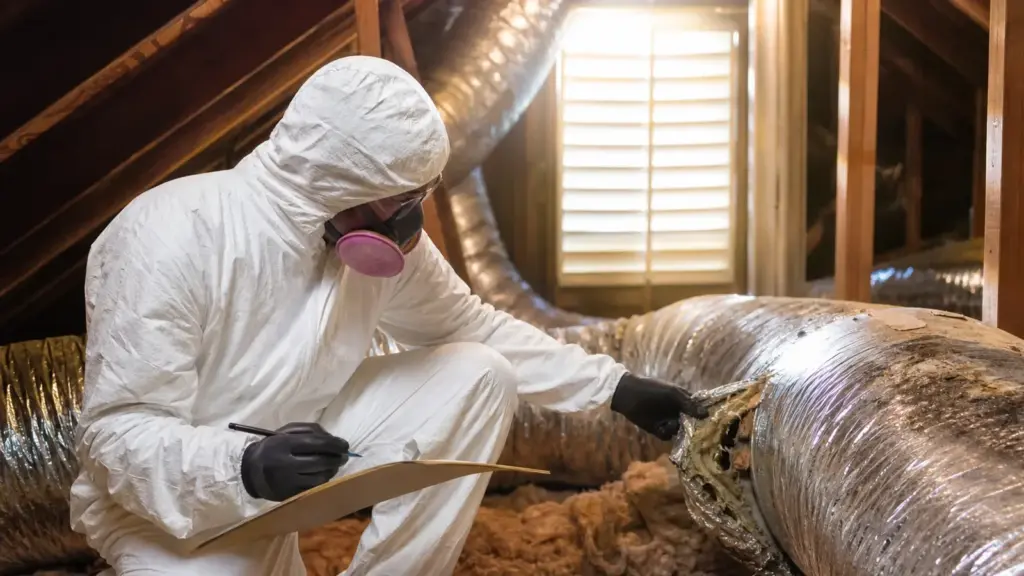
This step is where many homeowners inadvertently create extra expense: they schedule insulation work first and duct work later, only to discover that the new insulation must be disturbed to access the duct system. In Camarillo and the broader LA region, flex-duct systems installed in the 1980s and 1990s are common, and their outer jackets degrade in the extreme attic heat over time. Gaps at connections, collapsed inner liners, and disconnected sections are frequent findings. Reviewing the duct system before any insulation goes in allows both scopes to be priced and completed together, which avoids the cost of a second attic entry, a second cleanup, and a second round of disturbed insulation. If you are already seeing signs of duct trouble, the article how to spot failing attic ductwork explains the warning signs in detail before you schedule any contractor visit.
Step 3: Factor In Attic Accessibility and Clearance
Attic accessibility is one of the most underappreciated cost variables in any attic insulation service or duct replacement project. A standard pull-down stair with generous headroom allows crews to move equipment and materials efficiently. A small scuttle hatch with only eighteen inches of clearance above the joists means every tool, every bag of insulation, and every section of new duct must be maneuvered through a tight opening, often in extreme heat. Labor hours increase substantially in low-clearance attics, and that is reflected directly in project pricing. Homes in older Camarillo neighborhoods, particularly those built as ranch-style construction in the 1960s and 1970s, frequently have shallow attic profiles that add time to every task. When comparing quotes, ask each contractor how they account for accessibility constraints so you can evaluate proposals on equal footing.
If you want it handled correctly the first time, consider professional duct replacement in Malibu.
Step 4: Understand How Duct Layout Affects Replacement Cost
The complexity of the existing duct layout is a primary driver of attic duct replacement cost. A simple system with a central air handler, short trunk lines, and a handful of branch runs to individual rooms is far less labor-intensive to replace than a sprawling system with long flex runs, multiple elbows, and connections to hard-to-reach corners of the attic. Contractors will map the existing layout, note the number of supply and return registers, and calculate the linear footage of new duct required. Systems that were poorly designed originally, with excessive bends that restrict airflow, may also benefit from a redesigned layout during replacement, which adds engineering time but can meaningfully improve system performance. For a broader look at how the full scope of duct and insulation work is evaluated, the comprehensive guide to attic duct replacement and insulation in LA covers the evaluation process from start to finish.
Step 5: Account for Insulation Material Choice and R-Value Requirements
California’s Title 24 energy standards set minimum R-value requirements for attic insulation that vary by climate zone, and Camarillo’s coastal-influenced climate places it in a zone with specific targets. Achieving those targets with blown-in fiberglass requires a different material depth than achieving them with blown-in cellulose or batts, and the material cost per square foot differs accordingly. Blown-in materials are generally preferred in attics with irregular joist spacing or obstacles because they fill gaps more completely than batts. The choice of material affects not only the upfront material cost but also the long-term performance of the insulation, since some materials hold their R-value more consistently over time in high-heat attic environments. A qualified contractor will walk you through the trade-offs for your specific attic rather than defaulting to the cheapest option.
Step 6: Include Rodent Proofing and Sanitation in the Scope
In Camarillo and throughout the LA region, rodent activity in attics is common enough that it should be on every homeowner’s checklist before scheduling insulation or duct work. Rodents damage both insulation and ductwork, and their presence leaves behind contamination that must be addressed before new materials go in. If a contractor finds evidence of active or past rodent intrusion during the initial attic assessment, the scope will expand to include sanitation, decontamination, and sealing of entry points. Skipping this step and installing new insulation over a contaminated attic is a short-term decision with long-term consequences. The added cost of rodent proofing and sanitation is real, but it protects the investment in new insulation and ductwork. Addressing it as part of a single coordinated project is more efficient than returning for a second round of work after the insulation is already in place.
Step 7: Compare the Economics of Bundling Versus Staging
One of the clearest financial arguments for addressing attic insulation and duct replacement together is the cost of attic access. Every time a crew enters the attic, there are fixed costs: setup, protection of living spaces below, equipment staging, and cleanup. Running those costs once for a combined project rather than twice for sequential projects produces real savings. Beyond the logistics, there is also a performance argument: new insulation wrapped around old, leaking ducts does not deliver the efficiency gains you are paying for. The conditioned air escaping through duct gaps heats the attic space, which then works against the insulation. The two systems work together, and they should be addressed together. For guidance on selecting a contractor who can manage both scopes competently, choosing the right attic contractor in LA is a useful reference before you start collecting quotes.
Many Malibu homeowners rely on expert duct replacement in Malibu for exactly this.
Step 8: Get the Attic Assessed for LA’s Specific Climate Conditions
Camarillo’s climate is genuinely distinct from inland LA communities, and that distinction matters for attic work. The marine influence from the Pacific moderates summer extremes compared to the San Fernando Valley or the Inland Empire, but the marine layer also brings moisture that can affect insulation performance and duct jacket integrity over time. Attics in coastal Camarillo homes sometimes show different degradation patterns than those in drier inland communities, with more condensation-related issues alongside the heat-related ones. A contractor familiar with Ventura County’s coastal microclimates will account for these conditions when recommending insulation materials and duct jacket specifications, rather than applying a one-size-fits-all solution designed for a hotter, drier environment. This local knowledge is one of the practical reasons to work with a contractor who operates regularly in the area rather than one dispatched from a distant service territory.
Step 9: Plan for Post-Installation Verification
The final cost consideration is not an upfront expense but a protection of your investment: verifying that the completed work performs as specified. For duct replacement, this means confirming that connections are sealed, that airflow reaches all registers, and that the system is balanced. For insulation, it means confirming that the installed depth meets the specified R-value across the entire attic floor, not just in the easy-to-reach center sections. A contractor who includes a walkthrough and documentation of completed work gives you a baseline record that is useful for future maintenance, energy audits, or home sales. For ongoing maintenance after the project is complete, caring for your attic ducts after installation outlines what to monitor and when to schedule follow-up inspections.
When to Call a Professional in Camarillo
Attic insulation and duct replacement are not projects where the DIY approach offers meaningful savings or safety advantages. Working in a Camarillo attic during summer months means exposure to temperatures that can exceed safe working limits within minutes without proper precautions. Beyond the physical environment, duct systems connect to gas-fired furnaces and require proper sealing to prevent combustion byproducts from entering living spaces. Insulation removal involves materials that require appropriate respiratory protection and disposal. California also requires that certain energy-related improvements meet Title 24 standards, and documentation may be required for permit purposes depending on the scope of work. If your attic shows any of the following, schedule a professional assessment rather than attempting to evaluate or address the problem yourself:
- Visible gaps or disconnections in visible duct sections
- Insulation that appears flattened, discolored, or wet
- Evidence of rodent nesting or droppings in the attic
- Rooms that are consistently warmer or cooler than the rest of the house
- An HVAC system that runs continuously without reaching the set temperature
- Utility bills that have increased without a change in usage habits
LA Attic Pro serves Camarillo and the surrounding Ventura County communities with attic assessments, insulation removal and installation, and full air duct replacement. A professional evaluation is the fastest way to understand exactly what your attic needs and what a coordinated project will realistically involve.
Frequently Asked Questions
Ready for the next step? Learn how duct replacement services in Malibu can help and reach out to the team.
Why does attic accessibility affect the cost of insulation service so much?
Every task in the attic, from removing old insulation to routing new duct sections, requires moving materials and equipment through the access point. A small or awkward hatch significantly increases the time required for each task, and labor time is a primary component of any project estimate. Contractors who inspect the access point before quoting are giving you a more accurate number than those who estimate without seeing it.
Can I add insulation on top of my existing insulation without replacing the ducts first?
Technically yes, but it is rarely the right sequence. If the ducts are leaking, new insulation installed over them will be disturbed when the duct work eventually needs attention, and you may pay for two rounds of attic entry and cleanup. Having a contractor assess both systems at the same time lets you make an informed decision about whether to address them together or in stages based on actual condition rather than assumption.
What R-value does my Camarillo attic need to meet California’s energy standards?
California’s Title 24 energy code sets R-value requirements by climate zone, and requirements can also vary based on the scope of work being permitted. A licensed contractor familiar with Ventura County’s climate zone classifications can confirm the applicable target for your specific project. Requirements vary, so it is worth verifying the current standard rather than relying on what was required when your home was originally built.
Is it worth replacing ducts that are only partially damaged?
It depends on the age of the system and the extent of the damage. Spot repairs on an aging flex-duct system can address immediate leaks, but if the system is old enough that other sections are likely to fail soon, a full replacement often makes more financial sense over a five-to-ten year horizon. A contractor can help you evaluate the condition of the full system and give you an honest assessment of whether repair or full air duct replacement is the better long-term decision.
How do I know if a quote I received is reasonable?
Compare quotes by scope, not just by total number. Make sure each quote specifies the insulation material, the target R-value, the linear footage of duct being replaced, and what is included in cleanup and disposal. A lower number that omits rodent sanitation or debris removal may end up costing more once those items are added. Asking each contractor to walk you through their quote line by line is a straightforward way to make comparisons meaningful. For more on evaluating contractors, what to look for in an LA attic insulation contractor covers the key questions to ask.
Making a Coordinated Decision
Attic insulation and duct replacement are significant home improvement investments, and the variables that shape their cost are real and specific to your home’s construction, age, and condition. In Camarillo and across the greater LA area, the combination of high attic temperatures, aging housing stock, and California’s energy code requirements makes a thorough, professional assessment the essential first step. Addressing both systems together, when both need attention, is almost always the more efficient and economical path than staging the work separately.
If you are ready to understand exactly what your attic needs, contact LA Attic Pro for a professional assessment. Our team serves Camarillo and the surrounding Ventura County communities and can evaluate your insulation, ductwork, and attic condition in a single visit, giving you a clear picture of what a coordinated project involves before you commit to anything.