
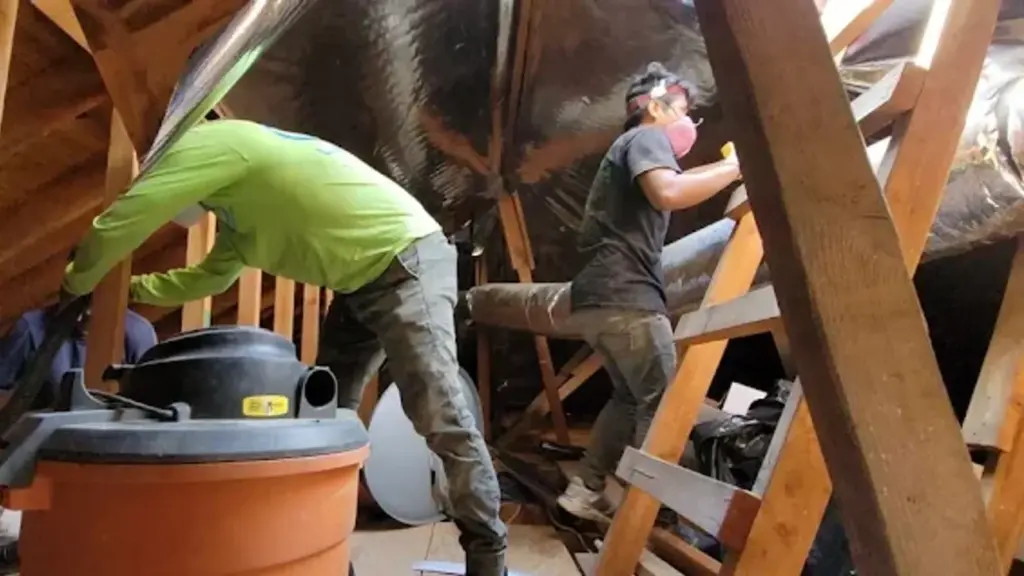
What to Expect After New Attic Duct Installation in Los Angeles and Camarillo
You close the last vent cover, the technician packs up, and your system kicks on. Suddenly the bedroom that always ran ten degrees warmer than the rest of the house actually feels like the thermostat setting. That moment is what new attic ductwork delivers for homeowners across Los Angeles and Camarillo, and it is only the beginning of what you will notice over the coming days and weeks. This checklist walks you through every real, measurable benefit so you know exactly what a successful installation looks like.
Immediate Comfort Changes to Check for on Day One
- Walk every room within the first hour the system runs and compare how quickly each space reaches the set temperature.
- Stand directly below supply registers and feel for strong, steady airflow rather than a weak or uneven trickle.
- Notice whether the system cycles off sooner than it used to, shorter run times at the same comfort level signal that conditioned air is actually reaching its destination instead of leaking into the attic.
- Check that return-air vents are pulling air smoothly; a balanced system draws and delivers air at roughly equal rates across the house.
- Listen for the difference in operating noise, properly sealed and supported ducts vibrate less, so the system should run quieter than before.
- Feel the air temperature at each register and confirm it matches what you expect from your system (cool in summer, warm in winter) rather than a lukewarm middle ground caused by heat transfer through old, uninsulated duct walls.
Indoor Air Quality Improvements to Monitor in the First Week
- Replace your air filter on the day of installation so you start with a clean baseline and can accurately judge how quickly it loads with debris going forward.
- Notice whether the musty or dusty smell that often accompanies degraded ductwork has cleared; new sealed ducts stop pulling unconditioned attic air, and whatever it carries, into the living space.
- Check that supply registers are no longer blowing visible dust or debris; old flex duct interiors shed fibers and accumulate particulates that new ductwork eliminates.
- If anyone in the household is sensitive to airborne irritants, pay attention to whether symptoms that coincide with the system running seem less frequent, new ducts remove a common pathway for attic contaminants to enter living areas.
- Inspect the area around return-air grilles for the dark, oily dust staining (sometimes called “ghosting”) that indicates a leaky system pulling air around the grille rather than through the filter; this staining should stop accumulating after replacement.
- For context on why damaged ductwork degrades air quality so significantly, see this overview of duct damage signs, many of those warning indicators reverse themselves after a proper replacement.
Energy Efficiency Gains to Track Over the First Billing Cycle
- Pull your last three utility bills before the job and set them aside; compare your next bill against that average to gauge the efficiency improvement.
- Expect the HVAC system to run for shorter, more purposeful cycles rather than running almost continuously trying to compensate for duct leakage.
- Check your smart thermostat data (if you have one) for total runtime hours per day; a meaningful drop in daily runtime is a direct indicator of reduced duct loss.
- Understand that the full efficiency benefit compounds when new ductwork pairs with adequate attic insulation, conditioned air that travels through well-insulated ducts inside a well-insulated attic loses far less energy than either improvement alone; the complete guide to attic duct replacement covers how these two systems interact.
- Note whether your outdoor condenser unit seems to run with less strain; when ducts stop leaking, the system moves the volume of air it was designed to move, which reduces mechanical stress on the blower and compressor.
- If you were experiencing pressure imbalances (doors that swing open or shut on their own, rooms that feel stuffy), those often resolve when duct leakage is corrected and return-air capacity is properly matched to supply.
If you want it handled correctly the first time, consider professional air duct cleaning in Malibu.
What to Verify About the Installation Itself
- Confirm that all new duct connections at the air handler, plenum, and each branch are sealed with mastic or appropriate metal tape, not standard household duct tape, which degrades quickly in attic heat.
- Verify that flex duct runs are fully supported and hang without sharp bends or kinks; a kinked flex duct can restrict airflow nearly as much as a disconnected one.
- Check that new ducts are wrapped in insulation rated for attic conditions, in the Los Angeles and Camarillo climate, duct insulation is critical because attic temperatures can exceed outdoor temperatures significantly during summer afternoons.
- Ask your contractor for documentation of the duct insulation R-value installed; California Title 24 energy standards set minimum requirements for duct insulation in conditioned distribution systems, and requirements vary by climate zone, confirm your installation meets local code with your contractor.
- Make sure all access panels and attic hatches disturbed during installation are properly resealed and insulated; an unsealed hatch can undermine the efficiency gains from new ductwork.
- Request a post-installation walkthrough so the technician can point out every new duct run, confirm airflow at each register, and answer questions about the system layout.
Los Angeles and Camarillo-Specific Considerations After Duct Replacement
- Attics in the Los Angeles basin and Ventura County regularly reach extreme temperatures during summer, particularly during Santa Ana wind events when overnight temperatures stay elevated; your new ducts’ insulation will be working hardest during these periods, so check register temperatures on the hottest days of the first summer to confirm performance holds up.
- Older housing stock in Camarillo and established LA neighborhoods, much of it built in the 1950s through 1980s, often features original duct layouts designed for window-unit or early forced-air systems; a replacement project is an opportunity to correct undersized trunk lines or dead-end branch runs that reduce whole-house comfort.
- Coastal proximity in parts of the LA and Ventura County service area means attic humidity can fluctuate more than inland zones; inspect new flex duct vapor barriers at the six-month mark to confirm no moisture is accumulating at low points in the runs.
- Wildfire smoke seasons are a real part of life in this region; a properly sealed duct system significantly reduces the pathway for outdoor particulates to enter the home through the distribution system during air quality events.
- Many homes in the area also have older attic insulation that was installed before current California energy code requirements; pairing new ductwork with updated attic insulation installation delivers compounding efficiency gains that neither project achieves alone, a qualified attic insulation contractor can evaluate both systems in one visit.
- If rodent activity was a factor in your previous duct damage (a common issue in both urban LA and the more rural edges of Ventura County), confirm that any rodent entry points identified during the duct replacement have been sealed; new ducts inside an unprotected attic are vulnerable to the same damage that required the replacement in the first place.
Longer-Term Performance Benchmarks to Watch
Many Malibu homeowners rely on expert air duct cleaning in Malibu for exactly this.
- Schedule a filter inspection at 30 days after installation to see how the new system is loading the filter compared to before; a dramatic reduction in debris on the filter is a reliable sign that attic air infiltration has been stopped.
- Plan a professional system check at the first annual HVAC maintenance interval to confirm all connections remain sealed and no new flex duct sags have developed.
- Compare your heating bills in the first winter after installation against the prior year; duct leakage in attic systems is especially costly in heating mode because warm air escaping into a cold attic represents direct energy loss.
- If your attic insulation was not updated at the same time as the ductwork, consider scheduling an insulation evaluation before the next peak season; even perfectly sealed new ducts lose efficiency when surrounded by inadequate insulation, see what drives the cost of ductwork projects to understand how bundling work affects overall value.
- Watch for any return of the comfort complaints that prompted the replacement; persistent hot or cold rooms after new ductwork may indicate a related issue such as insufficient return-air capacity or equipment sizing rather than a duct problem.
- Keep a simple log of monthly utility consumption for the first year; a clear downward trend confirms the installation is performing as expected and gives you a baseline for future comparison.
Frequently Asked Questions
How soon after new attic duct installation will I notice a difference in comfort?
Most homeowners notice improved airflow and more even room temperatures within the first few hours of running the system after installation. The full efficiency benefit, reflected in lower utility bills, typically becomes visible over the first one to two billing cycles as the system runs under real-world conditions across the home.
Do I need to do anything to maintain new attic ductwork?
New ductwork requires minimal homeowner maintenance beyond keeping the HVAC filter changed on schedule and scheduling routine professional HVAC inspections. Checking that flex duct runs remain properly supported and free of kinks at each annual service visit helps catch any settling issues before they affect performance.
Will new ducts make a difference if my attic insulation is still old?
New ducts improve airflow and reduce leakage regardless of insulation condition, but the efficiency gains are significantly greater when both systems are addressed together. Old or insufficient attic insulation allows heat to transfer directly through duct walls even when those ducts are perfectly sealed, so pairing new ductwork with an attic insulation service delivers compounding benefits that either project alone cannot match.
New attic ductwork is one of the highest-impact upgrades a Los Angeles or Camarillo homeowner can make to HVAC performance, and knowing what to look for helps you confirm the job delivered everything it should. If you are still in the evaluation stage, the full attic duct replacement guide covers how to assess whether your current system needs repair or full replacement. Ready to schedule an evaluation? Contact LA Attic Pro to have a technician inspect your attic ductwork and insulation together.