
Why Hot Los Angeles Attics Destroy HVAC Ductwork: Myths vs. Reality
Attic air temperatures in the Los Angeles Basin and Ventura County regularly climb past 140°F on summer afternoons, a thermal environment that most flexible duct materials were never designed to endure for decades on end. Yet many homeowners in the region assume their ductwork is holding up fine, simply because the air conditioner still turns on. That gap between assumption and reality is exactly where energy waste, comfort problems, and premature system failure quietly take root. Misinformation about how ducts age in Southern California’s climate is surprisingly common, partly because duct deterioration happens out of sight and partly because the consequences build gradually rather than announcing themselves with a loud failure. This article works through the most persistent myths, so you can make better decisions about your home in Los Angeles or Camarillo.
Myth: Ductwork Lasts as Long as the House
Reality: The lifespan of flexible duct in a Southern California attic is heavily compressed by thermal cycling. A home built in Camarillo in the 1980s or a mid-century ranch in the San Fernando Valley may still have its original duct system, but that does not mean the ducts are still performing. Flexible duct is composed of a wire helix wrapped in plastic film and covered with fiberglass insulation and an outer jacket. Each of those layers responds differently to heat expansion and contraction. Over years of daily cycling between cool nights and scorching attic afternoons, the inner liner can develop micro-tears, the insulation batts separate from the core, and the outer jacket becomes brittle. Industry guidance from groups like NADCA and ACCA generally suggests that flexible duct systems in high-thermal-stress environments should be evaluated around the 15-to-20-year mark, not simply assumed to be serviceable indefinitely. The house may stand for a century; the duct materials inside it will not match that timeline without inspection and eventual replacement.
Myth: If the AC Is Cooling the House, the Ducts Must Be Fine
Reality: A system that still cools is not the same as a system that cools efficiently. Deteriorated ducts can leak conditioned air into the attic space rather than delivering it to living areas. The result is that the HVAC equipment runs longer cycles to compensate, driving up energy consumption without improving comfort. In a Los Angeles or Camarillo home where cooling loads are already high for five or more months of the year, that extra runtime adds meaningful cost over a billing season. Homeowners often notice the air conditioner seems to run constantly, or that certain rooms never quite reach the thermostat setpoint, without connecting those symptoms to duct condition. If you are seeing those patterns, the warning signs of damaged attic ducts are worth reviewing before assuming the equipment itself is undersized.
Myth: Duct Tape Repairs Are a Permanent Fix
Reality: Despite its name, standard cloth-backed duct tape is one of the least reliable materials for sealing HVAC ductwork. Studies from Lawrence Berkeley National Laboratory found that duct tape adhesive fails relatively quickly when exposed to the temperature swings and humidity changes typical of an attic environment. In a Los Angeles attic that may swing from 55°F on a January night to 150°F on a July afternoon, adhesive-backed products that are not specifically rated for HVAC use will lose their bond. Proper duct sealing uses UL 181-rated mastic sealant or foil-backed tape rated for HVAC applications, applied by a technician who can access the full length of the duct run. A quick patch over a visible tear may stop one leak while several others develop undetected nearby. When a duct system has reached the point where multiple sections need attention, a professional evaluation of whether repair or full attic duct replacement makes more economic sense is the right next step.
Myth: Attic Insulation Has Nothing to Do With Duct Performance
If you want it handled correctly the first time, consider professional air duct cleaning in Malibu.
Reality: Duct performance and attic insulation are tightly linked in Southern California homes. When attic insulation is thin, missing, or has settled over time, attic air temperatures rise higher and stay elevated longer. That additional heat load accelerates the degradation of duct materials and also means that even intact ducts are transferring more heat into the conditioned air stream as it travels to living spaces. Conversely, improving attic insulation as part of a duct replacement project reduces the thermal stress on the new ductwork from day one, extending its useful life. An attic insulation service that addresses R-value deficiencies alongside duct work is not upselling; it is addressing two parts of the same heat-gain problem. If you are weighing a duct project, asking your attic insulation contractor to assess insulation depth and coverage at the same time is a practical way to avoid doing the work in two separate visits.
Myth: Newer Homes Do Not Have Duct Problems
Reality: Construction era matters less than installation quality and subsequent maintenance history. Homes built in the Conejo Valley and Camarillo’s newer tract developments during the 1990s and 2000s used flexible duct that was adequate for its time, but installation quality varied. Ducts that were kinked during installation to route around framing members, or that were left with excessive sag between supports, develop stress points that degrade faster than properly supported runs. Additionally, some attic insulation installation projects from that era buried duct connections under blown insulation without first verifying that connections were properly sealed. A home that is 20 to 25 years old in the greater Los Angeles area is squarely in the window where a professional duct evaluation is warranted, regardless of when the subdivision was built.
Myth: The Los Angeles Climate Is Mild, So Attic Heat Is Not a Real Issue
Reality: The coastal reputation of Southern California obscures significant thermal variation across the region. Camarillo and the inland portions of Ventura County experience the marine layer effect, which can keep coastal mornings cool, but interior valleys and hillside neighborhoods heat up substantially by midday. The Santa Ana wind events that affect the region in late summer and fall drive attic temperatures even higher by reducing humidity and increasing solar gain. Meanwhile, Los Angeles neighborhoods in the San Fernando Valley, the South Bay, and the eastern portions of the county sit in heat pockets where summer temperatures regularly exceed 100°F outdoors, pushing attic air well above that. Duct materials in these environments experience the kind of sustained thermal stress that accelerates aging regardless of how the region is characterized in national climate averages. Understanding how to choose insulated ductwork for Los Angeles conditions starts with accepting that the attic environment here is genuinely harsh.
Myth: You Can Assess Duct Condition Without Going Into the Attic
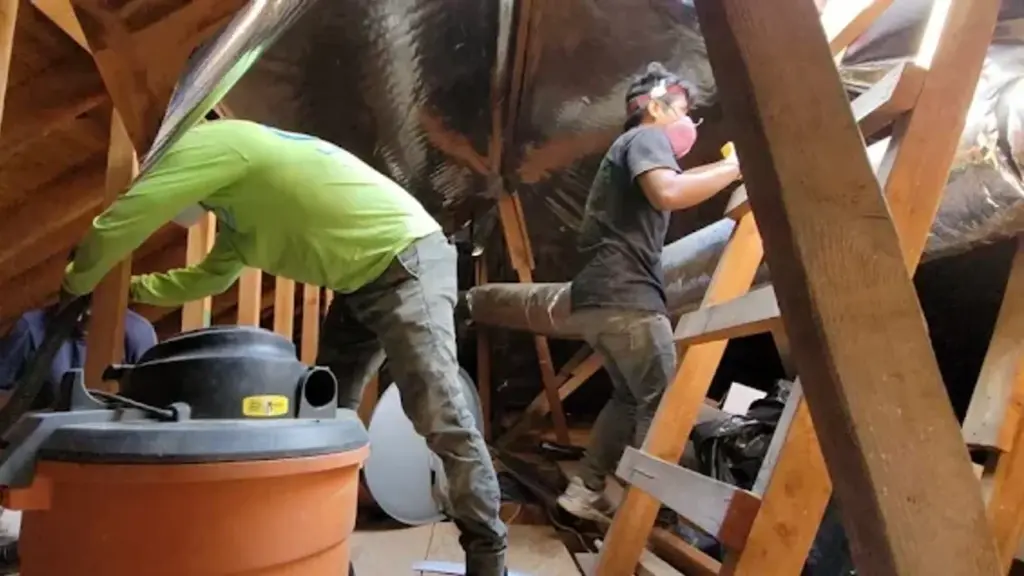
Reality: Airflow measurements at registers and basic visual checks from an access hatch give only partial information. A complete duct evaluation requires physically accessing the attic space, tracing each duct run from the air handler to the register boot, and checking flex duct for kinks, tears, disconnected sections, and insulation separation. In Los Angeles and Camarillo homes, attic access is often limited to a single hatch, and duct runs can extend 20 to 30 feet across the attic floor, partially buried under blown insulation. A technician performing a real evaluation will use a duct blaster or pressure pan test to quantify leakage rather than relying solely on visual inspection. If a contractor quotes duct work after only a register check and a glance through the hatch, that is a sign the evaluation was incomplete. Our professional duct replacement assessment includes a full attic walkthrough and leakage measurement before any recommendation is made.
Myth: Replacing Ducts Is Only Necessary After a Complete System Failure
Many Malibu homeowners rely on expert air duct cleaning in Malibu for exactly this.
Reality: Waiting for a total failure means living with degraded performance and elevated energy use for years before acting. In practice, duct deterioration follows a gradual curve: small leaks develop at connections, insulation separates and reduces the R-value of the duct jacket, and flexible sections develop sag and kinks that restrict airflow. None of these individually constitutes a dramatic failure, but together they can reduce system efficiency significantly. Proactive replacement, timed around a major HVAC service or an attic insulation installation project, is almost always more cost-effective than emergency replacement after a duct section collapses or a major disconnection floods the attic with conditioned air. If your system is showing early symptoms, reviewing what homeowners typically experience after new duct installation can help frame the decision with realistic expectations.
The Los Angeles and Camarillo Attic Environment: Why This Market Is Different
Homes across the greater Los Angeles area and Ventura County face a combination of factors that makes attic duct deterioration faster and more consequential than in many other U.S. markets. First, the region’s building stock skews heavily toward single-story and low-slope ranch construction, which means attic spaces are shallow and directly exposed to roof deck temperatures. A shallow attic with a dark composition shingle roof in Canoga Park or Thousand Oaks can reach temperatures that exceed the rated operating range of standard flexible duct materials during peak summer heat.
Second, the prevalence of original-equipment duct systems in homes built during the postwar construction boom through the 1970s and 1980s means a large portion of the housing stock in the San Fernando Valley, Simi Valley, and the Camarillo corridor is running on ductwork that is at or well past its expected service life. Many of these homes also have attic insulation that was installed to the code standards of that era, which fall well short of current California Title 24 energy efficiency requirements. Thin insulation compounds the heat stress on aging ducts.
Third, the region’s wildfire smoke events and periodic rodent activity in attics add biological and particulate contamination risks to duct systems that are already mechanically compromised. A duct with small tears from age becomes a pathway for attic air, insulation particles, and contaminants to enter the conditioned air stream. Addressing both the duct system and the attic insulation together, rather than in isolation, is particularly important in this local context.
Frequently Asked Questions
How do I know if my air ducts are actually deteriorating?
Common indicators include rooms that are consistently harder to cool or heat than others, HVAC equipment that runs for unusually long cycles, and higher-than-expected energy bills during peak seasons. Visible signs inside the attic, such as flex duct that appears kinked, sagging heavily between supports, or has sections with separated outer jackets, are also meaningful. A pressure test performed by a qualified technician gives the most objective picture of actual leakage.
Ready for the next step? Learn how air duct cleaning services in Malibu can help and reach out to the team.
Does replacing attic ducts really make a noticeable difference in comfort?
Homeowners with significantly deteriorated duct systems often notice improved room-to-room temperature consistency after replacement, because conditioned air is reaching its intended destination rather than leaking into the attic. The degree of improvement depends on how much leakage was present beforehand, but systems with leakage rates above 20 to 30 percent of total airflow typically show meaningful comfort gains after replacement.
Can I add more insulation to the ducts instead of replacing them?
Wrapping additional insulation around a duct that has a compromised inner liner or leaking connections addresses only part of the problem. Insulation wrap can improve the thermal performance of the duct jacket, but it does not seal air leaks or repair a degraded inner liner. If the duct’s structural integrity is compromised, adding insulation is a temporary measure rather than a solution.
How does attic insulation affect how long new ducts will last?
Adequate attic insulation reduces the peak temperatures the duct system is exposed to during summer, which directly reduces the rate of thermal degradation in the duct materials. Pairing a new duct installation with an attic insulation installation that brings the space to current energy code standards gives the new ductwork a more favorable operating environment and can meaningfully extend its service life.
Is duct replacement something a homeowner can do themselves?
Routing, connecting, and sealing flexible duct in an attic requires working in a confined, extremely hot space, properly sizing duct runs for airflow, and achieving airtight connections at every boot and plenum. Errors in sizing or sealing can create new performance problems. This is work that benefits from professional tools, including duct blaster testing to verify the finished installation meets leakage standards, rather than a DIY project.
Making an Informed Decision About Your Duct System
The myths covered above share a common thread: they all make duct deterioration seem less urgent or less consequential than it actually is in the Los Angeles and Camarillo climate. Ductwork that is degrading in a hot attic is not a problem that resolves on its own or stabilizes at a manageable level. Thermal cycling, UV exposure through roof deck gaps, and the physical stress of air pressure through compromised materials all continue working on the system every time the HVAC runs.
If your home is more than 15 years old and has never had a duct evaluation, or if you are already noticing the comfort and efficiency symptoms described above, scheduling a professional assessment is the practical next step. Our team serves homeowners across Los Angeles and Camarillo with full attic evaluations that cover both duct condition and insulation performance. Reach out to discuss what a complete duct replacement evaluation would look like for your home, or explore what factors shape the scope and cost of a duct replacement project to go into the conversation better prepared.