
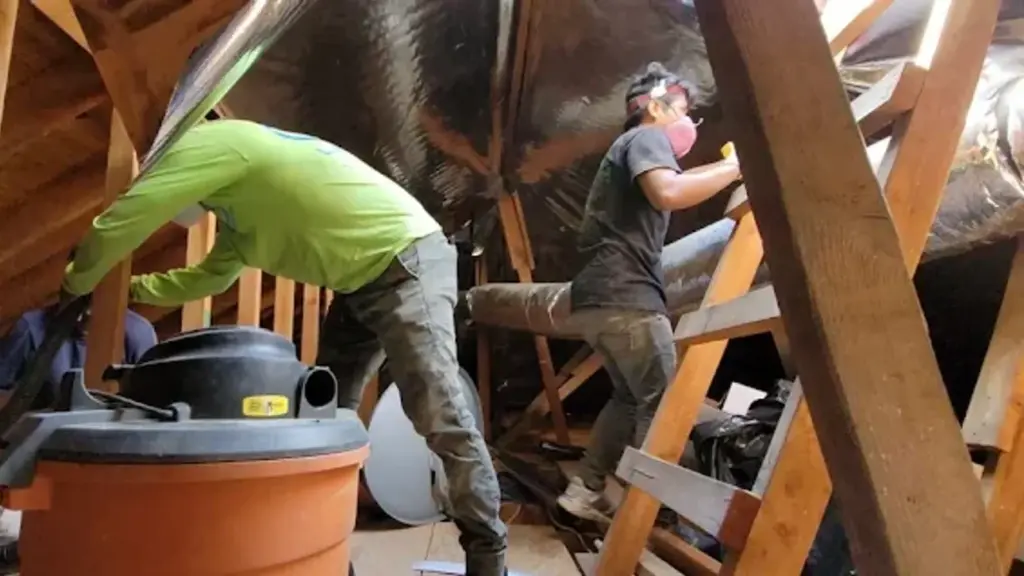
Attic Duct Replacement in Los Angeles and Camarillo: A Complete Homeowner’s Guide
You flip on the AC on a warm Camarillo afternoon and notice one bedroom stays stuffy while the rest of the house cools down fine. That uneven comfort is rarely a thermostat problem. More often, it traces back to the network of flexible ducts baking in your attic. For homeowners across Los Angeles and Camarillo, aging or damaged attic ductwork is one of the most overlooked reasons an otherwise functional HVAC system underperforms. This guide walks you through every stage of evaluating whether attic duct replacement is the right move for your home.
Why Attic Ducts Deteriorate Faster in Southern California
Attics in the greater Los Angeles basin and Ventura County reach extreme temperatures during summer. On a 90-degree day in Camarillo or the San Fernando Valley, an uninsulated or under-insulated attic can exceed 150 degrees Fahrenheit. Standard flexible duct materials, including the inner liner, insulation wrap, and outer jacket, were not designed for decades of that kind of heat cycling.
Beyond heat, Southern California’s mild but persistent seismic activity can stress duct connections over time. Joints that were once snug can loosen after years of minor ground movement, creating gaps that bleed conditioned air directly into the attic rather than into your living spaces. The result is a system that runs longer, works harder, and still leaves rooms uncomfortable.
For a deeper look at exactly what extreme attic heat does to duct materials, see how high attic temperatures break down ductwork.
Signs Your Attic Ducts Need Replacement, Not Just Repair
Not every duct problem requires full replacement. A single disconnected joint or a small puncture may be a repair candidate. But several patterns point clearly toward full air duct replacement rather than a patch-and-hope approach.
- Ducts older than 15 years: Flexible ductwork has a practical service life. Beyond that window, the inner liner becomes brittle and the insulation wrap degrades, making piecemeal repairs less reliable than starting fresh.
- Widespread crimping or collapsed sections: A duct that has been pinched flat in multiple locations cannot be restored to proper airflow by sealing alone.
- Visible mold or persistent musty odors: Moisture intrusion inside ductwork, sometimes from condensation in coastal areas near Camarillo, can allow mold to establish inside the liner. Replacement removes the contaminated material entirely.
- Rodent damage: Rats and mice commonly nest in attic ductwork across the LA region. Chewed liners and torn insulation jackets compromise both airflow and indoor air quality in ways that sealing cannot fully address.
- Consistently high energy bills despite a functioning HVAC unit: When conditioned air leaks into an unconditioned attic space, your system compensates by running longer cycles, which shows up directly on your utility bill.
- Multiple rooms with poor airflow: Isolated comfort complaints may point to a single duct run, but if several rooms across the house are affected, the problem is likely systemic.
For a more detailed breakdown of warning signs specific to the Camarillo area, learn to spot damaged attic ducts before they fail completely.
How Duct Condition Connects Directly to Attic Insulation Performance
Attic duct replacement and attic insulation service are closely linked, and scheduling them together almost always produces better outcomes than treating them as separate projects.
Here is why: even a perfectly sealed new duct system will lose efficiency if the attic around it has inadequate insulation. When attic temperatures stay extreme, the temperature differential between the air inside the duct and the air surrounding it increases. That drives heat gain in summer and heat loss in winter through the duct walls themselves, even through insulated flex duct. Upgrading your ductwork while also addressing attic insulation installation means the new ducts operate in a more controlled thermal environment from day one.
If you want it handled correctly the first time, consider professional air duct cleaning in Malibu.
Conversely, adding insulation over deteriorated ducts traps the old, leaky system under a fresh layer of material, making future access for repairs much harder. Sequencing duct replacement before or alongside attic insulation installation is the logical order.
LA Attic Pro handles both services, which is one reason homeowners in Los Angeles and Camarillo often find it practical to have a single attic insulation contractor assess the full picture rather than coordinating multiple separate trades.
The Los Angeles and Camarillo Housing Market: What Makes Local Attics Unique
The housing stock across the LA metro and into Ventura County spans a wide range of construction eras, and that matters when evaluating ductwork. Homes built in the 1950s through the 1970s in neighborhoods like Reseda, Northridge, and older Camarillo tracts were often constructed with minimal attic ventilation and early-generation duct materials. Many of those original systems have been patched multiple times over the decades rather than fully replaced, leaving a patchwork of duct generations that can be difficult to diagnose without a physical inspection.
Homes built in the 1980s and 1990s across the Santa Clarita Valley and newer Camarillo developments often used standard flexible duct that is now approaching or past its practical service life. Meanwhile, the region’s Title 24 energy code, which governs new construction and significant HVAC work in California, has grown increasingly specific about duct insulation values and sealing requirements. Any attic duct replacement project in Los Angeles or Camarillo should be evaluated against current Title 24 standards, though the specifics of what triggers compliance vary by project scope. Always confirm requirements with a licensed contractor familiar with local building department expectations.
Coastal proximity also shapes the equation. Areas within a few miles of the Pacific, including parts of Camarillo near the coast and communities along the LA coastline, experience higher humidity than inland valleys. That moisture can accelerate condensation on duct surfaces and contribute to insulation wrap degradation at a faster pace than in drier inland areas like the Antelope Valley.
Duct Replacement vs. Duct Repair: A Practical Comparison
Deciding between repair and full replacement is one of the most common questions homeowners ask. The table below outlines the key factors that push a project toward one option or the other.
| Factor | Favor Repair | Favor Full Replacement |
|---|---|---|
| Duct age | Under 10 years | 15+ years |
| Number of problem areas | One or two isolated spots | Multiple runs or widespread leakage |
| Duct material condition | Liner intact, jacket undamaged | Brittle liner, torn jacket, collapsed sections |
| Rodent or mold involvement | No contamination present | Any confirmed contamination |
| Planned insulation upgrade | No insulation work scheduled | Attic insulation installation planned |
| HVAC system age | System recently replaced | New HVAC unit being installed simultaneously |
| Comfort complaints | One room affected | Multiple zones or whole-house issues |
When the factors lean toward replacement, working with an experienced attic insulation contractor who also handles duct work means the attic is treated as a complete system rather than a collection of unrelated components.
To understand what goes into selecting the right duct materials and insulation ratings for the LA climate, read our guide to choosing insulated ductwork for Los Angeles homes.
What the Replacement Process Looks Like
Many Malibu homeowners rely on expert air duct cleaning in Malibu for exactly this.
Homeowners sometimes hesitate to schedule attic duct replacement because they picture a weeks-long disruption. In practice, a well-organized crew can complete most residential duct replacement projects in a single day, though larger homes or complex layouts may require two days.
A typical project follows this sequence:
- Inspection and documentation: A technician accesses the attic to photograph existing duct runs, note connection points, measure duct diameters, and identify any secondary issues like inadequate insulation or signs of rodent activity.
- Existing duct removal: Old flexible duct, including insulation wrap and any deteriorated mastic or tape at connections, is carefully removed and bagged for disposal. If rodent contamination is present, this phase may overlap with attic cleaning.
- New duct layout and installation: Replacement ducts are sized to current ACCA Manual D standards where applicable, ensuring airflow is balanced across all supply registers. Connections at the air handler, plenum, and each branch are sealed with approved mastic or metal tape rather than standard duct tape, which degrades quickly in attic heat.
- Pressure testing: A duct blaster or similar diagnostic tool can verify that the new system meets leakage thresholds before the attic is closed up.
- Insulation coordination: If attic insulation service is part of the same project, it proceeds after ducts are confirmed sealed and positioned correctly.
After the work is complete, most homeowners notice the difference in comfort within the first few HVAC cycles. For a realistic picture of what to expect in the days following installation, see what typically happens after new attic ducts are installed.
Factors That Influence the Scope and Investment of a Duct Project
Every attic duct replacement project in the Los Angeles and Camarillo area is shaped by a set of variables that affect both the scope of work and the overall investment required. Understanding these factors helps homeowners have more productive conversations with contractors and avoid surprises.
Home square footage and number of duct runs: A larger home with more supply and return runs requires more material and labor time. A 1,200-square-foot Camarillo bungalow and a 3,000-square-foot Thousand Oaks home are genuinely different projects.
Attic accessibility: Low-pitch rooflines, limited hatch openings, or attic spaces divided by structural framing can add complexity to the removal and installation process.
Existing insulation depth: If the current attic insulation is deep and in good condition, technicians need to work carefully around it. If it is inadequate or contaminated, combining insulation removal with duct replacement is often the more practical approach.
Duct configuration changes: Sometimes a replacement project is also an opportunity to redesign a duct layout that was never properly balanced. Rerouting runs or adding dampers adds scope but can meaningfully improve room-to-room comfort.
Permit requirements: In many Los Angeles and Ventura County jurisdictions, duct replacement that involves the full system may require a mechanical permit. Requirements vary by city and project scope, so confirming with your contractor and local building department before work begins is worthwhile.
Ready for the next step? Learn how air duct cleaning services in Malibu can help and reach out to the team.
For a thorough breakdown of what drives project scope and investment in this region, explore the cost factors for replacing attic ductwork in Southern California.
Frequently Asked Questions
How do I know if my ducts need replacement or just cleaning?
Duct cleaning addresses accumulated dust, debris, and microbial buildup inside an otherwise intact duct system. Replacement is the right call when the duct material itself is compromised, whether from age, physical damage, rodent activity, or mold. If a cleaning inspection reveals torn liners, collapsed sections, or significant leakage at joints, cleaning alone will not restore system performance.
Can I replace attic ducts without replacing my HVAC unit?
Yes, and it is often done that way. New ductwork paired with an existing functional air handler and condenser can substantially improve comfort and efficiency without the full expense of an HVAC replacement. That said, if your HVAC unit is also near the end of its service life, coordinating both projects at once avoids opening the attic twice and may allow the new duct layout to be optimized for the replacement unit’s airflow characteristics.
How long does new flexible ductwork last in an LA or Camarillo attic?
Quality flexible duct installed with proper mastic sealing and adequate insulation wrap typically performs well for 15 to 20 years in Southern California attic conditions. Longevity improves when the surrounding attic insulation is adequate, because lower attic temperatures reduce the thermal stress on duct materials over time.
Will replacing my attic ducts lower my energy bills?
Homes with significantly leaky or deteriorated ductwork commonly see measurable reductions in HVAC runtime after replacement, because conditioned air is reaching living spaces rather than escaping into the attic. The magnitude of the improvement depends on how severe the existing leakage was and whether attic insulation is also addressed as part of the project.
Do I need a permit for attic duct replacement in Los Angeles or Camarillo?
Permit requirements vary by municipality and project scope. Full duct system replacement often falls under mechanical permit requirements in both Los Angeles County and Ventura County jurisdictions, but partial repairs may be treated differently. A licensed contractor familiar with local building departments can confirm what applies to your specific project before work begins.
Is it worth upgrading attic insulation at the same time as duct replacement?
Combining both services is generally the most efficient approach. New ducts perform better in a thermally controlled attic environment, and the attic is already cleared and accessible during duct work, making it the practical time to assess and upgrade insulation. Scheduling them separately means paying for attic access twice and potentially covering new ducts with insulation before any issues have been identified.
Ready to Evaluate Your Attic Ducts?
Worn, leaky, or damaged attic ductwork is one of the more straightforward problems to solve once it is properly identified. For homeowners in Los Angeles and Camarillo, addressing the duct system and attic insulation together is often the most direct path to consistent comfort and a more efficient HVAC system. LA Attic Pro provides full attic duct replacement alongside attic insulation installation, insulation removal, and attic cleaning services throughout the region.
Use our complete attic duct replacement service page to learn more about what the process involves, or contact LA Attic Pro directly to schedule an attic inspection and get a clear picture of what your home actually needs.