
How to Evaluate HVAC Duct Replacement Cost Factors in Los Angeles and Camarillo
When aging ductwork is quietly leaking conditioned air into a hot attic, the damage compounds month after month: energy bills climb, rooms stay stubbornly warm or cold, and the HVAC system works harder than it should. In Los Angeles and Camarillo, where summer attic temperatures can push well past 140°F, deteriorating ducts lose efficiency faster than in milder climates. Before calling for quotes, understanding what actually drives the project cost helps you compare proposals clearly and avoid surprises. This guide walks you through every meaningful cost factor, step by step, so you can approach the conversation with a contractor from a position of knowledge. For a broader look at whether replacement is the right call, see our full attic duct replacement guide.
Before You Start: What Shapes the Scope of a Duct Replacement Project
- Your home’s square footage and layout, more conditioned space generally means more linear feet of ductwork.
- Number of supply and return registers, each branch run adds labor and material.
- Attic access point size and location, a tight, poorly placed hatch changes how long the job takes.
- Current duct material, flex duct, sheet metal, and fiberboard each have different removal requirements.
- Existing insulation condition, ducts often sit on or under attic insulation, so the two projects frequently intersect.
- Local jurisdiction requirements, permit requirements vary by city and county; always confirm with your contractor and local building department.
- HVAC system age and condition, if the air handler or furnace is near end of life, timing both projects together can reduce overall disruption.
Step 1: Assess Attic Accessibility and Working Conditions
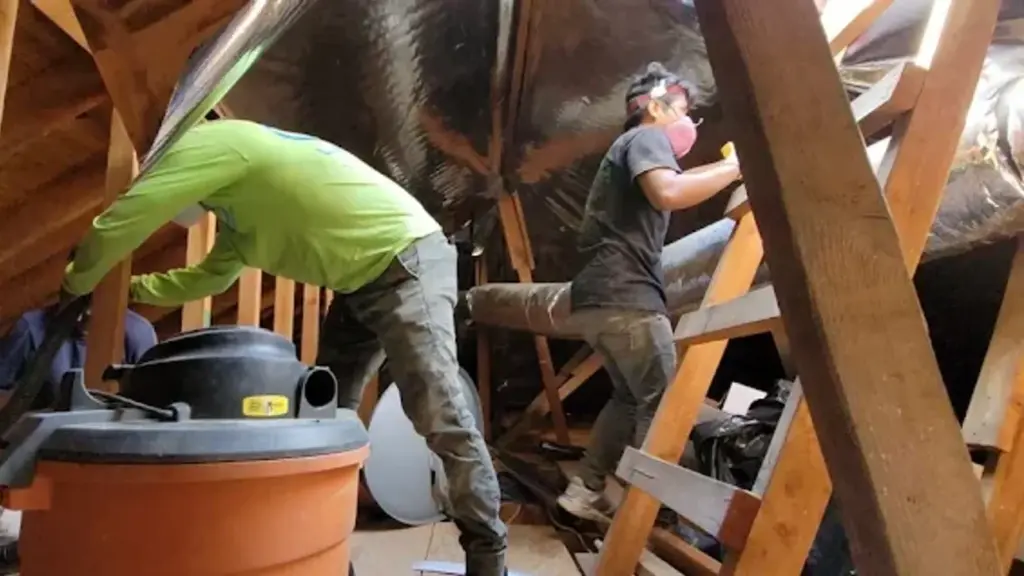
Labor is one of the largest line items in any duct replacement project, and attic accessibility is the single biggest driver of how long that labor takes. A spacious, well-lit attic with a wide hatch and a solid floor deck allows technicians to move quickly and safely. A cramped attic with a 22-inch scuttle hole, low rafters, and blown insulation covering every surface is a different job entirely. In older Los Angeles neighborhoods, Craftsman bungalows and mid-century ranch homes frequently have shallow roof pitches that leave less than three feet of clearance at the peak, meaning every duct run requires slow, careful maneuvering. Camarillo’s tract homes from the 1970s and 1980s tend to have more generous attic volumes, but they often have original flex duct that has become brittle and difficult to remove without tearing. The harder it is to move around up there, the more hours the crew spends, and that directly affects the overall project scope.
Step 2: Measure Total Duct Run Length and Complexity
Ductwork is priced in part by how many linear feet of new material the system requires. A single-story home with a central air handler and short, direct runs to each room is a simpler project than a two-story home where ducts travel long distances, change direction multiple times, and serve zones with different load requirements. Complexity also rises when the system includes a return-air plenum that spans the length of the attic, large trunk lines that feed multiple branches, or custom transitions around obstructions like structural beams and HVAC equipment. Each additional fitting, elbow, and reducer adds both material and installation time. When a contractor walks your attic before quoting, they are mapping this geometry, so a thorough walkthrough is a sign of an accurate estimate.
Step 3: Factor In Duct Material and Insulation Rating
If you want it handled correctly the first time, consider professional air duct cleaning in Malibu.
The type of duct specified for the replacement matters significantly. Flexible duct (flex duct) wrapped in a fiberglass blanket and a vapor barrier is the most common choice for residential attic systems in Southern California because it installs quickly around obstructions. However, the insulation rating of that wrap, expressed as an R-value, varies. California’s Title 24 energy code sets minimum R-value requirements for ducts in unconditioned attic spaces, and meeting or exceeding those minimums affects both material cost and long-term efficiency. Rigid sheet metal with external duct wrap is more durable and better suited to high-velocity systems, but it requires more fabrication time. Fiberboard duct board sits in between. For guidance on choosing the right material for Southern California’s climate, this breakdown of insulated ductwork options covers the tradeoffs in detail. The specification your contractor proposes should always include the R-value of the duct wrap, not just the duct type.
Step 4: Account for Existing Insulation Removal and Reinstallation
In most attics, the ductwork does not sit in empty space. It runs through or on top of attic insulation, and replacing ducts almost always requires moving, removing, or reinstalling some of that insulation. If the existing insulation is in poor condition, contaminated, or simply too thin to meet current standards, combining an attic insulation installation with the duct project is efficient and can reduce total labor costs compared to scheduling two separate visits. Conversely, if the insulation is in good shape, a careful crew can work around it, though some disturbance is unavoidable. Ask any contractor quoting the duct work to explicitly state what happens to the insulation during and after the project. An overview of what to expect after new attic ducts explains how the two scopes typically interact once the job is complete.
Step 5: Understand the Los Angeles and Camarillo Permitting Landscape
This is the step many homeowners overlook until it causes a delay. Duct replacement in California typically requires a mechanical permit, and inspections may be required before the attic is closed back up. Requirements vary between the City of Los Angeles, unincorporated LA County, and Ventura County jurisdictions that include Camarillo. Permit fees, plan-check timelines, and inspection scheduling all affect total project duration and, in some cases, the overall project scope if an inspector requires additional upgrades to bring the system into compliance with current code. A reputable attic insulation contractor will pull the required permits and include that process in their project timeline. If a quote does not mention permitting at all, it is worth asking directly. Permit costs are a real project expense, and their absence from a proposal can signal either an oversight or an intent to work without required approvals.
Step 6: Evaluate Whether Rodent Damage or Contamination Is Present
In the greater Los Angeles area, rodent activity in attics is common enough that it should be on every homeowner’s checklist before a duct project begins. Rats and mice nest inside flex duct, chew through the outer jacket, and leave contamination that requires remediation before new ductwork can be installed. If a pre-project inspection reveals active or past rodent intrusion, the scope expands to include sanitation and, depending on the extent of damage, partial or full insulation removal before new ducts go in. Skipping this step and installing new ducts over a contaminated attic is a problem that tends to resurface. The signs of damaged attic ducts in Camarillo article covers how to spot rodent-related duct damage before a contractor visit, which helps you ask the right questions during the inspection.
Many Malibu homeowners rely on expert air duct cleaning in Malibu for exactly this.
Step 7: Compare What Each Quote Actually Includes
Once you have two or three proposals in hand, the comparison is only meaningful if you are comparing the same scope. A lower quote that excludes permit fees, insulation reinstallation, and register box replacement is not cheaper than a higher quote that includes all three. When reviewing proposals, look for explicit line items covering: removal and disposal of old ductwork, new duct material with stated R-value, all fittings and transitions, mastic or foil-tape sealing at connections, balancing the system after installation, permit application and inspection coordination, and cleanup of the attic space. If any of these items is absent or vague, ask for clarification in writing. A detailed scope protects both you and the contractor and reduces the likelihood of change orders once the work is underway.
Step 8: Consider the Interaction Between Ducts and Attic Insulation Efficiency
This step is more strategic than procedural, but it directly affects whether the investment in new ductwork delivers the efficiency gains you expect. A well-sealed, properly insulated duct system running through an attic with inadequate insulation still loses significant energy to radiant heat gain. Southern California’s climate means attic temperatures regularly exceed outdoor air temperatures by 40 to 60 degrees on summer afternoons, and every BTU that transfers through the duct wall into that hot air is conditioned air you paid to produce but never benefited from. Scheduling an attic insulation service at the same time as duct replacement, or at least confirming the existing insulation meets current Title 24 standards, makes the duct investment work as intended. An attic insulation contractor who also handles duct work can evaluate both systems in a single visit and give you a coordinated recommendation. For more on why the attic environment matters so much to duct longevity, see how hot attics degrade ductwork over time.
Step 9: Plan the Timing to Minimize Disruption
Duct replacement is typically a one-to-two day project for a standard single-family home, but that timeline stretches when permits require a mid-project inspection, when the attic needs remediation first, or when the crew encounters unexpected conditions like abandoned duct branches or non-standard equipment connections. Scheduling during mild weather, typically spring or fall in the Los Angeles basin, means the home can tolerate a day without HVAC more comfortably than during a July heat event. In Camarillo, the marine influence keeps temperatures moderate more often than inland LA neighborhoods, so the seasonal window is wider. Confirm with your contractor whether the system will be fully operational at the end of each workday or whether there will be a period without heating or cooling, and plan accordingly if you have young children, elderly residents, or pets in the home.
When to Call a Professional in Los Angeles or Camarillo
Ready for the next step? Learn how air duct cleaning services in Malibu can help and reach out to the team.
Evaluating duct replacement cost factors is useful preparation, but the actual assessment of your duct system requires a professional inspection. If you notice uneven room temperatures, a significant rise in energy bills without a change in usage habits, visible damage at accessible duct connections, or any evidence of rodent activity in the attic, those are signals to schedule an inspection rather than wait. Attic work in Southern California involves real hazards, including extreme heat, fiberglass particles, and in older homes, potential asbestos-containing materials in certain insulation types. A licensed attic insulation contractor with duct replacement experience can assess the full scope safely, pull required permits, and give you a written proposal that accounts for all the factors covered in this guide. To understand the full scope of what a replacement project involves, our attic duct replacement service page outlines the process from inspection through completion. Ready to get a clear picture of your attic’s condition? Contact our team to schedule an attic inspection in Los Angeles or Camarillo.
Frequently Asked Questions
Does replacing attic ducts always require a permit in Los Angeles?
In most cases, yes. California requires a mechanical permit for duct replacement work, and local jurisdictions within Los Angeles County and Ventura County may have additional requirements. Requirements vary by city, so confirm with your contractor and the relevant building department before work begins.
How does attic insulation condition affect the duct replacement scope?
Ducts run through attic insulation, so the two systems are physically intertwined. If existing insulation is thin, damaged, or contaminated, it often makes sense to address it at the same time as duct replacement to avoid disturbing the new ductwork later. A qualified attic insulation contractor can assess both in a single visit.
What R-value should replacement ducts have in Southern California?
California’s Title 24 energy standards set minimum R-value requirements for ducts in unconditioned attic spaces, and those minimums have increased over successive code cycles. Your contractor should specify the R-value of the duct wrap in the proposal; ask for it explicitly if it is not listed.
Can I combine duct replacement with an attic insulation installation to save on labor?
Yes, and it is often the most efficient approach. Scheduling both projects together reduces the number of attic entries, minimizes disruption to existing insulation, and allows the crew to coordinate the work so the new ducts are properly supported and surrounded by adequate insulation from the start.
How long does a typical attic duct replacement take in a Los Angeles home?
Most standard single-family homes take one to two days, assuming the attic is accessible and no remediation is needed beforehand. Larger homes, complex duct layouts, permit inspection holds, or rodent contamination can extend the timeline, which is why a pre-project walkthrough and clear written scope are important.